

[For more diverse corporate information on the startup featured in this article, you can view it on the Unicorn Factory big data platform's "Data Lab."]
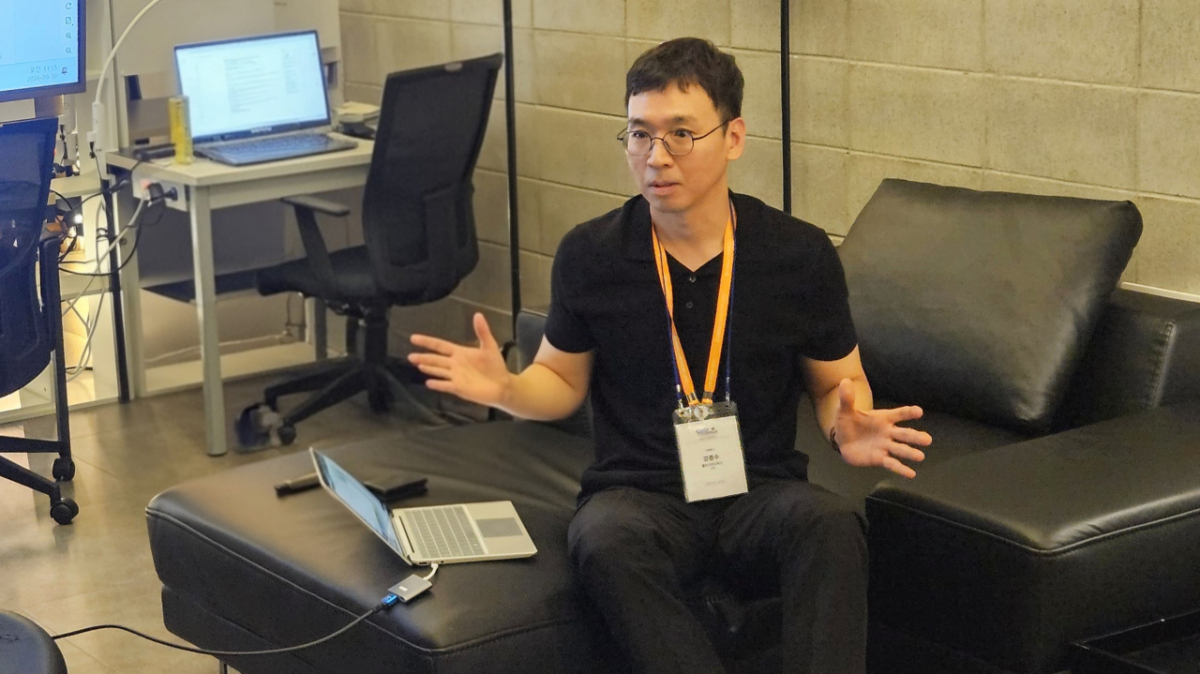
"Defining an AC (accelerator) solely as an investment house is like confining yourself. The advantage that ACs have compared to VCs (venture capital) is that they can undertake various businesses related to supporting startup growth, in addition to incubation and investment."
Kang Jong-soo of Coz Dynamic held a tea meeting with reporters on the 30th at Urban Creators Unit (UCU) in Seodaemun-gu, Seoul, stating, "The role of an AC is to fill in what companies would ideally want to have directly as they grow but find difficult to arrange immediately," and said this.
Founded in 2013, Coz Dynamic is the first AC in the Busan and Gyeongnam region. It has discovered and nurtured startups in a region with an investment environment less favorable than that of the metropolitan area. The cumulative number of incubated companies reaches approximately 3,000, and it was also selected as the operator of the small business investment linkage project "LIPS," further broadening its scope of support.
Kang said that when choosing investment targets, he looks at the founder's ability to interpret the market rather than specific technologies or industries. He stated, "I place importance on the sense of being able to interpret the market with numbers and explain how profits will change if factories are expanded or cost structures are altered."
He added, "Items can easily be the same, but if the market entry strategy differs, they can grow into completely different companies," and "The appeal of local investment is that even for items that already exist, the approach manifests differently in Gwangju and Busan."
Although attention in the venture investment industry is focused on the AI (artificial intelligence) field, Coz Dynamic does not place much weight on AI. Kang said, "If you have sufficient experience and insight into an industry, you can do well whether or not you incorporate AI."
He emphasized, "Focusing only on preferred areas makes one stagnant," and "Continuously discovering areas where one wonders why others did not invest is an important value of Coz Dynamic."
From this perspective, plans are being made to increase investments in offline-based lifestyle companies. It is looking for companies with the potential to expand brands and content, even if they appear as ordinary businesses on the surface, such as juice manufacturing or meat processing.
Coz Dynamic is also changing its approach to investment stages. Rather than staying at seed investments for early-stage companies in their 3rd to 5th year, it plans to increase bridge investments of 1 billion to 2 billion won for companies that experience funding gaps during their growth process.
Recently investing 1 billion won in the Series B bridge round of freight transport platform Sendy, which raised 3 billion won, is also part of this strategy. Kang said, "It is important to play the role of a bridge at every point where growth may stop after seed investment."
Going forward, the company plans to focus on filling funding gaps for regional companies with relatively insufficient investment networks. He stated, "Companies in the metropolitan area have well-established investor networks, but regions do not, so growth often stops temporarily," and "I believe local investment should be like this."
Post-investment support focuses on △HR (human resource management) △business development △mentoring. HR goes beyond recruitment to include stock options and work system design to prevent talent attrition. It also takes on the role of connecting collaboration opportunities with large corporations or senior startups and advising companies to focus on the essence of their business and survival.
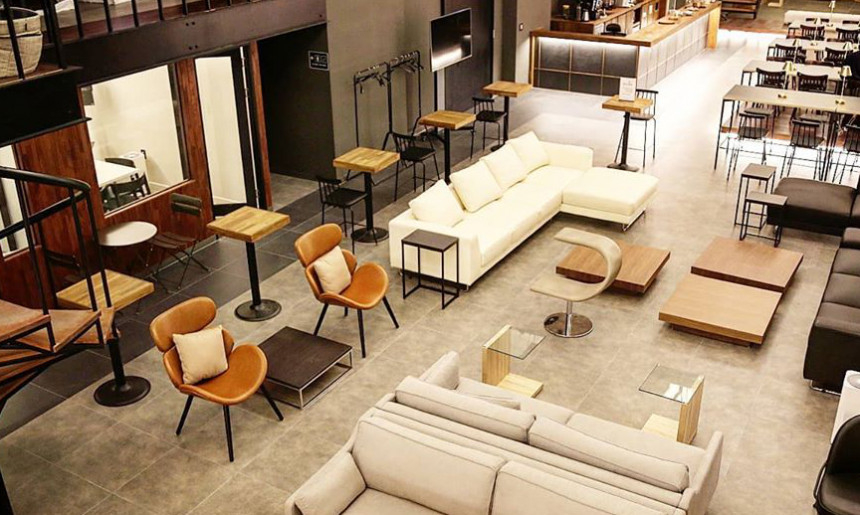
In particular, it is drawing attention for directly providing infrastructure necessary for entry into Seoul. UCU, where the tea meeting was held, is a residential and work complex space built and operated by Coz Dynamic. It was created to reduce stay and housing costs incurred when regional startups recruit talent in Seoul and expand their businesses.
Kang explained, "For non-metropolitan startups to scale up, they need talent with growth experience, but it is difficult to find locally, so many set up branches in Seoul," and "What holds them back is stay and housing costs. This cost must be reduced for investment funds to be fully used for growth."
Going forward, UCU's common space will be operated exclusively for portfolio companies. Kang said, "It was originally a space students also used, but we have completely cleared it out," and "We will let the regional companies we invested in use it like their Seoul branches to foster communication and collaboration among portfolio companies."
Investment resources are also being expanded. Currently, approximately 5 billion won in seed money is prepared for fund formation, with plans to secure 20 billion won by the second half of next year. Based on Kang's own funds and contributions from senior entrepreneurs who have exited after founding companies, it is promoting the formation of multiple blind pools.
The investment area is expected to expand from existing Busan, Seoul, Gwangju, and Jeonbuk to Chungcheong, Gangwon, and Jeju for consideration. As an exit strategy, plans are being promoted to connect 2nd and 3rd place companies aiming to leap to the market leader with strategic investors (SI) or acquisition candidates (M&A).
Kang stated, "The number one already holds 50-60% of the market, and the 2nd and 3rd places are willing to spend a lot of money to take the top spot," and "For acquiring companies, buying a company is buying time instead of spending 2-3 years and hundreds of millions of won in development costs; for selling companies, it is buying time to grow quickly by boarding a bigger ship."
[MoneyToday startup media platform 'Unicorn Factory']

 in FUTURE


