

[For more diverse corporate information on startups, visit 'Data Lab' on the Unicorn Factory big data platform.]
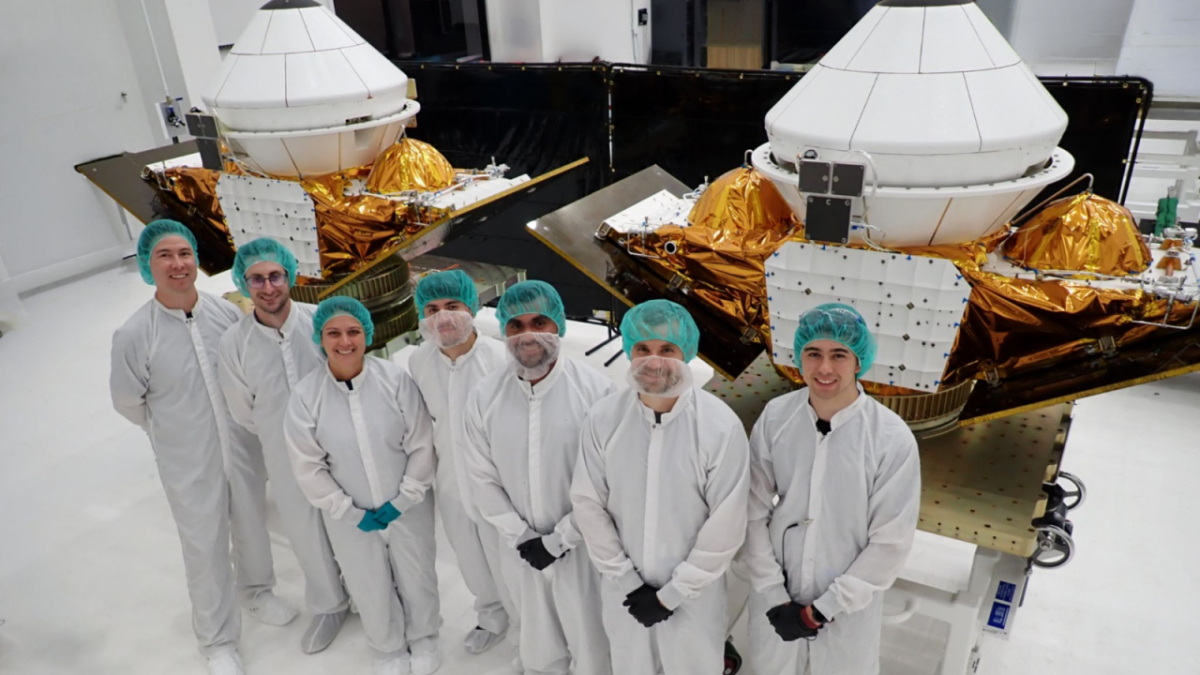
U.S. startup 'Varda Space Industries,' which manufactures pharmaceuticals in space orbit, has secured a Series D investment of $251 million (approximately 340 billion won). The company was valued at $1.6 billion (approximately 2.15 trillion won), joining the ranks of unicorns.
The round was led by deep-tech-focused VCs Lux Capital and Natural Capital. Participants also included Peter Thiel's Founders Fund, co-founded by PayPal founder Peter Thiel, as well as Kosla Ventures, General Catalyst, and Cape Infinite Capital. Total cumulative investment is approximately $600 million (approximately 800 billion won).
Becoming a 'Unicorn' in Five Years…Expanding Customers Beyond Pharmaceuticals to Semiconductors and Defense
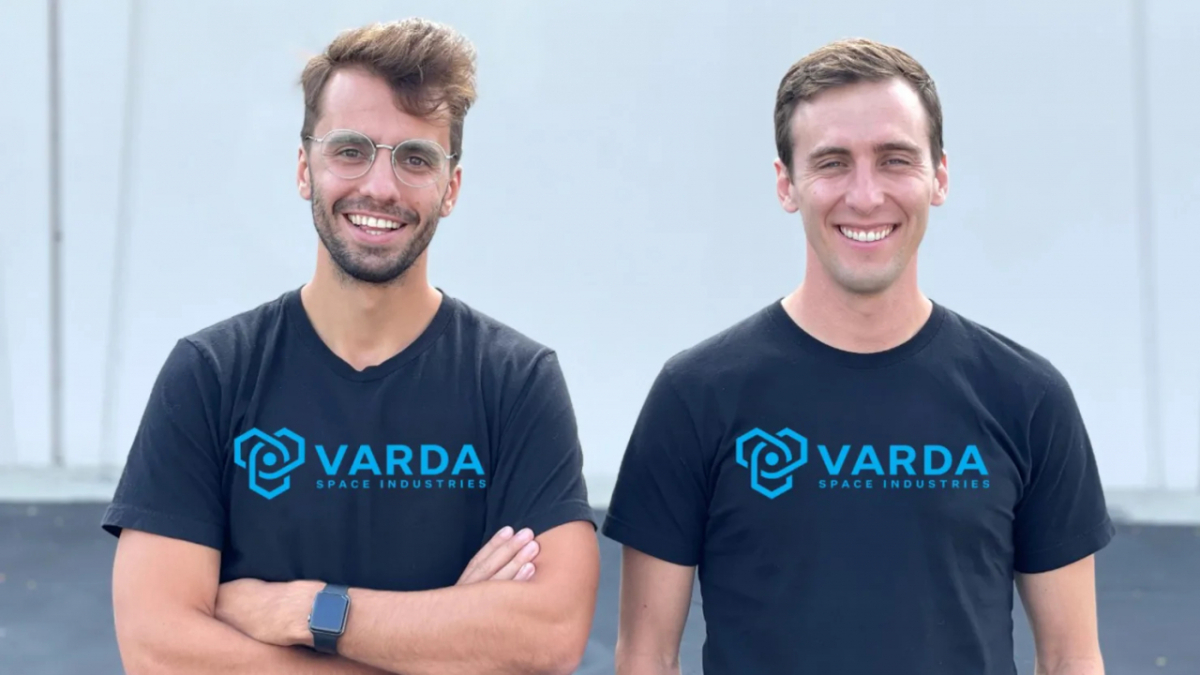
Founded in 2021, Varda was co-founded by CEO Will Bruey, a former SpaceX engineer, and Delian Asparouhov, a former Founders Fund partner.
What they focused on was the microgravity environment of space. In orbits with almost no gravity, drug components crystallize in ways impossible on Earth, enabling the creation of more effective pharmaceuticals.
Varda's core technology is a small reentry capsule. After completing manufacturing processes in orbit, this capsule returns to the atmosphere and is recovered on the ground. Varda has conducted six reentry missions since 2023 and plans to carry out approximately 10 additional missions over the next two years.
However, drugs manufactured in space have not yet reached the stage of being administered to patients. CEO Bruey stated in an interview with Reuters that entering clinical trials for administering microgravity-based formulations to humans is a key milestone around 2030.
In addition to pharmaceutical companies, semiconductor manufacturers are also using Varda's capsules to leverage the benefits of low-gravity environments. The W-9 capsule, set to launch soon, is reportedly carrying payloads from the U.S. Ministry of National Defense to test navigation technology during hypersonic flight.
The industry assesses that Varda's rise to unicorn status marks the beginning of 'space manufacturing' being recognized for its commercial viability beyond the experimental stage. Analysts note that expanding demand sources across pharmaceuticals, semiconductors, and defense is behind the high corporate valuation.
Varda aims to build operational experience through defense demand while expanding its pharmaceutical business. CEO Bruey said, "Next year's payload customer composition will be approximately 70% government sector and the remainder commercial pharmaceuticals," adding, "I expect this ratio to gradually reverse by 2032."
Israeli Defense Tech VC…'Female Duo' Manages a 170 Billion Won Fund

Israeli defense technology-focused VC 'Protego Ventures' has completed the final closing of its first fund, sized at $125 million (approximately 170 billion won). In its second year of operation, Protego positions itself as Israel's first and largest defense-specialized VC.
Co-founders Lital Leshem and Lee Moser are both women. It is noteworthy that female investors have taken the lead in the traditionally male-dominated industries of venture capital and defense.
Leshem worked for 11 years in the military and intelligence sectors. The emergency communication startup Carbyne, which she co-founded, was sold to U.S.-based Axon last year for $625 million (approximately 840 billion won). Moser, a former chief of staff to the Israeli Ambassador to the United States, is a veteran VC who also serves as Managing Partner at AnD Ventures.
The two combined their field experience in military and intelligence sectors with investment and diplomatic networks. They targeted an investment gap, noting that generalist VCs struggle to understand defense businesses, and overseas defense investors do not sufficiently know Israel's security ecosystem.
The event that became the core catalyst for the founding was Hamas's surprise attack on Israel in October 2023. Leshem was conscripted as a reservist while pregnant and remained at the front lines until just before giving birth. She said, "I witnessed firsthand how the battlefield moves completely differently from what I had known over the past 10 years."
Subsequently, executives from Ares Management proposed the startup to the two women and contributed $30 million (approximately 40 billion won). Protego invests between $5 million and $15 million (approximately 67 billion to 200 billion won) per company. Its first portfolio company, drone firm XTEND, listed on the New York Stock Exchange last month.
Protego's investment targets are not companies at the idea stage. They are early-stage growth companies that have begun selling products and validated their technology in battlefields or actual operational environments. The firm plans to raise a second fund in the first quarter of next year to expand its investment scope to U.S. early-stage defense companies.
Arson Incident at European Defense Startup…'Sabotage by Russian Intelligence Institutional Investor'
The Estonian government officially announced that a recent arson incident at the building of military robotics firm 'Milrem Robotics' in the capital, Tallinn, was sabotage instigated by Russian intelligence institutional investors. This conclusion was reached with "complete confidence" following a six-week investigation by the Internal Security Service.
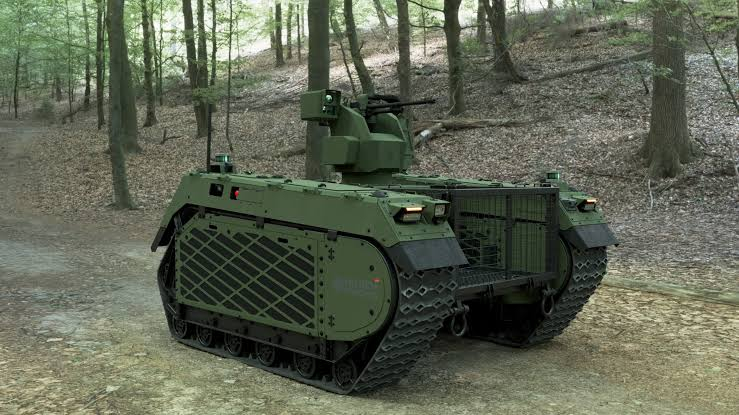
Milrem is a leading figure in Estonia's defense industry, manufacturing the Unmanned Ground Vehicle (UGV) 'THeMIS.' With Dutch government support, it plans to supply more than 150 vehicles to Ukraine.
The fire that occurred on the night of August 14 was immediately extinguished. Three suspects with Latvian nationality were arrested and extradited to Estonia. Estonia summoned the Russian charge d'affaires. When the Estonian Prime Minister criticized the incident as "absolutely unacceptable," the Kremlin denied it, calling it an "unfounded claim."
This is not the only case where a European defense startup has been directly targeted by an attack. On the 3rd of last month, arson occurred near the offices of Helsing, Europe's largest defense startup, and Rhodes Schwartz in Munich, Germany, resulting in the arrest of two individuals with Bulgarian nationality.
German authorities suspect the Russian military intelligence institutional investor (GRU) is behind the incident. Margus Paloson, head of Estonia's Internal Security Service, expressed concern that "defense companies and institutional investors supporting Ukraine will continue to face heightened threats."
An industry official stated, "Defense startups carry risks related to physical security and sabotage response," adding, "Startups aiming to enter the global defense supply chain must take all necessary defensive measures to ensure business continuity, including facility protection, in addition to expanding exports and orders."
[MoneyToday Startup Media Platform 'Unicorn Factory']

 in FUTURE


