

[For more diverse corporate information on the startup featured in this article, visit the Unicorn Factory big data platform 'Data Lab'.]

"Imagine you are in the middle of a multi-year construction project when a war breaks out. To determine whether work can be suspended and if there are any penalties, you ultimately have to consult the contract. The problem is that the relevant documents amount to tens of thousands of pages. Even while executing projects worth hundreds of billions of won, people still open documents one by one to find the necessary grounds."
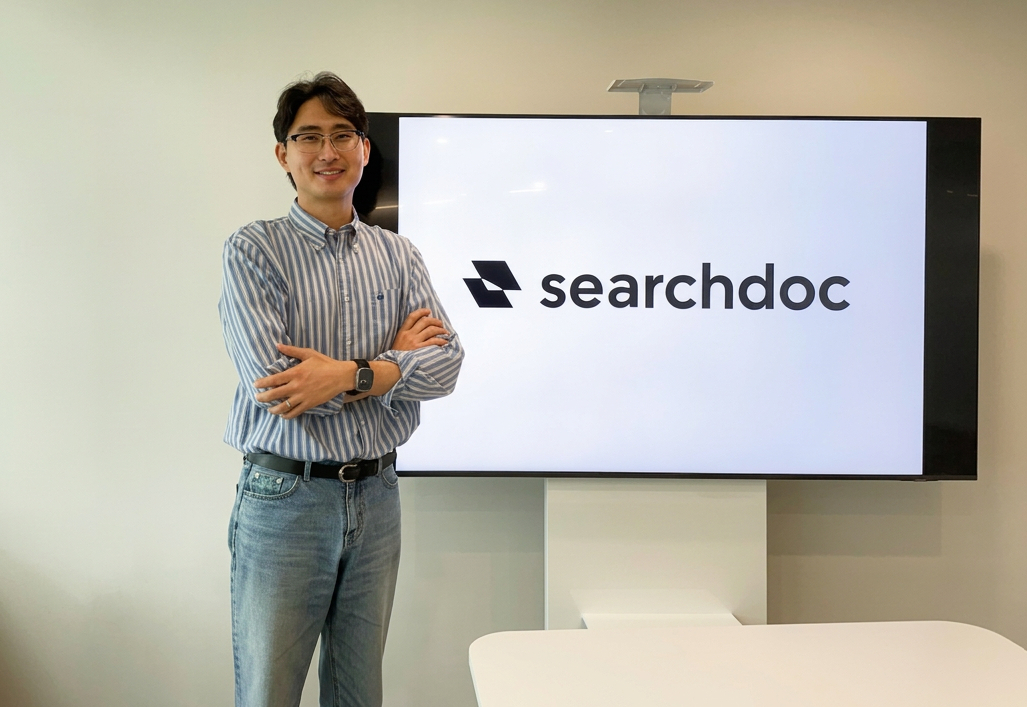
Baek Jun-seon, Seo Chi-dok (CEO), recently met with Unicorn Factory, MoneyToday's startup-focused media platform, and diagnosed the reality on construction sites in these terms. Large-scale projects in construction, shipbuilding, and plants come with a massive volume of documents, ranging from contracts to requests for proposals, purchase orders, and design standards. As a project progresses, documents are frequently modified, and it is not uncommon to have to examine multiple documents simultaneously just to verify a single contract condition.
SearchDog develops search AI that finds and connects the necessary grounds scattered among construction companies' internal documents. When a user asks a question, the system locates relevant documents, gathers information sources and evidence, and passes this to its in-house developed generative large language model (LLM) to generate an answer. Recently, it expanded its search scope from documents to 2D design drawings and 3D BIM (Building Information Modeling).
The 'Search Man' who worked at Naver and AWS… Finds startup opportunity in construction
At the heart of SearchDog's origin is Baek (CEO)'s experience in search and AI accumulated while working at Naver and AWS. As an engineer in Naver's search organization, he analyzed user search intent and developed AI models to improve search quality. Subsequently, at AWS, as a generative AI and data architect, he led the development of enterprise AI chatbots and retrieval-augmented generation (RAG)-based systems.
As generative AI was rapidly adopted in corporate settings, Baek (CEO) turned his attention back to 'search,' his long-standing area of expertise. "Search is such a deep technology that companies like Naver or Google were born from it alone," said Baek (CEO). "I believed that combining deep search with AI could solve even the complex problems of specific industries."
Among various industries, he discovered a startup opportunity in construction. This came about while he was working on an AI project for a major construction company at AWS, where he had been executing AI projects for large corporations in finance, insurance, and manufacturing. "The construction market is large in scale both domestically and internationally, yet it still relies heavily on analog methods and manual work," said Baek (CEO). "I paid attention to the fact that no one had properly automated this problem yet."
During his tenure at AWS, Baek (CEO) conducted technical validation with a major domestic construction company. After confirming the possibility of solving real-world site problems with search AI, he left AWS in May last year and founded SearchDog. The co-founders and operational team are also composed of personnel who have built expertise in search and AI technology as well as the construction and design domain at companies such as Naver, AWS, and Autodesk.
"BIM is ultimately a search problem"… Review time cut from one to two months to two to three days
The area Baek (CEO) particularly cites as the decisive battleground is BIM. In construction projects, client requirements and related regulations are documented in text, but actual deliverables are realized through drawings and 3D models. Personnel must cross-check documents and BIM one by one to verify that specifications and locations meet standards. SearchDog automates this manual process with search AI. It finds necessary conditions from contracts, design standards, and regulations and connects them to actual design elements such as columns, windows, and equipment within the BIM. The core is using AI to review whether 'the design properly adheres to the conditions specified in the documents.'
Designers can pre-verify that client requirements have been properly reflected, and clients can quickly confirm that delivered designs meet requirements and regulations. This structure reduces rework and costs arising from design errors discovered late. Design changes resulting from material or component substitutions are also a key application area. The AI finds relevant contract conditions and design standards, analyzes the impact on the modified design, and produces a report with the results. "Previously, reviewing a single change could take one to two months, but using SearchDog, cases are emerging where everything from searching for related information to writing the review result report is completed within two to three days," said Baek (CEO).
Baek (CEO) revealed that in the global market as well, technology for understanding BIM with AI is still in its early stages. Currently, many technologies remain at the level of finding specific elements in drawings, whereas SearchDog has implemented technology that finds and connects requirements scattered across multiple documents and cross-checks them against actual 3D designs to review compliance. The differentiator is implementing search technology that understands documents and BIM together, going a step beyond simple 'drawing exploration.'
Beyond construction to semiconductors, shipbuilding, and defense… "Ultimate goal is design automation"
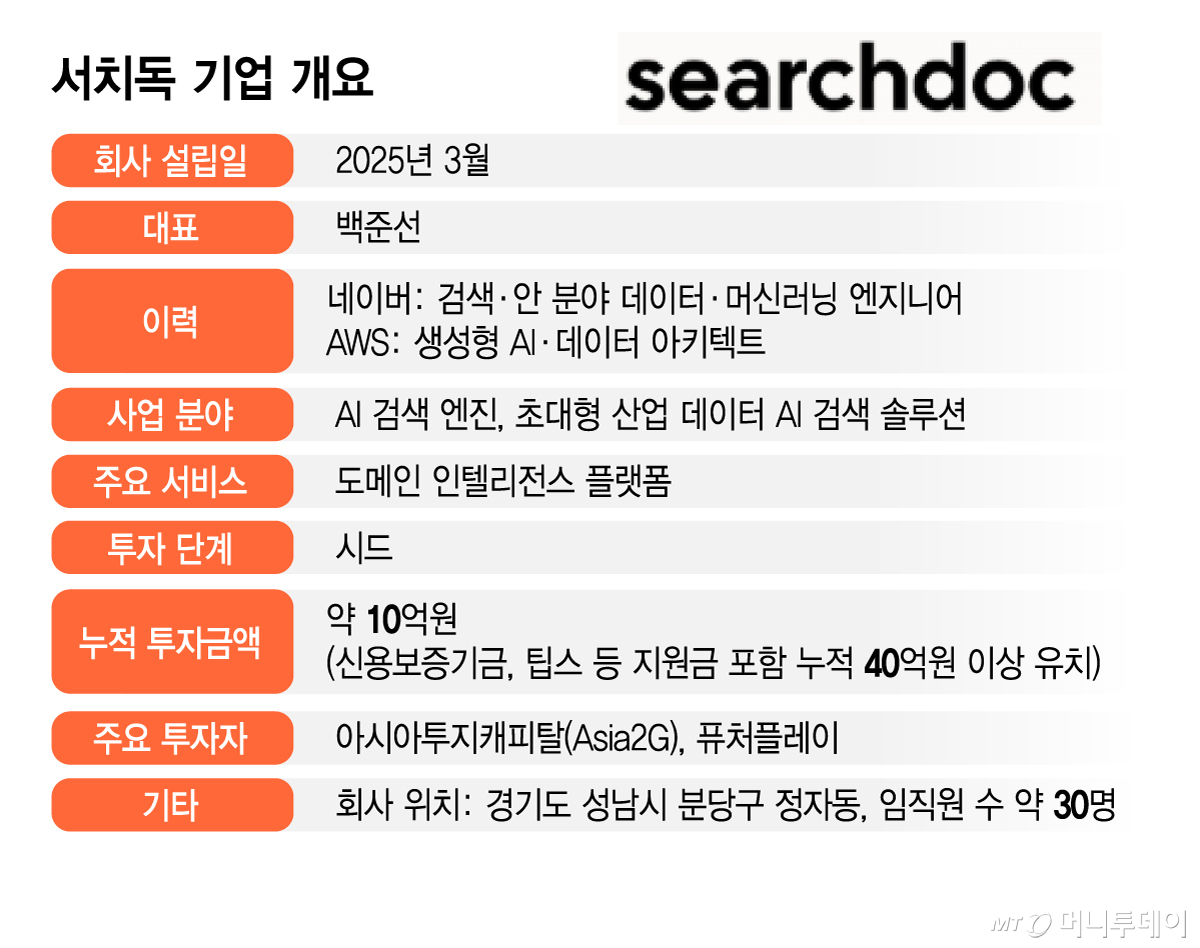
SearchDog has already moved beyond proof of concept (PoC) and is selling its solution centered on major construction companies. Currently, it is conducting a PoC with an institutional investor related to public infrastructure in Singapore and is also discussing business with U.S. construction firms. Starting from the first quarter next year, the company will fully launch its entry into the U.S. market. In the medium to long term, the company plans to expand the search technology validated in construction to industries that handle both documents and design drawings, such as semiconductors, shipbuilding, steel, and defense.
SearchDog's ultimate goal is 'design automation,' where AI understands conditions contained in documents and directly modifies or generates drawings and BIM. If the current stage is one where AI connects documents and designs to find errors and changes, the plan is to advance to a stage where it grasps order conditions, regulations, and product specifications and directly reflects them in the design. Baek (CEO) compared this to how generative AI has changed software development methods.
"In the future, whether it is a building, a ship, or equipment, designers will not draw everything one by one themselves," he said. "An era will come when AI understands client requirements, creates drawings, and even reflects changes."
[MoneyToday startup media platform Unicorn Factory]

 in FUTURE


