

[For more diverse corporate information on the startup featured in this article, please visit Data Lab on the Unicorn Factory big data platform.]
Enter just a few words into an artificial intelligence (AI) system, and designs for shoes or jewelry that have never existed before are generated in an instant. However, a design that looks impressive on the screen does not immediately become a product.
To actually produce it, components must be separated, and 3D models and CAD data must be created reflecting precise dimensions, materials, thickness, and structure. If errors are discovered during this process, the workflow returns to the design stage, where redesigning, 3D modeling, simulation, and testing are repeated.
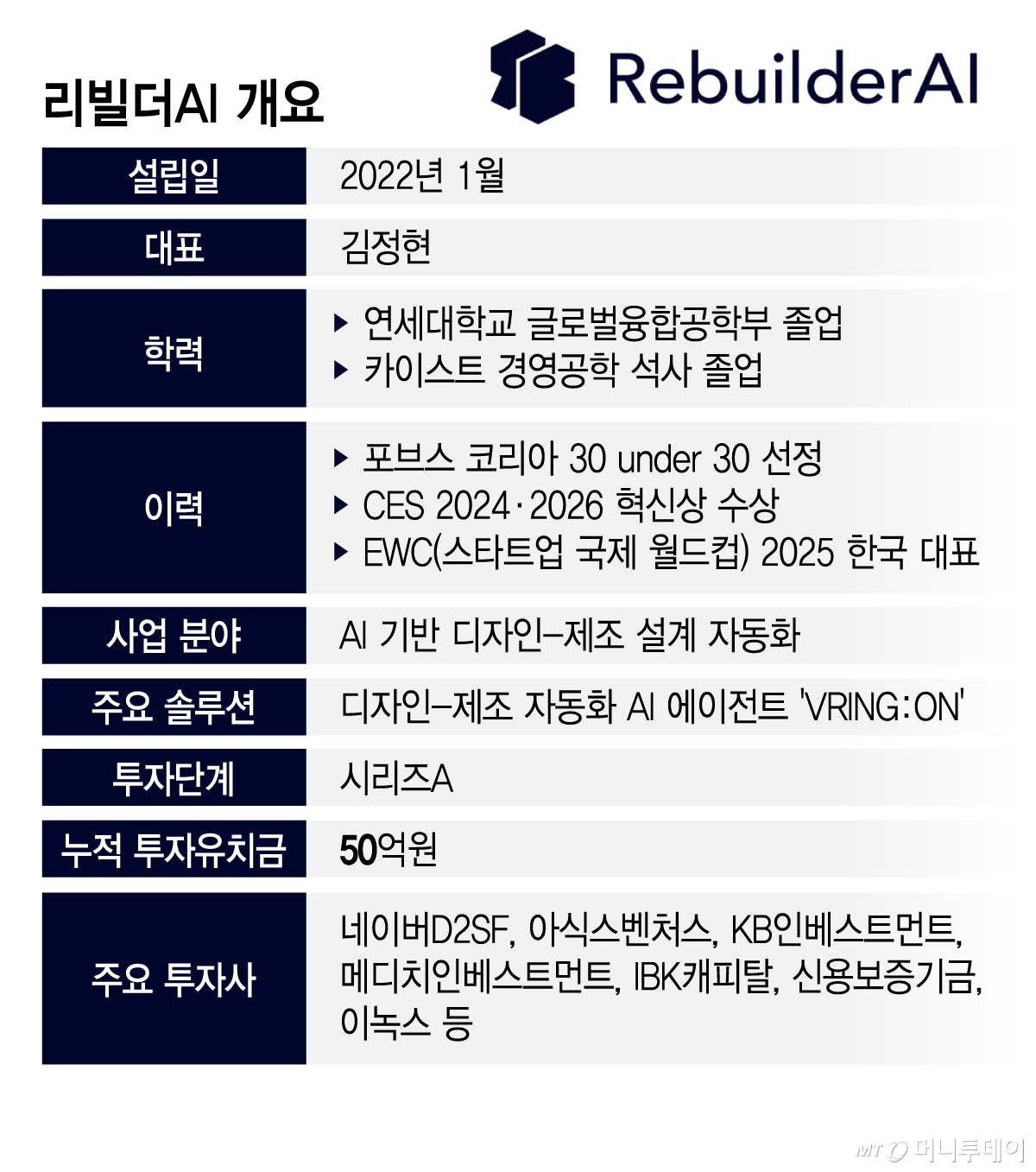
The time required to create design images has been shortened by AI, but the process of converting these into 'manufacturable data' still relies heavily on the hands and experience of skilled professionals. The AI-based design, manufacturing, and design automation startup Rebuilder AI saw this gap as a business opportunity.
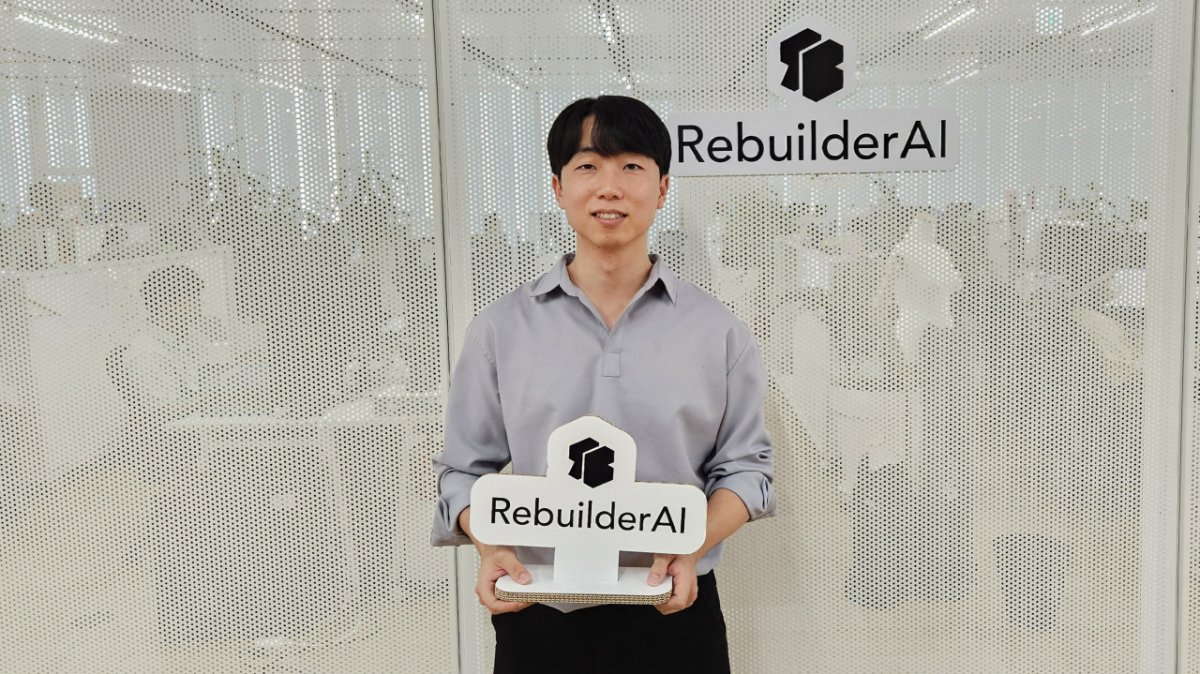
Kim Jung-hyun, CEO of Rebuilder AI, pointed out, "There are already many AI services that create beautiful design images," adding, "However, experts often judge that while something looks good, it cannot actually be made."
Evolution from 3D scanning for the metaverse to manufacturing AI
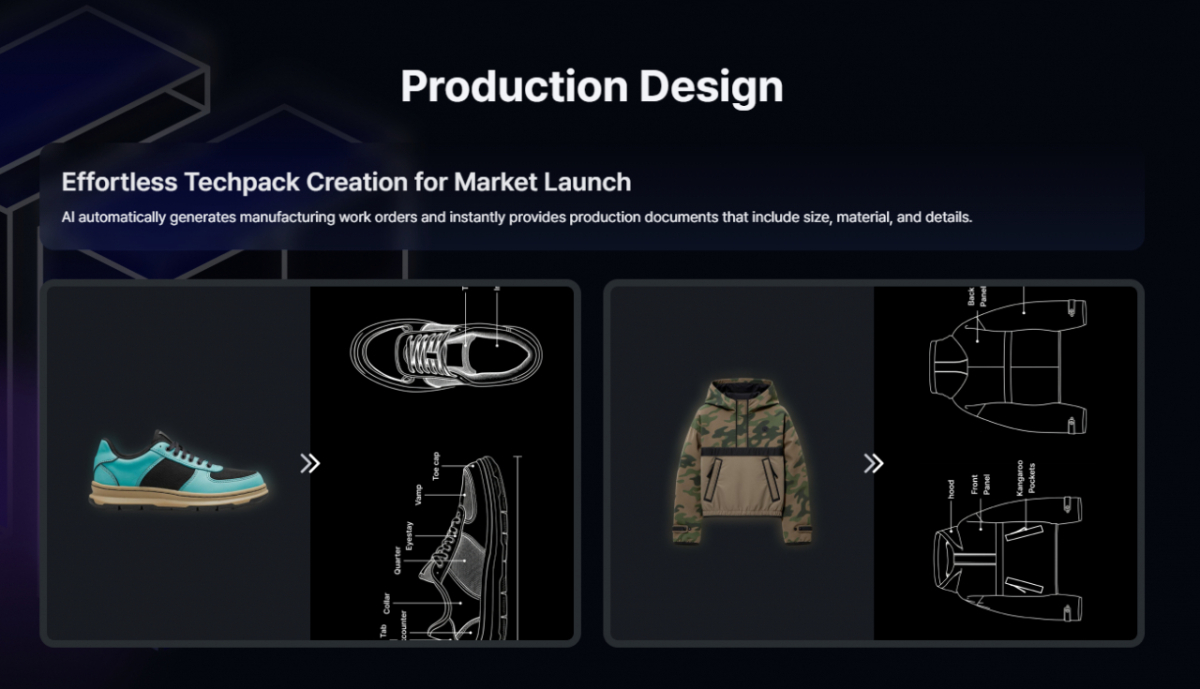
Rebuilder AI developed 'VRING:ON,' an integrated AI solution that converts design images into 3D models and manufacturing CAD data. Going beyond simple design generation AI, it connects product planning, design, 3D engineering, manufacturing data generation, simulation, and production in a single workflow.
The business started with smartphone-based 3D scanning; the initial product was a solution that converted objects or spaces captured by users into 3D content. Amid the Coronavirus disease (COVID-19) pandemic and the metaverse boom, it gained attention for its use in displaying brand products three-dimensionally on the online platform and allowing virtual experiences.
However, as the heat of the metaverse market quickly cooled, Rebuilder AI had to find a new business direction. Kim (CEO) explained this not as a break in the business, but as an expansion of technology. He stated, "What we have consistently focused on from the beginning is the technology that creates 3D data from images."
In the past, photos of finished products were converted into 3D, but now it starts from sketches or concept images drawn by designers. These are converted into real-size 3D models, components are separated, and manufacturing data for factory use is generated.
Kim (CEO) explained, "We have started using our accumulated 3D technology and data not just to 'show products well' online, but to help 'make products better,'" adding, "The root of the technology remains the same, but its application has shifted to the front end of product development."
From a single sketch to 3D, CAD, and simulation
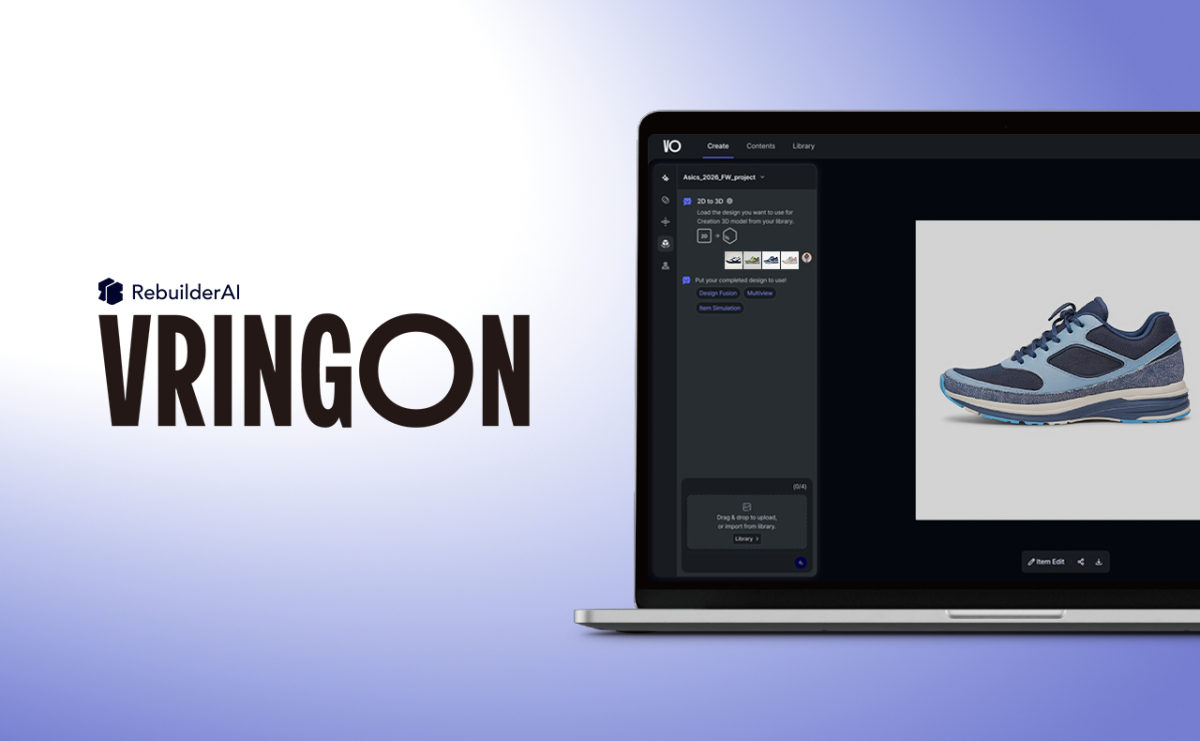
VRING:ON analyzes design intent expressed through sketches, images, or text to create multiple design proposals and separate and edit detailed elements. It then connects these to data required for actual production, such as 3D models, CAD, patterns, and BOM (Bill of Materials).
The difference from general image generation AI lies in 'manufacturability.' The focus is on creating data usable for manufacturing by considering whether a product can be made at real size and whether there are structural issues during mold injection or assembly processes.
The main target is 'hardline' (rigid material) products, which have relatively fixed production forms. Representative examples include shoes, jewelry, watches, eyewear, figures, and automotive parts. Products with flexible materials whose patterns and shapes vary significantly depending on physical properties, such as clothing, are called 'softline.'
Kim (CEO) stated, "VRING:ON's clients are companies that must create precise 3D blueprints based on set numerical values," adding, "Even for just a shoe sole, accurate 3D data is needed to simulate how weight is distributed and what kind of wearing feel it provides when a person walks or runs."
He continued, "The market we see is the area where product brands and OEM (Original Equipment Manufacturing) and ODM (Original Design Manufacturing) markets converge," adding, "We are building a structure that grows with customers' actual production, rather than just charging software usage fees."
Asics responds with investment… $1 million contract with Hong Kong ODM
Rebuilder AI's technology is being validated through actual customers and contracts. Notably, with global sports brand 'Asics,' it is conducting a Proof of Concept (PoC) and software license collaboration, developing an AI system that automatically generates precise parametric 3D data required for shoe design and sole structure engineering.
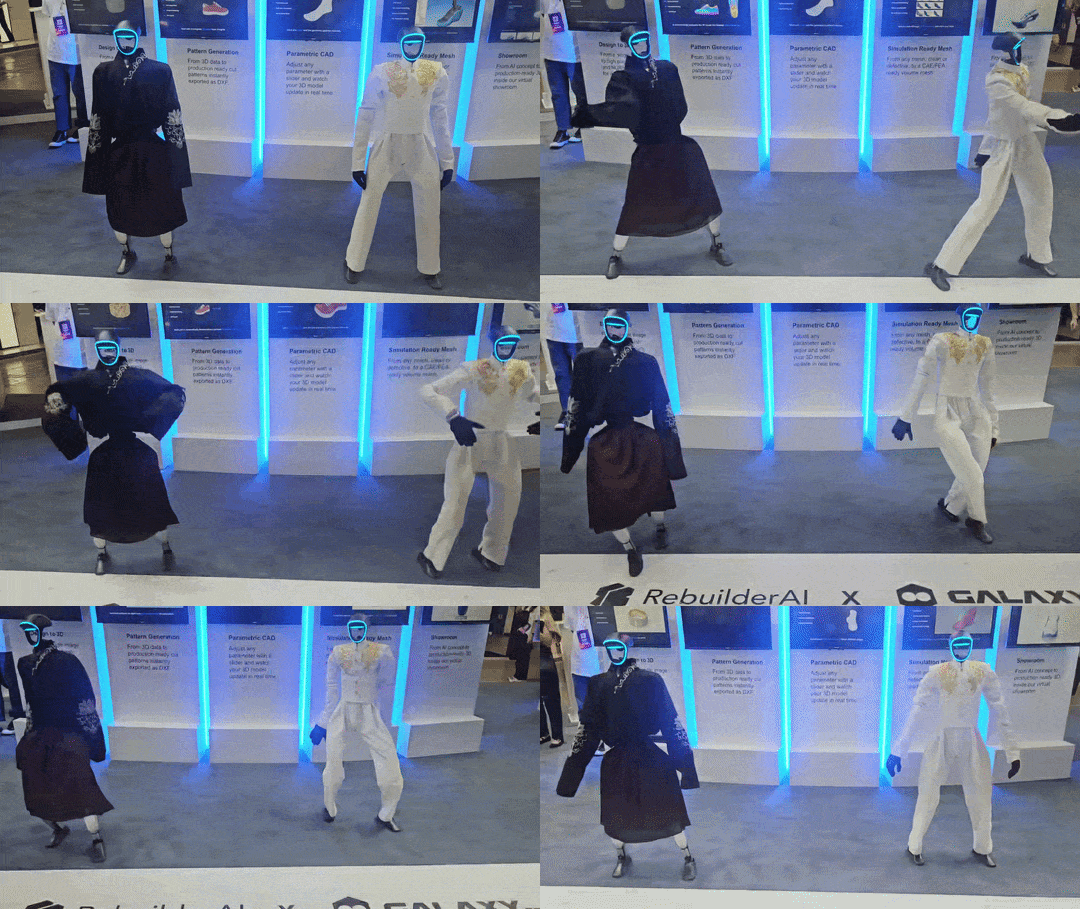
In particular, Asics Ventures, the Corporate Venture Capital (CVC) arm of Asics which validated the technology, joined Rebuilder AI as an investor. The two sides also unveiled a next-generation shoe development process at VivaTech held in Paris, France, last June, where design concepts lead to precise 3D data, manufacturing CAD, and simulation.
Additionally, at this event, Rebuilder AI captivated audiences worldwide by dressing humanoid robots in outfits that felt as if they were made by designer Andre Kim and having the robots dance to a song by Taemin of SHINee.
This demonstration was promoted to show on a global stage the possibility that AI can learn and newly reproduce even an individual designer's aesthetics and identity. Kim (CEO) stated, "AI design automation technology was applied to the entire process of making stage costumes, from design to manufacturing CAD files."
Rebuilder AI is aggressively securing overseas revenue. It signed a contract to introduce AI into furniture design and manufacturing processes in Saudi Arabia, and concluded a software customization and license contract worth approximately $1 million (approximately 14 billion won) with a Hong Kong ODM factory.
Manufacturing data becomes robot motion… Concept of 'AI Dark Factory'
Rebuilder AI's next goal is to connect manufacturing data created by software with actual production equipment. The aim is to extract the sequence and path required for product assembly and processing from 3D data and convert it into motion data for robotic arms or humanoids.
Kim (CEO) stated, "For equipment or humanoids to make a product, they must understand the product's exterior and component composition and know in what order to move," adding, "Product-specific data is needed, stating 'this design's product consists of these parts, so it should move this way,' rather than general robot motion."
In this regard, it is currently demonstrating related technology with manufacturing factories and robot/automation equipment companies in Busan. Kim (CEO) said, "Our role is to create data compatible with various automation equipment and convert it into the motion data for each piece of equipment."
Rebuilder AI plans to fully launch demonstrations connecting manufacturing data and automation equipment, and next year, at a hardline-specialized technology exhibition in Los Angeles, USA, it intends to showcase the process where manufacturing data generated by AI becomes an actual product through equipment and robots.
Kim (CEO) emphasized, "Becoming the 'brain of manufacturing' that connects design, manufacturing, and robotics is Rebuilder AI's ultimate goal," adding, "I want to leave behind permanent data so that the industry's tacit knowledge (knowledge latent in the mind) and manufacturing know-how can be utilized by future generations."
[MoneyToday startup media platform 'Unicorn Factory']

 in FUTURE


