

Spent batteries are called "urban mines" because they contain large amounts of valuable metals such as nickel and cobalt. However, extracting these requires powerful chemical substances. Since various metals are mixed together, a purification process is necessary to extract the desired substance. As a result, instead of simply obtaining the metal, a large amount of wastewater containing chemicals is generated.
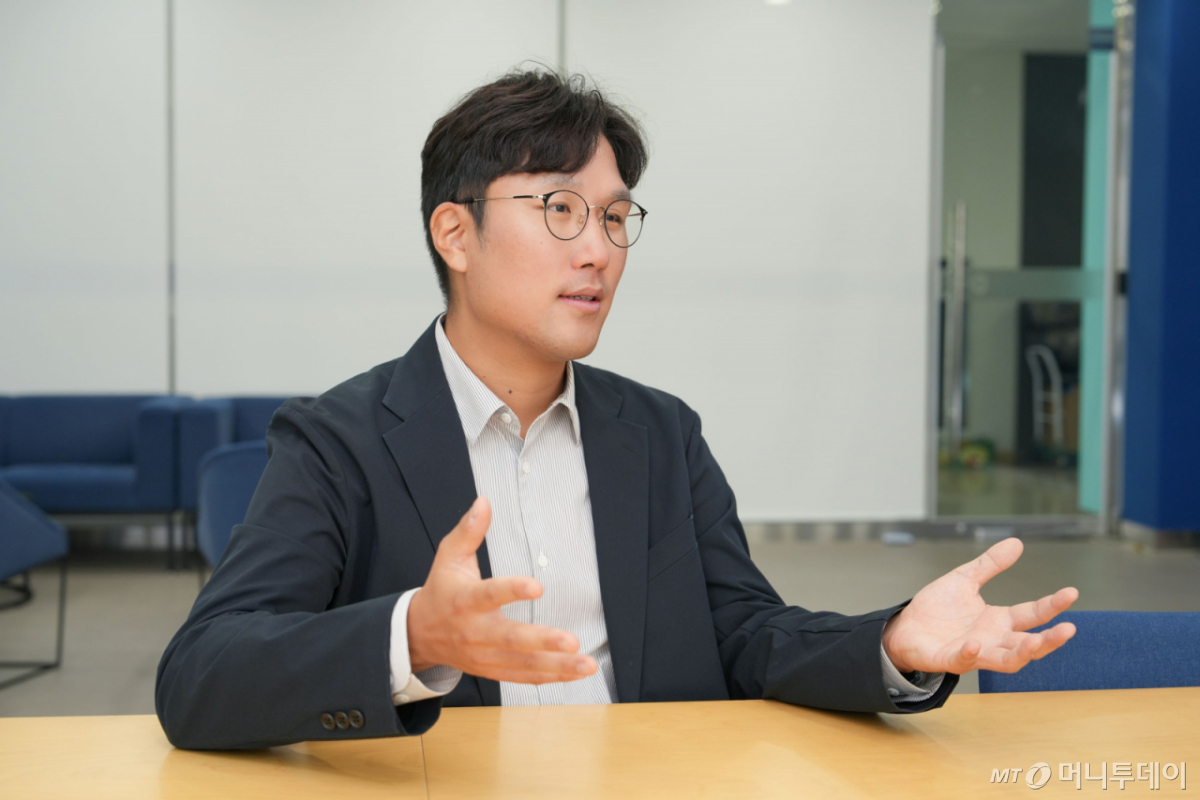
The team led by Kim Ki-yong at Ulsan National Institute of Science and Technology (UNIST) Department of Earth Environment, Urban and Construction Seol Gong-hak-gwa (Prof.) has developed an extraction technology that minimizes wastewater generation in this process. Instead of using large amounts of chemicals, it is an electrical recovery technology that passes electricity to sequentially select nickel and cobalt. The purity of the extract is over 99.9%, and the recovery rate reaches 95%.
At the '2026 K-Premier Deep Tech Festa' (Registration: https://url.kr/kpy365) to be held at COEX in Seoul on the 29th, Professor Kim’s research team will unveil this spent battery nickel and cobalt separation and recovery technology. They plan to introduce effects from the perspective of ESG (Environment, Social, and Governance) management and cost reduction when companies utilize it.
Picking out only desired metals via electrodeposition instead of chemical substances
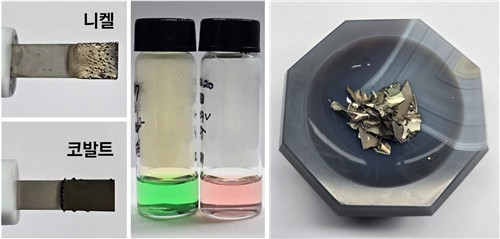
According to Professor Kim, typically, recycling spent batteries first involves disassembling and crushing the batteries into "black powder" and dissolving them in a strong acidic solution. Subsequently, "solvent extraction" is performed by adding chemicals (organic solvents) to the acidic solution containing the dissolved black powder to sequentially select the desired metals.
Professor Kim’s team’s technology skips this solvent extraction step. Professor Kim stated, "Instead of solvent extraction, we pass electricity through the solution where metals are mixed (electrodeposition) to extract the desired metal." This method utilizes the fact that each metal has a different voltage at which it turns into a solid, selecting specific metals by adjusting the voltage.
Professor Kim’s team was not the first to develop the electrodeposition method. However, extraction was not easy because the voltages at which nickel and cobalt react are similar. Professor Kim’s team solved this problem by using "Deep Eutectic Solvents (DES)" that alter the ionic properties of nickel and cobalt. Professor Kim explained, "Applying changes in metal ionic properties to metal recovery Navy Headquarters is the significance of this technology."
"Reducing wastewater treatment burden and ensuring economic viability"
Professor Kim emphasized, "By omitting solvent extraction, we can reduce not only the burden of wastewater treatment but also process costs." He explained that although the temperature of the liquefied black powder must be raised for electrodeposition and additional electricity is required, this is small compared to the cost savings. Deep eutectic solvents can also be recycled multiple times, so the amount of additional wastewater generated is minimal. Professor Kim plans to further improve this aspect by upgrading reactors and increasing the number of solvent reuse cycles.
The scale of the domestic spent battery recycling industry is a hurdle that must be overcome. This is because electric vehicles scrapped domestically are being exported to places like Southeast Asia, where process, labor, and wastewater treatment costs are low. However, if technologies that lower recovery costs spread, incentives to process spent batteries domestically rather than sending them overseas may also grow.
Professor Kim viewed spent battery recycling companies as the primary demand source for this technology. Theoretically, the scope of application is broader. Professor Kim said, "The same principle allows metal recovery for companies that discharge wastewater mixed with nickel and cobalt, or companies that refine nickel ore and concentrate," adding, "Fields such as metal refining and wastewater treatment can also become demand sources for the technology."
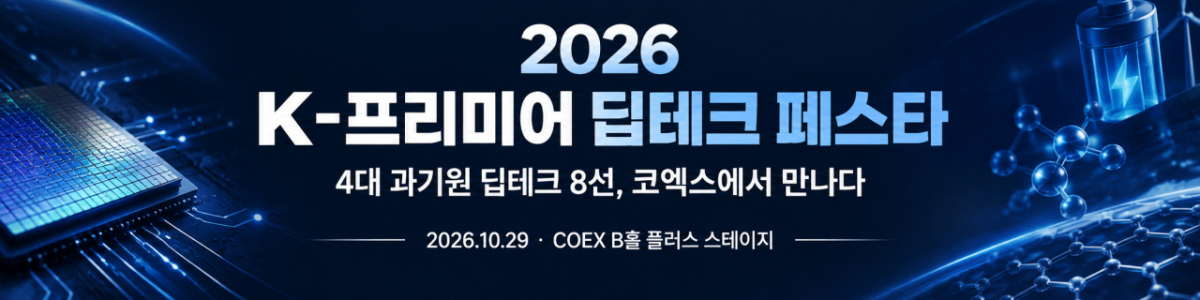
<Registration for 'K-Premier Deep Tech Festa (Technology Transfer and Commercialization)' >
- Date: October 29, 2026 (Thu) 1:00 PM
- Location: Hall B PLUS STAGE, COEX, Songpa-gu, Seoul
- Participants: Companies considering technology transfer, joint research, and new businesses; family companies of government-funded research institutes; investment firms
- Participation fee: Free (Advance registration required)
- Hosts: Ministry of Science and ICT, KAIST, GIST, DGIST, UNIST, MoneyToday Unicorn Factory
- Sponsors: Korea Institute of Science and Technology Information (KISTI), Commercialization Promotion Agency for Small and Medium Technology (COMPA)
- Application: https://url.kr/kpy365
[MoneyToday startup media platform Unicorn Factory]

 in FUTURE


