

Ultra-precise cancer diagnosis technology emerges... "Photoacoustic endoscope" that clearly visualizes blood vessels
Vidal Sonic, a faculty-founded startup from the Ulsan National Institute of Science and Technology (UNIST)
Development of an "optoacoustic endoscope" that clearly visualizes blood vessels deep within the body
Yang Jun-mo (CEO), “Developing into a Bioimaging Technology Company”
[For more diverse corporate information on the startups mentioned in this article, please refer to the Unicorn Factory big data platform “Data Lab.”]
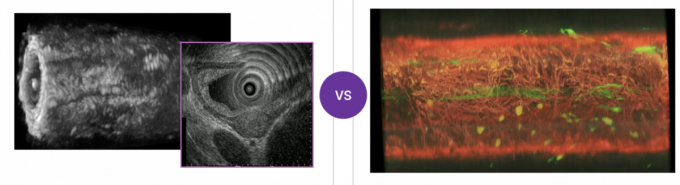
Current imaging technologies used for cancer diagnosis include CT, MRI, and ultrasound. CT is regarded as the first-line option for diagnosing various lesions through three-dimensional scanning. However, it has limitations in terms of radiation exposure, side effects from contrast agents, and the ability to deliver precise diagnoses. MRI is an examination that uses magnetic fields and high-frequency waves; while it does not involve radiation exposure, its drawback is high cost. Ultrasound utilizes sound waves, offering high safety and low cost, but precise diagnosis is difficult due to resolution issues.
Several problems can also arise in the process of confirming whether a tumor is actually cancerous. If a video suggests the possibility of cancer, the procedure involves inserting an endoscope into the relevant organ to examine its interior and collecting tissue samples for testing. However, because it is difficult to observe the entire organ and tissue samples are collected at 2 cm intervals, the rate of missed early diagnoses is known to reach 25%.
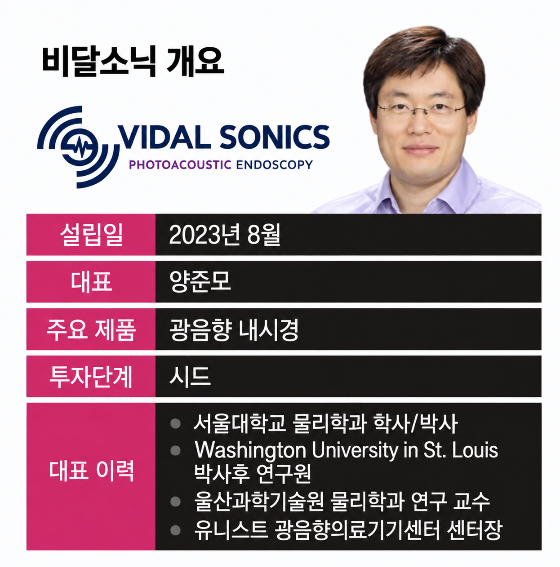
Vidal Sonic, a faculty-founded startup of Ulsan National Institute of Science and Technology (UNIST), established in August 2023, developed an "optoacoustic endoscope" to address this issue. The device integrates optoacoustics—the phenomenon in which light is absorbed when it encounters blood vessels—into conventional ultrasound endoscopy, enabling clear observation of the microvasculature of specific organs.
By adding an ultra-miniature rotational scanning method, the system observes the interior of organs in 360 degrees and visualizes this as three-dimensional images. This allows for precise assessment of vascular conditions, which is explained to significantly improve the accuracy of cancer diagnosis.
Yang Jun-mo, CEO of Vidasonic, stated, “By utilizing photoacoustic endoscopy, the early cancer detection rate will increase to 98–98%,” and explained, “After commercialization, as vascular data accumulates, even more precise diagnosis will be possible.”
Vidal Sonic has secured a 200 million won seed investment from Seonbo Angel Partners and is currently advancing its Pre-Series A round. The company plans to allocate the funds toward product regulatory approval and commercialization. Its current technology readiness level (TRL) stands at TRL5, having completed the demonstration of biological imaging using research prototypes. Centered on its core technologies, the company holds a total of 25 intellectual property rights, including nine registered patents and 16 patent applications.
The first target is the research equipment market. Through this, the company aims to build initial use cases and references, with plans to expand into preclinical and clinical applications at universities, hospitals, and research institutions in the future. Yang (CEO) stated, "We are confident that the photoacoustic endoscope is technically already complete," adding, "After undergoing Yangsan and obtaining regulatory approval, we will develop into a bioimaging technology company."
“Just insert DNA and it produces protein”... New technology that accelerates the discovery of new drug candidates
Acellon, a spin-off company founded by faculty members at Pohang University of Science and Technology (POSTECH).
Development of ‘POPFLEX,’ a cell-free protein synthesis platform with productivity and price competitiveness
Lee Jun-gu (CEO): “Also planning a CRO-style service for the outsourced production and screening of candidate compounds”
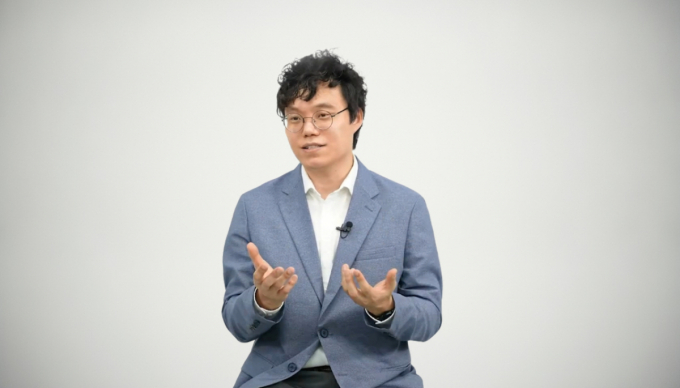
"We have developed an automation platform that makes cell-free protein synthesis technology much faster and cheaper, allowing components to be freely swapped as needed."
Lee Jun-gu (CEO), a faculty-founded startup from Pohang University of Science and Technology (POSTECH), explained it this way regarding the company’s in-house developed cell-free protein synthesis platform, “POPFLEX.”
Discovering new drug candidates requires a repetitive process of synthesizing numerous proteins and peptides—substances in which amino acids, the basic building blocks of proteins, are linked into short chains—and comparing their performance.
However, existing cell-based production methods require multiple steps from cell culture to protein expression and purification, making them time- and cost-intensive.
Acelleron solved this problem by using a cell-free protein synthesis technology that places the components necessary for protein production in a test tube to create desired proteins, rather than culturing cells themselves. By adding the gene (DNA) of the protein the user wants to synthesize, the method can produce proteins or peptides.
POPFLEX is a reconstituted cell-free system that combines purified ribosomes (cellular organelles responsible for protein synthesis within cells) with energy-related substances and translation factors required for protein synthesis. It can be utilized for the production and initial screening of various substances, including antibody fragments, peptide therapeutics, and enzymes.
Core competitiveness lies in productivity and price. Lee Jun-gu (CEO) stated, "POPFLEX demonstrates up to six times higher protein synthesis performance compared to competing commercial products, while reducing manufacturing costs by approximately 95% through in-house production."
Technical competitiveness was also confirmed in actual research. According to a study published in the international academic journal "Trends in Biotechnology," the automated reconstituted cell-free system demonstrated higher protein production than commercial kits while reducing preparation costs by up to 96%. The system's preparation time was also shortened from four days to two days.
Conventional reconstituted cell-free systems require the individual production and purification of each component necessary for protein synthesis, resulting in a complex manufacturing process. Acellon applied automated liquid dispensing equipment to reduce human intervention and process-related errors, standardizing the formulation and production processes of the components.
POPFLEX is also strong in its modular structure. Specific components can be added or removed depending on the intended use, allowing non-natural amino acids that do not exist in nature to be introduced at desired positions within a protein.
The explanation notes that this can be used to improve the stability, activity, and half-life of existing proteins, or to design peptides and proteins with new functions.
Acellon is pursuing a strategy to develop POPFLEX not merely as a research kit, but as a core consumable for the "biofoundry." A biofoundry refers to a facility that rapidly iterates the process of designing, fabricating, and testing biological materials by utilizing automated equipment.
POPFLEX can also be integrated into automation equipment based on 96-well and 384-well plates. By simultaneously introducing multiple types of DNA, it enables the parallel production of various protein candidates and the evaluation of their performance. This approach is said to accelerate the initial discovery of candidate compounds compared to methods that produce protein drug candidates one by one.
The business model will be expanded in stages. Initially, starter kits will be sold to universities, government-funded research institutions, and biotechnology companies. Subsequently, high-throughput reagents required for large-scale experiments and customer-tailored systems will be supplied.
Lee (CEO) stated, “The business model is characterized by the fact that these are consumables that must be purchased repeatedly,” adding, “In the long term, we plan to provide services in the form of a CRO (Contract Research Organization) that produces and screens protein and peptide candidate compounds.”
Welding inspection AI deployed in 24 lines across three countries... advanced through robotic autonomous welding
A faculty-founded startup, "AI Robotics," from the Daegu Gyeongbuk Institute of Science and Technology (DGIST).
Development and Deployment of AI Vision-Based Weld Bead Inspection Solution 'AIR Inspector'
Son Jong-uk (CEO): “Developing AI model using 4 million data points accumulated in the field”

"The reason why a significant number of manufacturing AI (artificial intelligence) projects stall at the PoC (proof of concept) stage and fail to be implemented at Yangsan LINE is not due to technology, but rather a lack of understanding of the field."
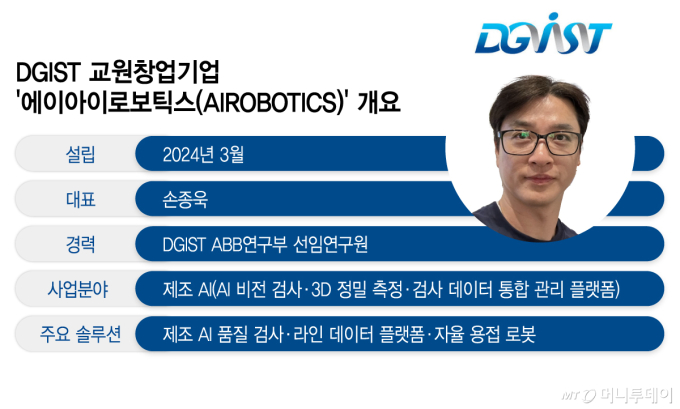
Son Jong-uk (CEO), a faculty-founded startup at DGIST (Daegu Gyeongbuk Institute of Science and Technology), said, "Even if a testing device has high accuracy in the laboratory, just one false detection on the Yangsan LINE causes the line to stop, ultimately forcing the operator to turn off the testing device." He added, "On-site factors such as soot, reflections, vehicle model changes, operator management practices, and the inability to modify the customer's PLC (Programmable Logic Controller) do not surface during the Proof of Concept (PoC) stage."
AI Robotics' flagship product is the AI vision-based welding bead inspection solution, "AIR Inspector." The AI vision system isolates the welding bead area at the pixel level even in the presence of soot and light reflections, measuring length, width, and centerline deviation in millimeters to determine whether a product passes or fails quality control. Multiple cameras simultaneously capture images at different bead locations, enabling 100% inspection of all products without slowing down production speed.
The problem the company aims to solve is false positives in vision inspection. A high rate of false positives makes it impossible to operate 100% inspection on the Yangsan LINE, while loosening the criteria risks missing defects. AI Robotics has reduced false positives and is currently operating 100% inspection on the Yangsan LINE. The company also cites as a differentiator that the basis for judgment is recorded in the database as measurement values rather than photographs. Defect alerts are delivered via a mobile app, while production volume, yield rate, and defect locations are provided through a web dashboard.
The most important aspect is on-site data. Son (CEO) explained, "AI Robotics operates every solution it installs with a structure that collects, stores, and analyzes data." He added, "On-site data is integrated into the cloud, and the accumulated welding bead inspection data to date exceeds 4 million records." The inspection PC simultaneously collects LINE PLC signals, recording operations between process stages, causes of stoppages and resolution processes, as well as points of variation. It can be installed without adding equipment or modifying PLC programs, and the same platform can be replicated to apply it to a new LINE in a short period.
The company is expanding its product lineup with 3D measurement technology. The method involves automatically determining errors by matching shape data obtained from a 3D camera against design drawings (CAD). Equipment for measuring all 120 holes in a battery pack case within the LINE has been deployed at Yangsan. It is described as replacing coordinate measuring machines (CMM) by performing non-contact measurements of part coordinates with a repeat precision of 0.06 to 0.15 mm. The company is also operating a detection solution that identifies cracks in press products within two seconds.
The scope of application has expanded in line with global automotive parts manufacturers. Starting with three lines at domestic facilities, the operation has been extended to 19 lines across two North American subsidiaries and two lines at a South American plant, currently running on 24 lines across three countries. Revenue increased by approximately 18 times last year compared to 2024, and as of September this year, it has already surpassed the full-year revenue of the previous year. The business is generating profits without external investment.
The next step is robotic autonomous welding. The company is developing a lightweight AI model that generates welding paths and conditions by learning from inspection and measurement data, as well as approximately 500 robot teaching data points from skilled workers. The company aims to list on the KOSDAQ market between 2029 and 2031.
Son Jong-uk (CEO) stated, "AI Robotics operates by simultaneously conducting development, verification, and deployment on the Yangsan LINE, while carrying out revenue generation and research in parallel." He or she added, "The company is operating 24 LINES across three countries, and the accumulated data of over 4 million welding beads and LINE PLC data will serve as a moat that latecomers cannot secure in the short term."
Six major science and technology universities' deep tech startups clash at COEX on the 30th
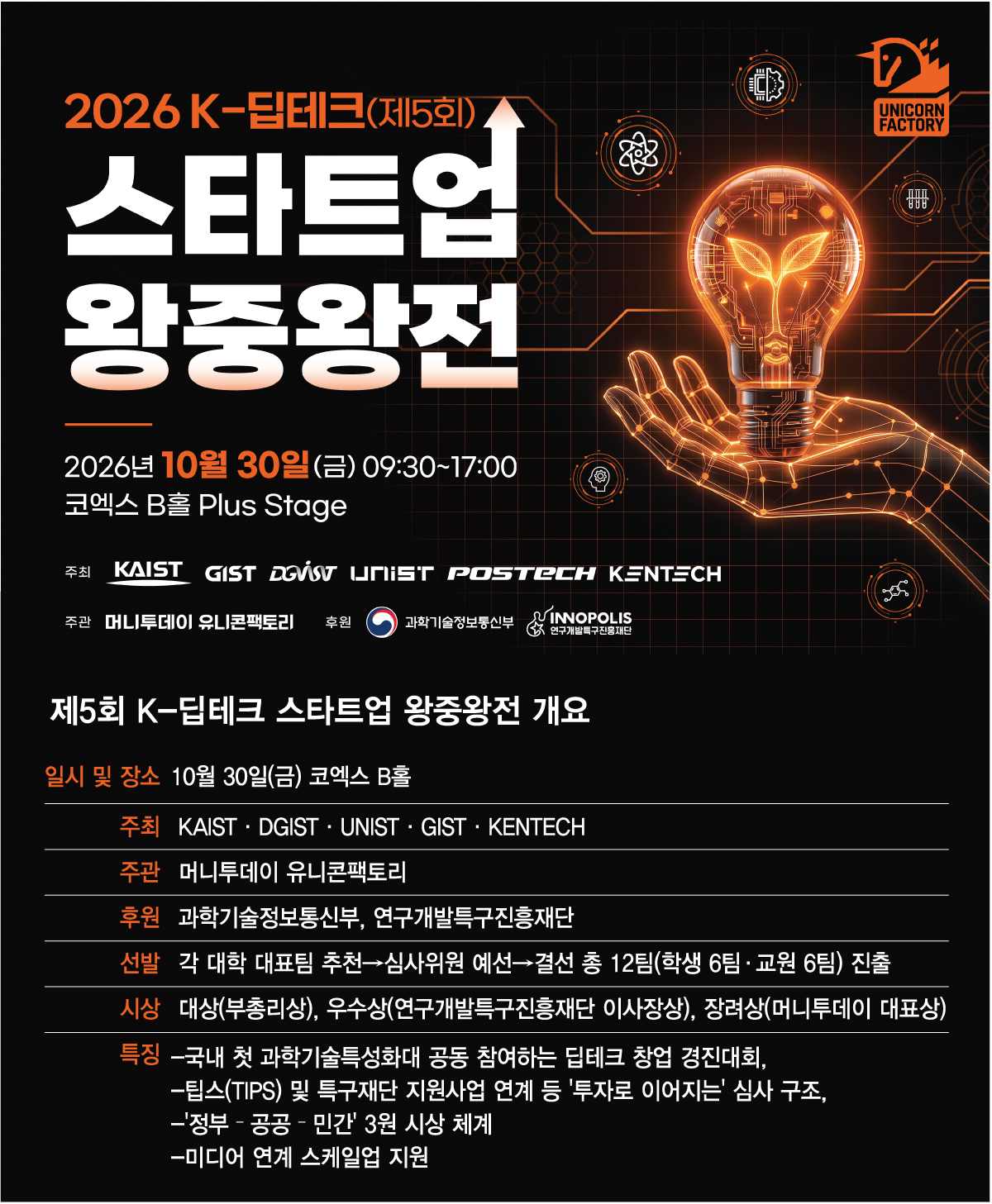
Meanwhile, Vidal Sonic, Acelon, and AI Robotics have advanced to the finals of the "5th K-Deep Tech Startup Championship" (Attendance Registration: https://forms.gle/McNBqdiBts8RJazVA) to be held on the 30th of this month at the Plus Stage in Hall B of COEX in Samseong-dong, Seoul.
This is the fifth edition of the King of Kings tournament. In addition to the existing participating universities—Korea Advanced Institute of Science and Technology (KAIST), Gwangju Institute of Science and Technology (GIST), Daegu Gyeongbuk Institute of Science and Technology (DGIST), Ulsan National Institute of Science and Technology (UNIST), and POSTECH (formerly Pohang University of Science and Technology)—the Korea Energy Technology University (KENTECH) has newly joined. The tournament is co-hosted by the six science and technology specialized universities and MoneyToday's startup media platform, Unicorn Factory, with support from the Ministry of Science and ICT and the Research and Development Special Zone Promotion Foundation.
This year's event will be held in conjunction with "SMART ENERGY PLUS (SEP) 2026." SEP is an energy-specialized event hosted by the National Assembly Hydrogen Economy Forum and co-organized by Money Today and COEX.
A total of 12 teams advanced to the finals, with six each in the faculty and student startup categories. One team from each category will receive the Grand Prize, awarded by the Deputy Prime Minister for Science and Technology, along with a startup support grant of 3 million won. This year, the Excellence Award was newly established as the Lee (President) Prize presented by the Research Development Special Zone Promotion Foundation. The four teams receiving the Excellence Award will each be granted a startup support fund of 1 million won, and their award history may be used as bonus points or preferential criteria when applying for future support programs from the Special Zone Foundation. The six teams receiving the Encouragement Award will be given the MoneyToday CEO Prize and a startup support grant of 500,000 won each.
<Application to Attend the 5th K-Deep Tech Startup King of Kings Tournament>
Date and time: October 30 (Fri), 9:30 a.m. to 5:00 p.m.
-Location: Hall B, COEX in Seoul, PLUS STAGE
Target: Deep tech startups and investment VC reviewers
-Hosted by: KAIST, DGIST, UNIST, GIST, POSTECH, KENTech, Money Today Unicorn Factory
-Application: https://forms.gle/McNBqdiBts8RJazVA
[Money Today Startup Media Platform Unicorn Factory]

 in FUTURE


