

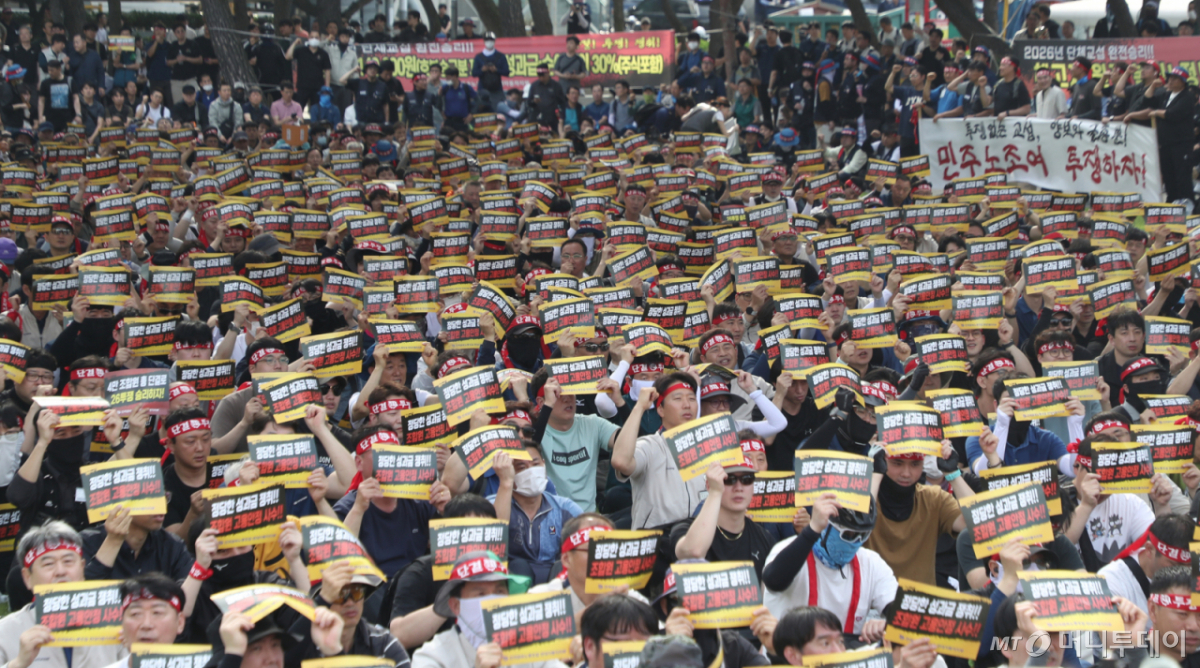
Labor-management conflicts between Hyundai Motor and Kia are expected to intensify again after the summer vacation. The Hyundai Motor Workers' Union is considering additional strikes, while the Kia union has left open the possibility of refusing overtime work, raising concerns that production disruptions at both companies will continue.
According to the union and relevant industry sources on the 9th, the Hyundai Motor union, which conducted partial strikes totaling nine days over three sessions last month, plans to convene the Central Dispute Countermeasures Committee (Dispute Committee) on the 11th to decide whether to proceed with additional strikes and their intensity. Previously, from the 13th to the 15th of last month, day shift and night shift workers each halted work for two hours, and from the 20th to the 22nd and from the 29th to the 31st, production lines were stopped for four hours each time. The cumulative strike time per shift reached 60 hours.
Labor and management have held 15 rounds of formal negotiations since a preliminary meeting in May but failed to narrow their differences over wages, performance bonuses, and retirement age extensions. The union is demanding a base wage increase of 149,600 won, a performance bonus equivalent to 30% of the previous year's net profit, an 800% increase in year-end bonuses, and an extension of the retirement age linked to the timing of National Pension eligibility.
The company proposed a third offer package including a base wage increase of 89,000 won, a performance bonus of 350% plus 10 million won, and the issuance of 15 shares. It also stated that if three separate demands, such as reinstating dismissed workers, are discussed separately from wage negotiations, it would present an additional offer on wages and performance bonuses.
However, since the union has not accepted the separation of discussions on the additional demands, no progress has been made in negotiations. If the gap between both sides persists after the vacation and the union decides to launch additional strikes, the scale of production disruptions could worsen.
In particular, the impact of the strike was already reflected in last month's sales performance. Hyundai Motor sold a total of 318,454 vehicles globally, including 48,113 units domestically and 270,341 units overseas. This represents a 5.1% decline compared to the same period last year, with domestic sales down 14.4% and overseas sales down 3.2%.
Hyundai Motor explained that the decline in sales was influenced by shrinking industrial demand, production disruptions due to strikes, and pent-up demand for new models. While the company plans to restore sales momentum through the launch of new models in the second half of the year and stabilization of production operations, further strikes could again disrupt domestic shipments and export volumes produced at domestic factories.
Kia sold 298,037 units last month, achieving a 13.4% growth compared to the same period last year. Although it maintained growth for five consecutive months driven by strong sales of electric vehicles and HYBE-led models, labor-management conflicts could derail this growth trend if they escalate into production disruptions such as overtime refusals or strikes.
Kia has concluded wage negotiations without any strikes in the past five years. This year, disagreements over wage increases, performance bonuses, and retirement age extensions remain unresolved, and since the union has been granted authority to refuse overtime work in the production sector, tensions at the production site are expected to rise depending on the outcome of negotiations after the vacation.
An industry official warned, "Production disruptions in finished vehicles can affect not only domestic shipments and exports but also the production and delivery schedules of parts suppliers. With Hyundai Motor's strike already resulting in reduced sales, if Kia also faces production disruptions, it will place a significant burden on Hyundai Motor Group's plan to expand sales in the second half of the year."

 in INDUSTRY
