

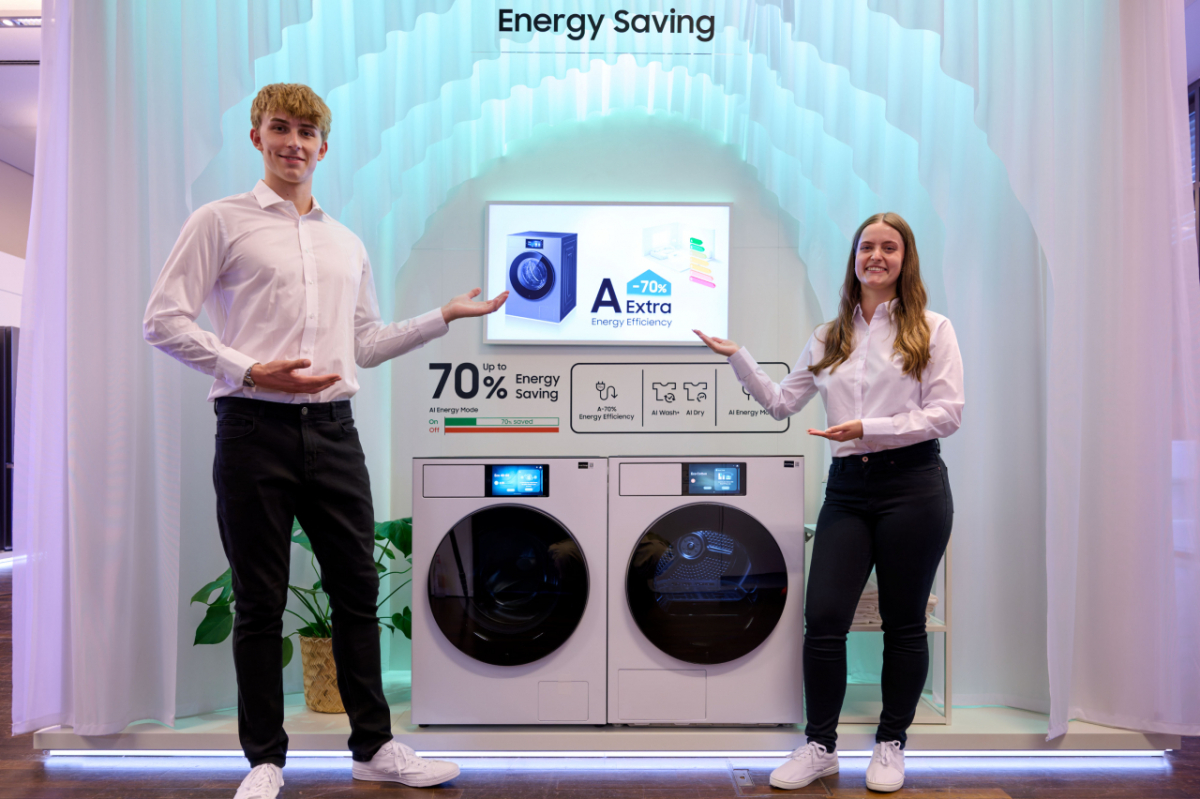
The scene at home appliance exhibitions, once focused on boasting about TV and refrigerator performance, is changing. Indeed, both Samsung Electronics and LG Electronics are placing 'AI (Artificial Intelligence) Ecosystems' at the forefront at IFA 2026, Europe's largest home appliance trade show held in Berlin, Germany. They have officially launched a competition to connect appliances, smartphones, wearables, and energy management through AI, drawing consumers' entire daily lives into their respective ecosystems.
Samsung Electronics announced on the 2nd that it will operate an 'IFA 2026' exhibition hall at 'Humboldt Carré,' a convention center in the city center, until the 6th. This marks the first time Samsung has established a standalone exhibition hall separate from the main IFA venue.
Samsung Electronics is operating its exhibition hall under the theme 'Your AI Daily Companion.' Building on last year's IFA slogan 'AI Home, Making Future Daily Life a Reality,' it expands the scope of AI activities beyond the home to include leisure and health management across all aspects of daily life.
Rather than merely showcasing individual appliance functions, Samsung presents 'AI Living,' where AI understands personal lifestyles and needs to support daily routines. This strategy aims to demonstrate human-centric AI experiences that understand and respond to users. Additionally, at 'Messe Berlin,' where 'IFA 2026' is held, Samsung will showcase the 'Samsung Creator Hub' and conduct events for experiencing the Samsung AI ecosystem.
Samsung's weapon lies in its broad AI ecosystem spanning from mobile devices to home appliances. It connects various products including smartphones, wearables, TVs, refrigerators, and washing machines through the smart home platform 'SmartThings.' At this exhibition, it will demonstrate experiences where AI understands user situations and connects multiple devices and services.
The 'Vision AI Companion' applied to 2026 model TVs provides answers to users' questions and delivers personalized content and context-specific information based on conversational AI. This effectively expands the TV from a simple display into an AI interface within the home.
The 'Bespoke AI Family Hub' refrigerator recognizes ingredients using camera-based 'AI Vision' and suggests recipes. Through its touchscreen, users can check and control real-time power consumption of appliances connected within the home. Dishwashers and washing machines detect dish soiling levels and laundry conditions to optimize energy usage.
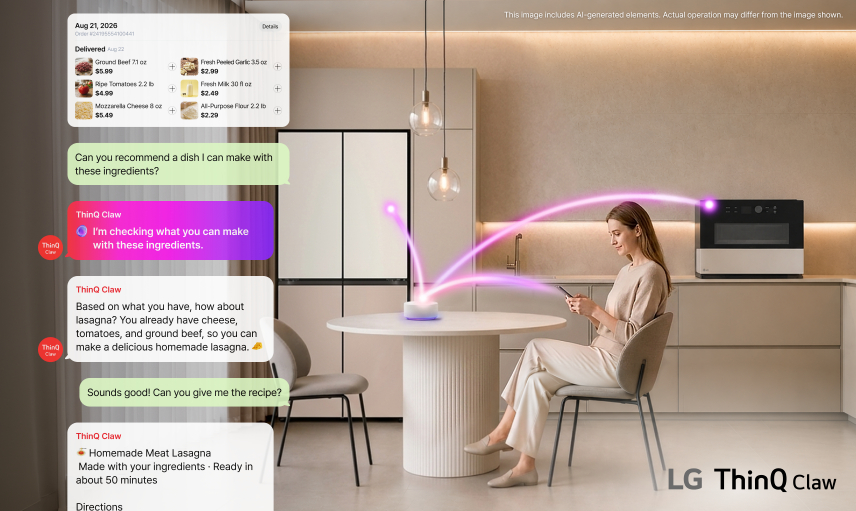
LG Electronics also places 'AI Connectivity' at the forefront, prioritizing it over individual appliance functions. It presents a next-generation 'AI Home' that combines AI appliances, connected services, and situational awareness to understand users' lives and coordinate multiple devices and services.
LG AI Home analyzes personal schedules, lifestyle patterns, home environments, and appliance usage information to recommend necessary actions and optimize interconnections between devices and services. The goal is to reduce the time customers spend managing appliances and enhance daily convenience through customized recommendations based on actual usage environments.
The newly unveiled 'ThinQ Claw' is an AI agent that exemplifies this strategy. It identifies user intentions and situations through text chat, then connects necessary devices and services. This represents an evolution from simply executing user commands to becoming an AI Home that understands contexts and determines necessary actions.
LG Electronics is also expanding its AI home ecosystem beyond its own products. By utilizing 'Homey,' the smart home platform of Dutch company Athom acquired in 2024, it connects products from various manufacturers and service providers into a single system. Based on Homey, it will also unveil a residential energy management system that connects smart meters, solar panels, home batteries, and electric vehicle chargers.
Benjamin Brown, Samsung Electronics' Europe-wide Chief Marketing Officer (CMO), stated, "AI must provide meaningful benefits that people can directly see and feel in their daily lives," adding, "We will showcase examples of applying AI in practical and accessible ways across the entire home ecosystem."

 in INDUSTRY

