

Hyundai Motor is devoting all its efforts to bolstering its battery business capabilities in response to the onslaught of Chinese electric vehicles. The strategy is to compensate for the relatively weak 'price competitiveness' compared to Chinese EVs while further strengthening the superior 'safety' to increase market share both domestically and abroad.
According to the automotive industry on the 8th, Hyundai Motor plans to accelerate the mass adoption of electric vehicles by introducing next-generation batteries that ensure cost reduction, improved energy density, and stability starting next year. The company believes that EV competitiveness ultimately hinges on the battery, which plays the role of the 'heart,' and is thus speeding up related research and development (R&D).
In this process, Hyundai Motor has focused on 'price.' Electric vehicles use expensive batteries, making them pricier than internal combustion engine vehicles, which acts as a barrier to entry for buyers. The reason Chinese electric vehicles sell particularly well in major countries worldwide is attributed to domestic oversupply and price competitiveness driven by government support.
Hyundai Motor first plans to develop Mid-Ni NCM (Nickel-Cobalt-Manganese) batteries that are relatively inexpensive yet have high energy density, intending to equip them in Yangsan vehicles in the first half of next year. This battery is a product with reduced nickel content, an expensive material, making it cheaper than Hi-Ni NCM and approaching the level of LFP (Lithium-Iron-Phosphate), according to Hyundai Motor. Another feature is that it can carry 30% more capacity in a battery pack of the same volume compared to LFP. Hyundai Motor plans to apply Hi-Ni NCM to EVs requiring fast charging, Mid-Ni NCM to reasonably priced EVs, and LFP to ultra-low-cost models.
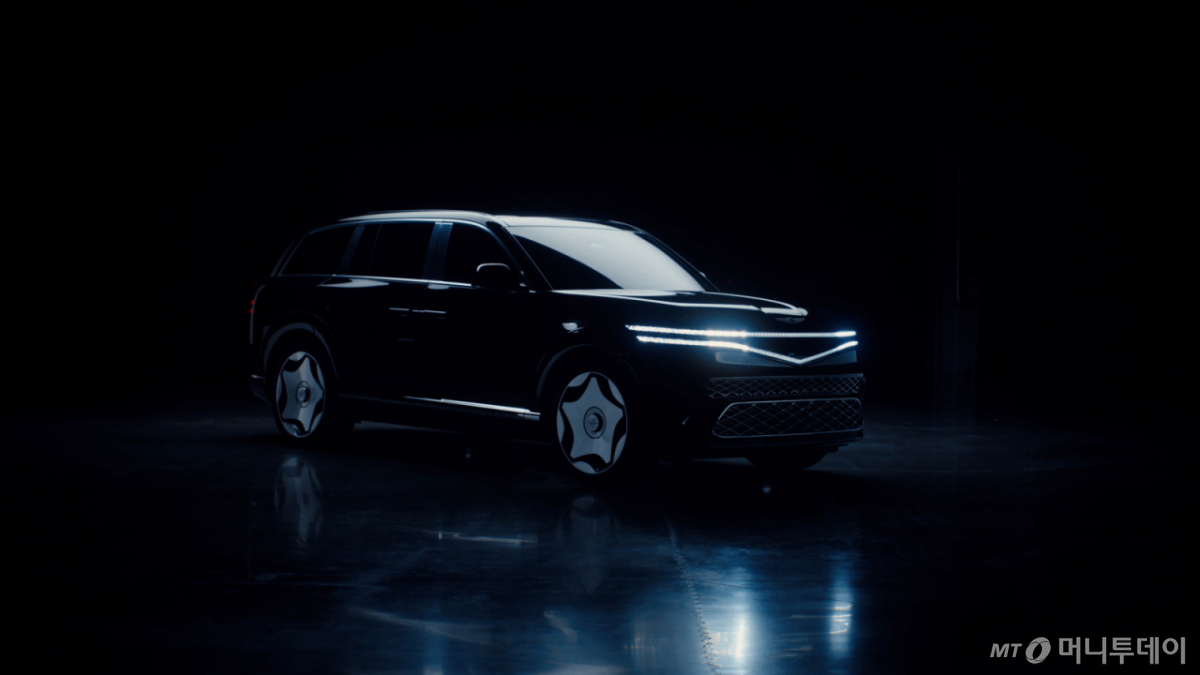
Hyundai Motor has also developed next-generation battery technology that enhances 'safety.' Considering that concerns over fires in some Chinese-made batteries have not been fully resolved, the company judged it could gain a relative advantage in this area. The Thermal Runaway Protection (TRP) technology developed by Hyundai Motor is strong in its ability to fundamentally block thermal transfer to other cells even if an anomaly occurs in one cell. Hyundai Motor stated that it verified the safety of the technology through more than 200 repeated tests using all NCM prismatic and pouch batteries applied inside vehicles. The company aims to first apply TRP technology to the Genesis 'GV90' launching in the fourth quarter of this year and then expand its application to all vehicle models and classes in the future.
The reason Hyundai Motor is also turning its attention to battery competitiveness as it expands its business scope beyond electric vehicles into robots and UAM (Urban Air Mobility) is that these products require optimal batteries reflecting their respective characteristics, and there are limitations if battery procurement relies on external sources. In fact, at a recent 'Investor Day' held for investors, Hyundai Motor presented areas where the company's battery technology would be applied, including humanoid robots 'Atlas,' PAVs (Personal Air Vehicles) being developed with Uber, and unmanned fire-fighting robots developed in collaboration with the National Fire Agency, alongside electric vehicles.

 in INDUSTRY
