

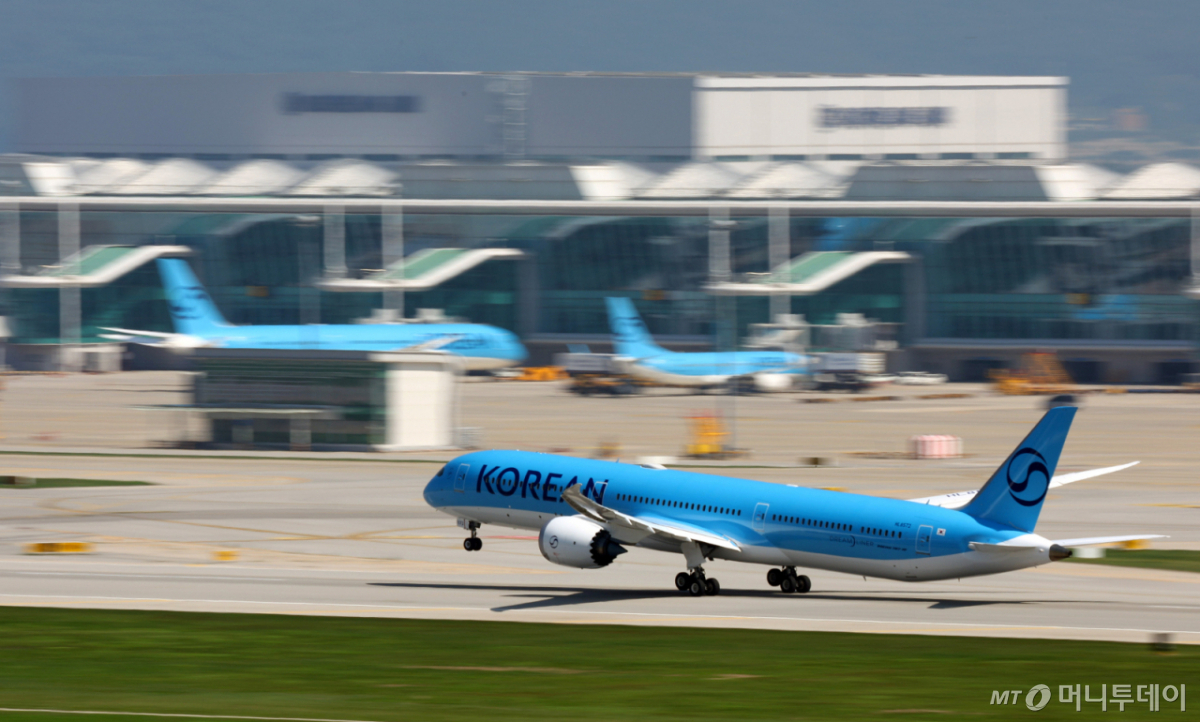
International oil prices have surpassed $100 per barrel for the first time in about four months, raising concerns that domestic airlines will face increased fuel cost burdens. With tensions in the Middle East escalating again, international oil prices have resumed an upward trend. If high oil prices persist, it could not only worsen airline profitability but also lead to continued consumer burden due to rising fuel surcharges.
According to industry sources on the 10th, Brent crude, the benchmark for international oil prices, closed at $101.21 per barrel the previous day, marking its highest level since May 22. This is the first time Brent crude has exceeded $100 per barrel on a closing basis since recording $100.69 on July 23, approximately seven weeks ago.
International oil prices are surging amid renewed attacks by tankers from the United States and Iran. The Strait of Hormuz is a critical shipping route through which about 20% of global crude oil and gas trade normally passes. As the U.S. and Iran have exchanged attacks at a level approaching full-scale war once again, concerns over vessel safety have resurfaced.
The aviation industry, one of the sectors most sensitive to oil price fluctuations, is taking a direct hit. Fuel costs account for an average of about 30% of total operating expenses for airlines.
Korean Air was already significantly affected by high oil prices in the second quarter of this year. On a separate basis, its second-quarter revenue reached 5 trillion 199 billion won, setting a record high for any second quarter; however, its operating profit fell to 261.8 billion won, down 34.4% from the same period last year. Notably, fuel costs surged by 110.9% to 1.9991 trillion won, compared to 947.8 billion won during the same period last year. This was influenced by both rising oil prices and an increase in the won-dollar exchange rate.
With international oil prices once again exceeding $100 per barrel, if high oil price trends continue, pressure on airline profitability is expected to persist beyond the third quarter. While airlines are responding to price fluctuations through fuel hedging and fuel surcharges, given that fuel costs represent a large portion of total expenses, it will be difficult to fully offset sharp price increases.
Consumers will also face increased burdens from airfare prices. As jet fuel prices rise due to higher international oil prices, the September international flight fuel surcharge jumped seven levels from 14 to 21 compared to the previous month. For Korean Air's long-haul routes such as Incheon-New York, one-way fuel surcharges rose by 36.6% from 259,200 won in August to 354,000 won this month. Asiana Airlines also imposes one-way fuel surcharges of up to 291,000 won depending on the route.
October international flight fuel surcharges are determined based on the average jet fuel price from the 16th of last month through the 15th of this month. Given that the recent upward trend in international oil prices has continued until the final days of the calculation period, next month's fuel surcharges are also expected to rise.
An aviation industry official stated, "Oil prices, which had shown signs of stabilization, have surged recently as the Middle East war crisis has once again intensified." The official added, "For airlines where fuel costs account for 30% of total expenses, profitability is bound to deteriorate, and this increased burden on airfares is expected to lead to a contraction in demand for air travel."

 in INDUSTRY
