

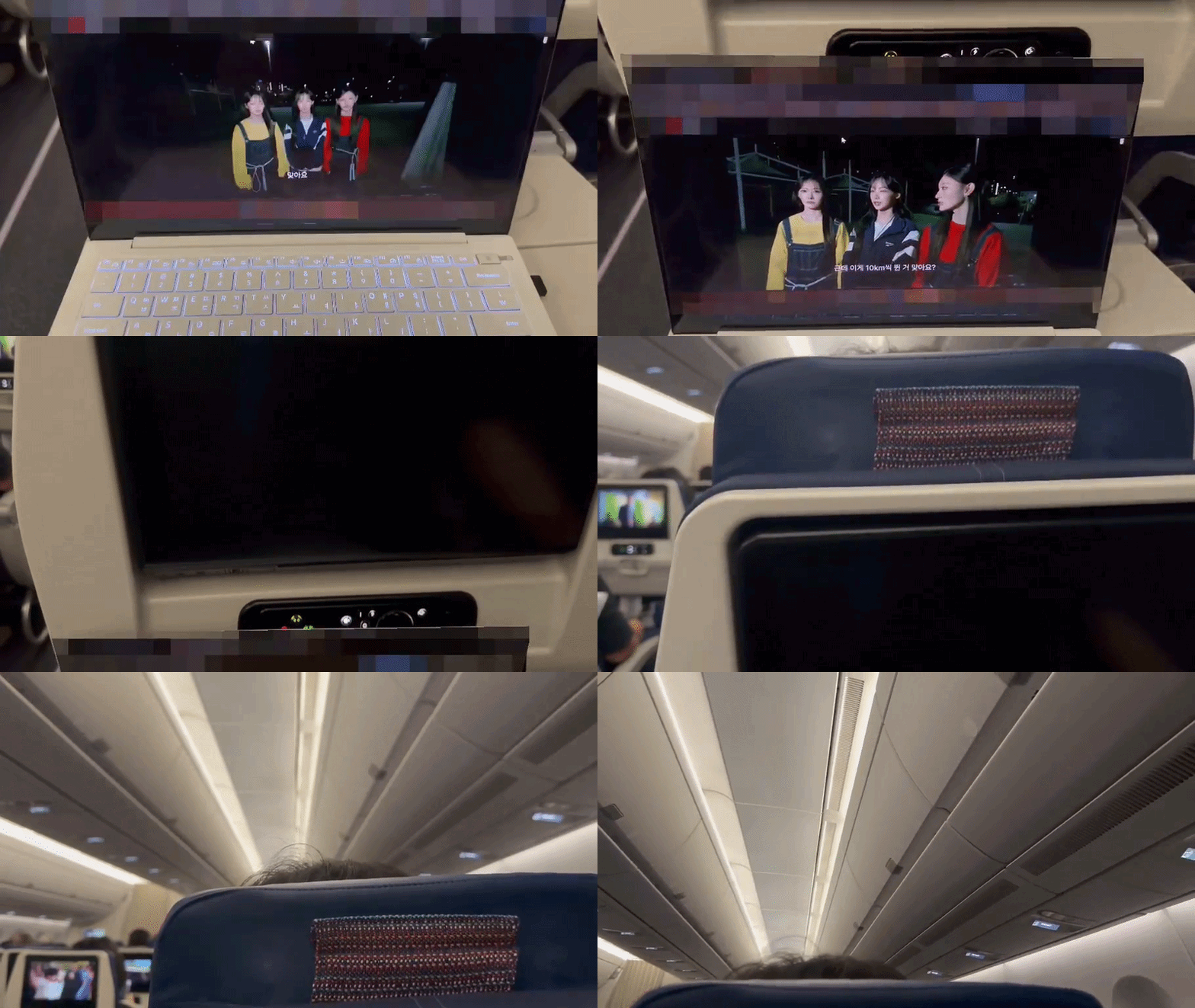
"'It's faster than my home Wi-Fi,'"
At 7:40 p.m. on the 15th (local time), a new announcement was added to an Asiana Airlines passenger flight departing from Frankfurt Airport in Germany. The notice informed passengers that Starlink Wi-Fi would be available free of charge starting that day.
Previously, Korean Air and Asiana Airlines became the first national carriers to begin offering free Starlink-based in-flight Wi-Fi as of the 15th (Korean time). Fortunately, the aircraft I boarded was an A350-900, which Asiana Airlines had proactively chosen to equip with Starlink Wi-Fi. Asiana Airlines plans to install Starlink on 10 aircraft, including nine A350-900s and one A330-300, and began operations on the 15th. Korean Air launched the service on four aircraft, including three A350-900s and a Boeing 777-300ER.
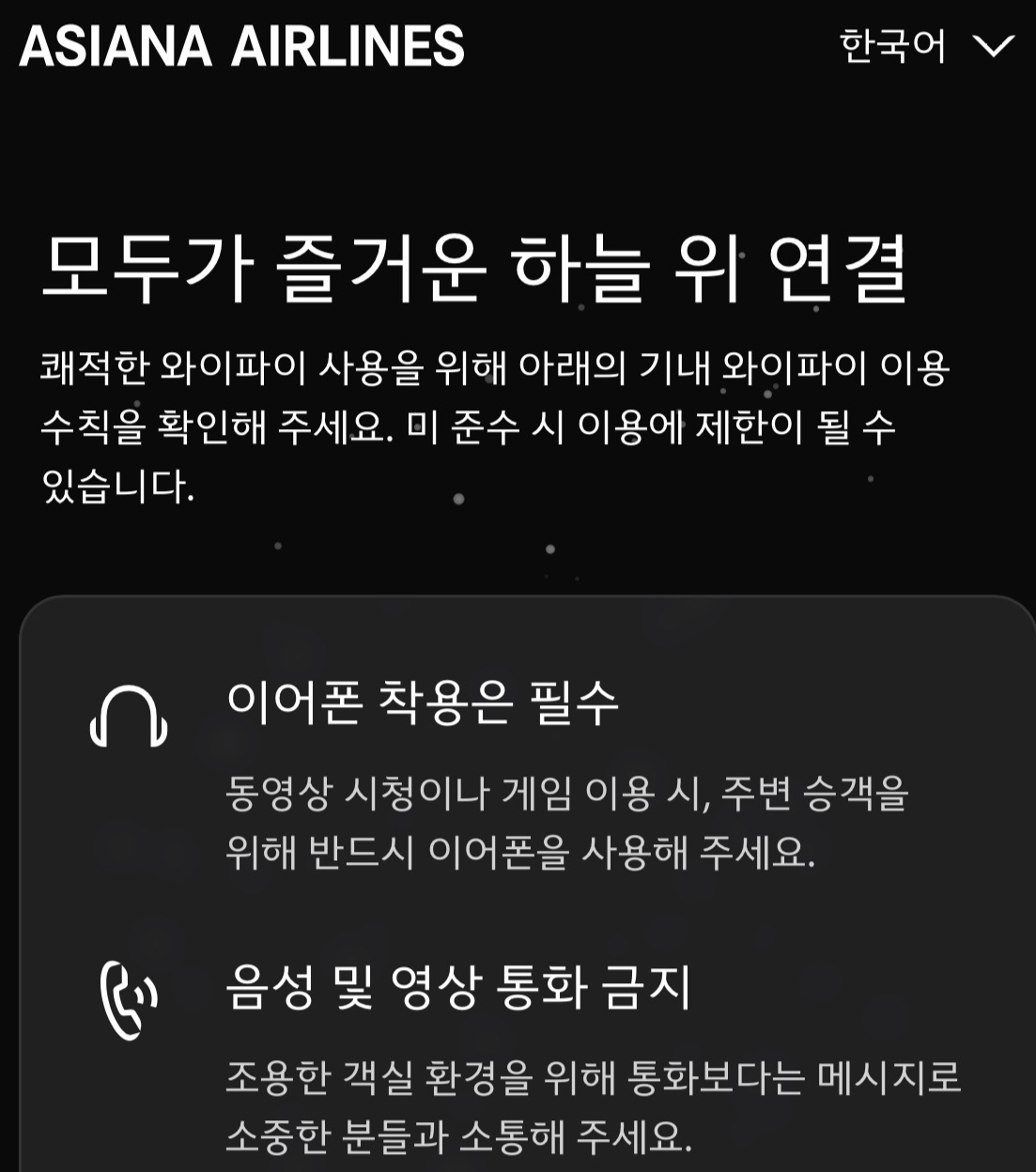
Starlink Wi-Fi provided by Korean Air and Asiana Airlines is available free of charge regardless of seat class. To use Starlink Wi-Fi, simply connect to the in-flight Wi-Fi network. Once connected, a Starlink login screen appears, followed by an agreement process for safety guidelines including: wearing headphones, prohibiting voice and video calls, and banning unauthorized photography or streaming.
After agreeing, advertisements totaling 60 seconds begin playing, starting with Hyundai Card promotions and including tourism videos for Guam. Once the message "Connected to Starlink Wi-Fi" appears, passengers are free to browse the internet.
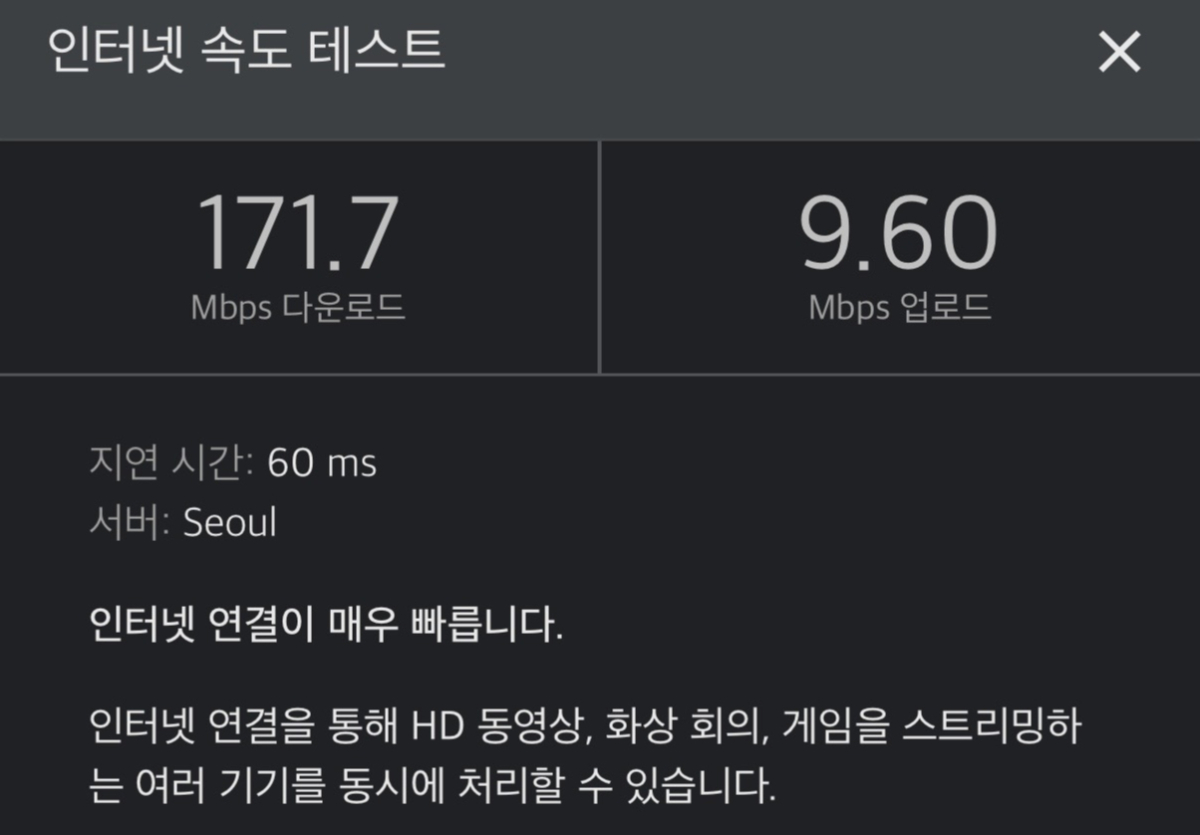
Most notably, the speed of Starlink Wi-Fi was impressive. Download speeds measured twice at different intervals were 55 Mbps (megabits per second) and 171.7 Mbps respectively, both exceeding Netflix's recommended 15 Mbps for streaming 4K ultra-high-definition video. In practice, users could smoothly exchange KakaoTalk messages as well as watch videos on YouTube and other online video-on-demand (OTT) services without issues.
Especially in mobile games where internet speed is critical, content could be enjoyed without interruptions. Furthermore, connecting a laptop for work did not feel cumbersome either. As long as the internet connection was active, passengers could continue their usual ground-based activities seamlessly.
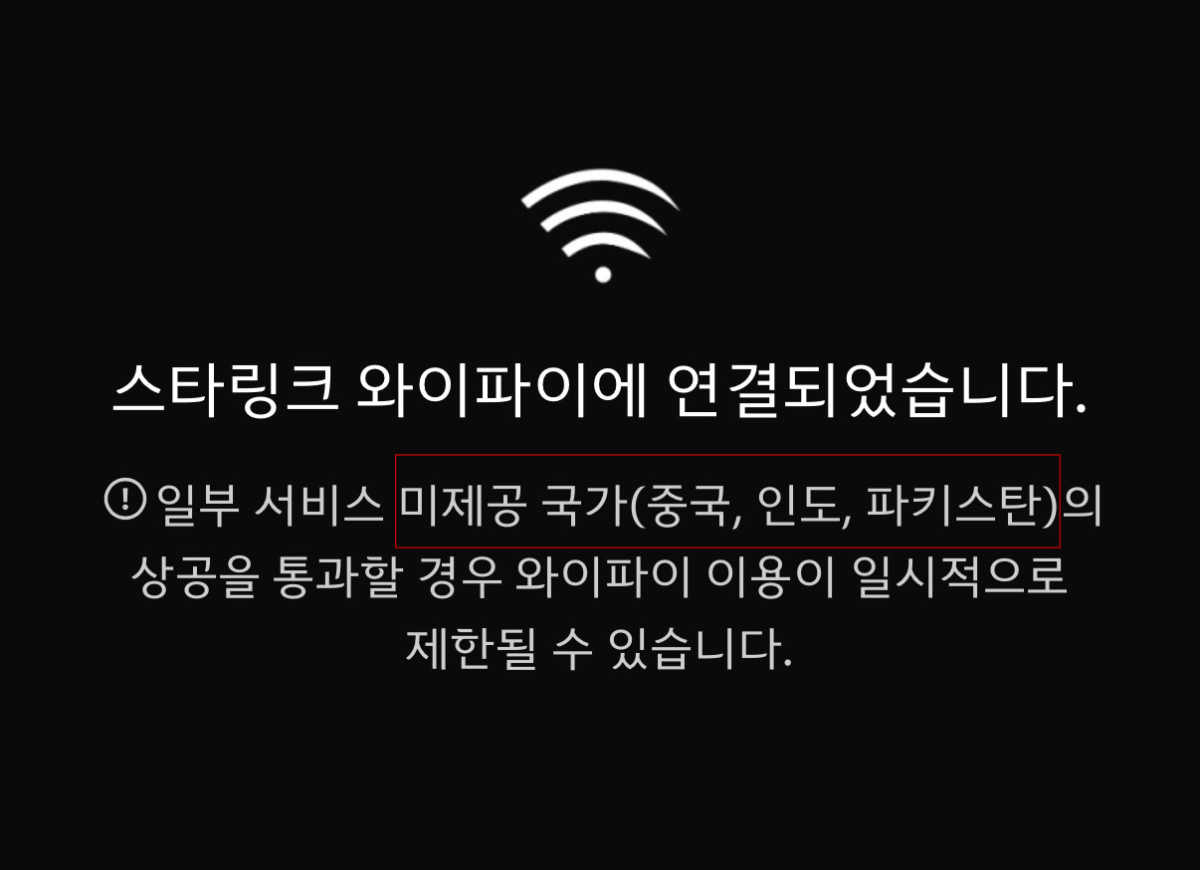
However, it was disappointing that certain flight segments were unavailable due to route restrictions. Asiana Airlines advises that Starlink cannot be used in the airspace of certain countries where satellite communication approvals are limited, including China, India, and Pakistan. This means Starlink will only resume functioning once the aircraft exits those restricted airspaces.
On this flight, Starlink connectivity was blocked for approximately four hours while passing over airspace near Pakistan and China. Unlike earlier periods when videos and games ran smoothly, the internet connection itself failed entirely. Considering the total flight time of 11 hours, roughly 36% of the journey could not utilize the service. From a passenger's perspective, it was inconvenient that there was no way to predict in advance where or when the connection would drop.
If connectivity is lost while exchanging real-time messages or saving/transmitting documents online, work inevitably faces disruptions. While the free Wi-Fi was satisfactory for alleviating boredom during long flights, passengers planning to complete important tasks onboard must consider the possibility of connection interruptions.

There were also concerns that in-flight noise levels might increase. Although instructions prohibiting calls during internet use were displayed, some passengers were observed ignoring these rules. Given that long-haul flights involve passengers sharing the same space—some watching videos or playing games while others try to sleep—it appeared necessary for proper etiquette, such as wearing headphones and refraining from calls, to become established alongside the widespread adoption of in-flight internet.
Additionally, if Korean Air and Asiana Airlines go one step further than merely listing restricted countries by providing specific flight segments where service may be interrupted and indicating when reconnection will occur, Starlink utilization would likely improve significantly. Passengers need to know when the internet might disconnect so they can pre-download videos or wrap up ongoing work accordingly.

 in INDUSTRY


