

As LG Group Chairman Koo Kwang-mo expands AI alliances with global big tech companies, new opportunities are opening for LG Electronics' AI data center cooling business. Following the acquisition of NVIDIA's next-generation AI factory standard approval and strengthening cooperation on cooling solution supply with Microsoft, LG is accelerating its push into the global AI infrastructure market.
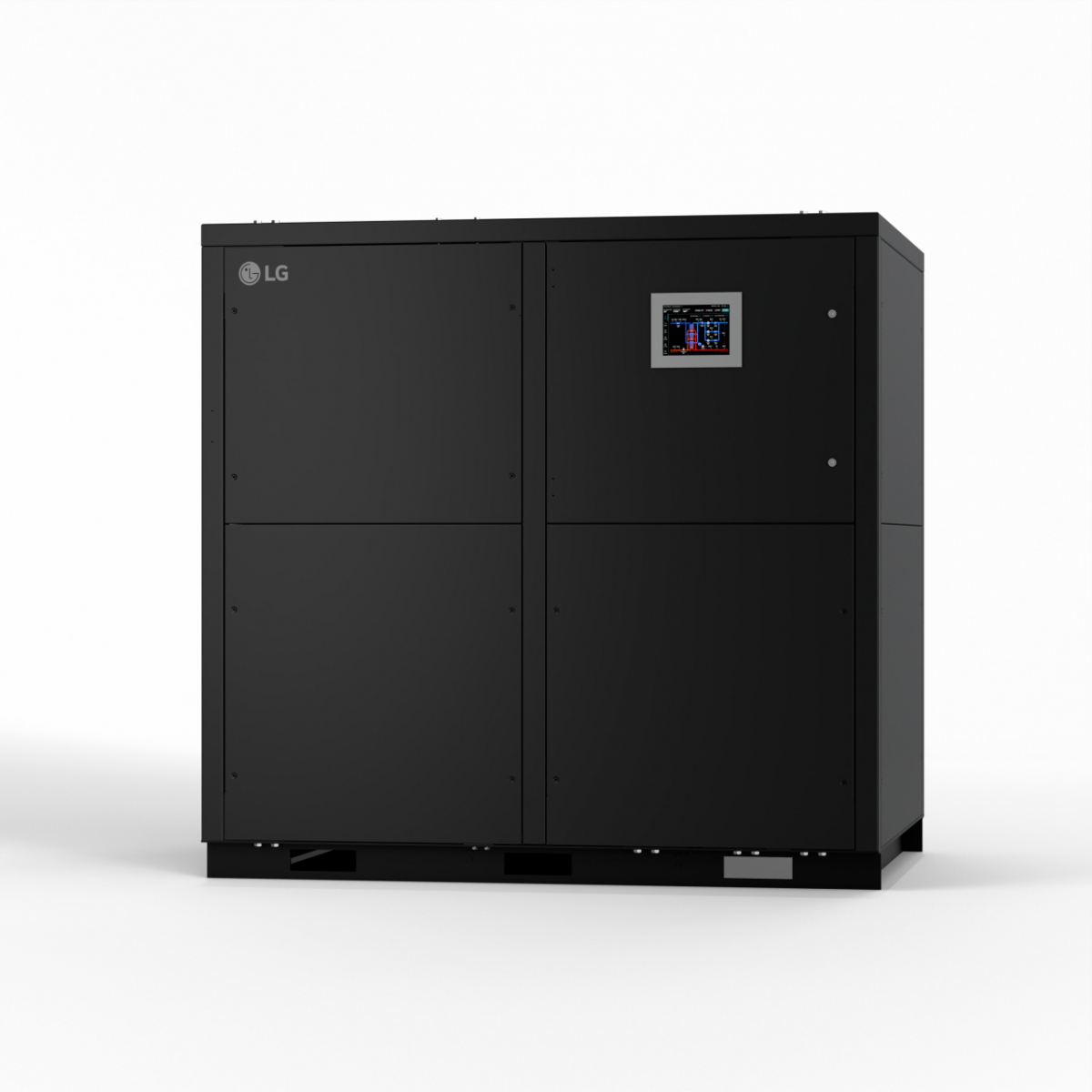
LG Electronics announced on the 22nd that its 2.5-megawatt (MW) CDU (coolant distribution unit) has been approved as NVIDIA's "DSX Ready CDU" product. NVIDIA operates the "DSX AI Factory Platform," which integrates AI factory design and operations, and grants "DSX Ready" certification to products meeting relevant standards.
CDUs are core facilities for liquid cooling in AI data centers. They send coolant to servers to absorb heat generated by AI semiconductors, then collect the heated coolant, cool it down again, and circulate it. LG Electronics had previously secured NVIDIA standard approvals for its 600-kilowatt (kW) and 1-MW CDUs in July and this month, respectively, and has now also obtained certification for its large-capacity 2.5-MW product.
Only three companies received early "DSX Ready" certification from NVIDIA in the CDU field, and LG Electronics is the sole Korean company among them. On the same day, LG Energy Solution was also selected as an NVIDIA DSX Ready partner in the BESS (Battery Energy Storage System) field. Thus, two subsidiaries of LG Group simultaneously received official NVIDIA certification in key AI data center infrastructure areas: cooling and power.
With rapid improvements in AI semiconductor performance driven by recent adoption of NVIDIA's Blackwell architecture-based AI accelerators, power density per server rack has risen to several hundred kilowatts. The capacity of the latest AI server racks is approximately 120 kW; grouping them into cooling clusters of about 20 units requires CDUs with a capacity of 2.4–2.5 MW. This explains why LG Electronics' 2.5-MW CDU has attracted attention.
Through this certification, LG Electronics has laid the foundation to supply proven cooling solutions to global business operators building NVIDIA-based AI data centers. Lee Jae-seong, President and Head of LG Electronics' ES Business Division, emphasized: "With the DSX standard approval, we will begin actively supplying more reliable and efficient cooling solutions to global big tech companies and secure leadership in the next-generation liquid cooling market."
LG Electronics already possesses a comprehensive "Chip to Chiller" total solution covering thermal management from semiconductor chips to entire data centers. It has secured high-efficiency chillers that produce large volumes of cold water, computer room air handlers (CRAH), and traditional HVAC equipment, along with CDU technology and cold plate technology that directly cools chips.
Koo Kwang-mo's cooperation with global AI companies leads to business results
In particular, this approval is significant as it shows that strategic cooperation with global AI companies led by Koo (Chairman) has translated into concrete business results. Last month on the 13th, he met Jensen Huang, CEO of NVIDIA, at NVIDIA's headquarters in Santa Clara, California, U.S., and signed a memorandum of understanding (MOU) for strategic business cooperation. Both companies agreed to expand "One LG"-level collaboration across all aspects of AI infrastructure, including thermal management, power, design, and operations in the AI factory sector.
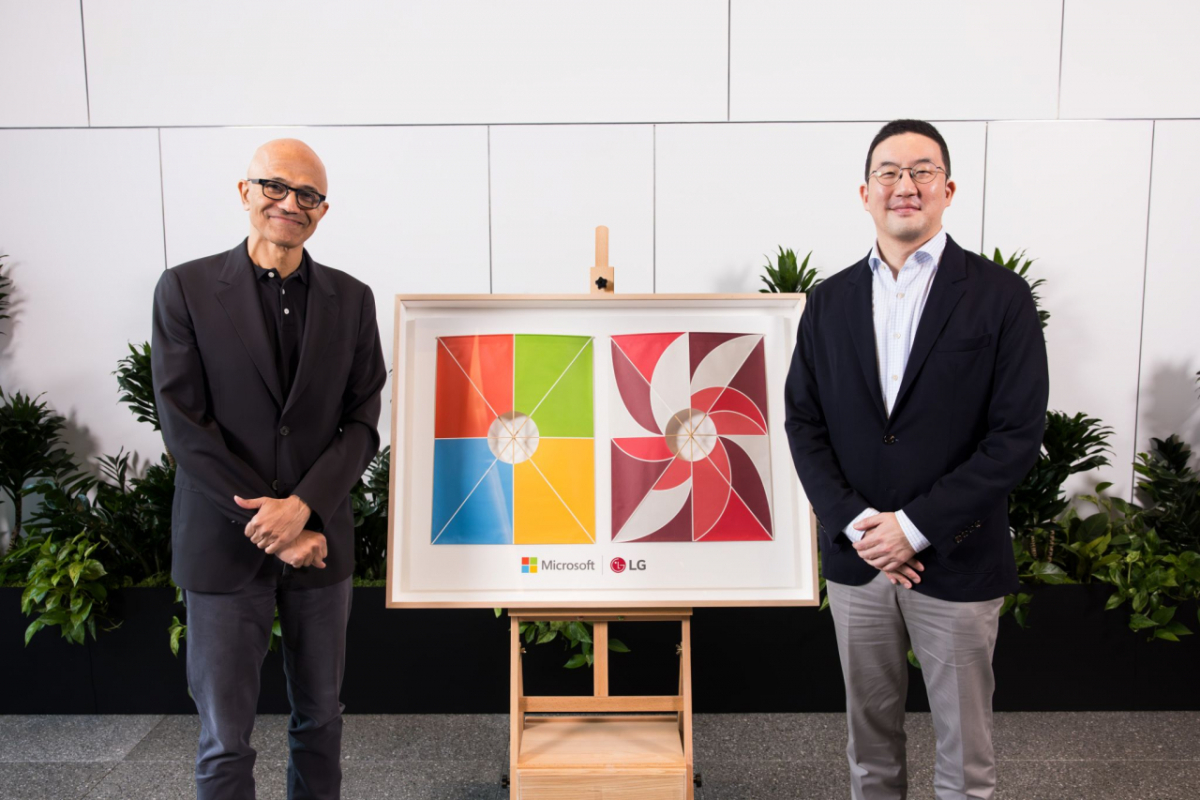
Cooperation with Microsoft is also expected to lead to new business opportunities. Koo (Chairman) met Satya Nadella, CEO of Microsoft, on the 21st (local time) at Microsoft's headquarters in Redmond, Washington, U.S., and agreed to expand strategic cooperation in the AI data center infrastructure field.
Both companies decided to concretize opportunities for LG to supply large-capacity cooling solutions centered on AI data centers built by Microsoft at key global locations. In the medium to long term, they plan to broaden their cooperation scope to include prefab (Prefabricated) data centers, where servers and cooling/power facilities are pre-manufactured in factories and assembled on-site.
They also agreed to strengthen cooperation in AI transformation (AX) and physical AI fields. LG plans to introduce Microsoft's AI and cloud platforms, including Copilot, for all office employees company-wide. The goal goes beyond simply adopting AI tools; it aims to build optimized work environments in terms of security, cost, and operations, and to innovate the very way of working centered on AI.
In the physical AI field, both companies agreed to actively utilize Microsoft's high-performance cloud infrastructure to accelerate the development and learning speed of AI models in real-world domains such as manufacturing, logistics, and mobility. They also committed to collaborating on building a "Data Flywheel" that creates a virtuous cycle of accumulating manufacturing site data and training models. The strategy is to combine both companies' infrastructure and platforms to speed up physical AI technology development and commercialization.
An LG official stated: "This cooperation is the result of several months of practical discussions and executive exchanges following the formalization of strategic cooperation talks between our two companies at a tech show held at Microsoft's headquarters in December last year."

 in INDUSTRY

