

Samsung Electro-Mechanics forecasts that its third-quarter operating profit will exceed market expectations, driven by expanding demand for high-value-added products for AI (artificial intelligence) servers despite a decline in the won-dollar exchange rate.
According to industry sources on the 28th, the company's flagship product, MLCC (multilayer ceramic capacitors), is seeing rapidly increasing demand centered on high-capacity and high-reliability models amid expanded investments in AI servers and data centers.
Notably, the capacity and quantity of MLCCs installed in a single AI server are significantly higher than those in general servers, intensifying supply shortages for high-value-added MLCCs used in AI servers. At Huaqiangbei in Shenzhen, China—a representative spot market for trading MLCCs from major companies—prices for some high-specification products have surged to as much as five times their early-year levels.
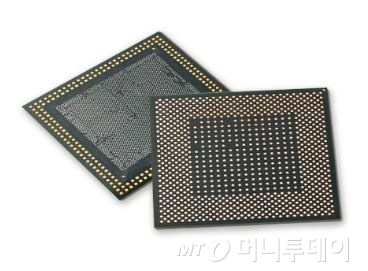
FC-BGA (flip chip ball grid array), which is gaining momentum alongside Samsung Electric's high-value-added MLCCs, represents another key driver of profitability. As a type of semiconductor substrate, FC-BGA is a high-performance packaging substrate with enhanced electrical and thermal properties, making it an essential component for AI servers. As AI accelerators and data center semiconductors evolve toward mounting multiple semiconductor chips on a single substrate to boost computational power and data transmission speeds, substrates are also becoming larger and more multi-layered. Only a few companies globally, including Samsung Electric, can manufacture such high-specification FC-BGAs for servers in the Yangsan facility.
Market observers anticipate that prices will inevitably rise due to supply falling short of surging demand, leading to improved profitability for Samsung Electric.
With market conditions where demand outstrips supply, Samsung is securing stable revenue by expanding long-term supply agreements (LTAs) with major global corporations. Reports indicate the company is also planning to pre-sell a significant portion of its 2027 production capacity through such long-term contracts, in addition to efforts this year.
Reflecting these trends, securities firms have recently been repeatedly raising their forecasts for its third-quarter operating profit. According to financial information provider FNGuide, the consensus estimate for third-quarter operating profit stands at approximately 600 billion won, though KB Securities recently projected 660.1 billion won and iM Securities estimated 650 billion won.
Views within and outside the industry lean toward the actual third-quarter operating profit meeting or exceeding these elevated expectations. Although the won-dollar exchange rate has declined compared to the previous quarter—posing a burden for export-oriented companies—analysts argue that the company will offset much of this impact through increased demand and rising prices for high-value-added AI server components, along with an expanded proportion of high-value-added products.
A company representative stated, "As the AI server and data center markets grow, demand for high-value-added MLCCs and packaging substrates continues to rise," adding, "We plan to actively respond to market demands by focusing on high-performance and high-reliability products while strengthening our differentiated product competitiveness."

 in INDUSTRY
