

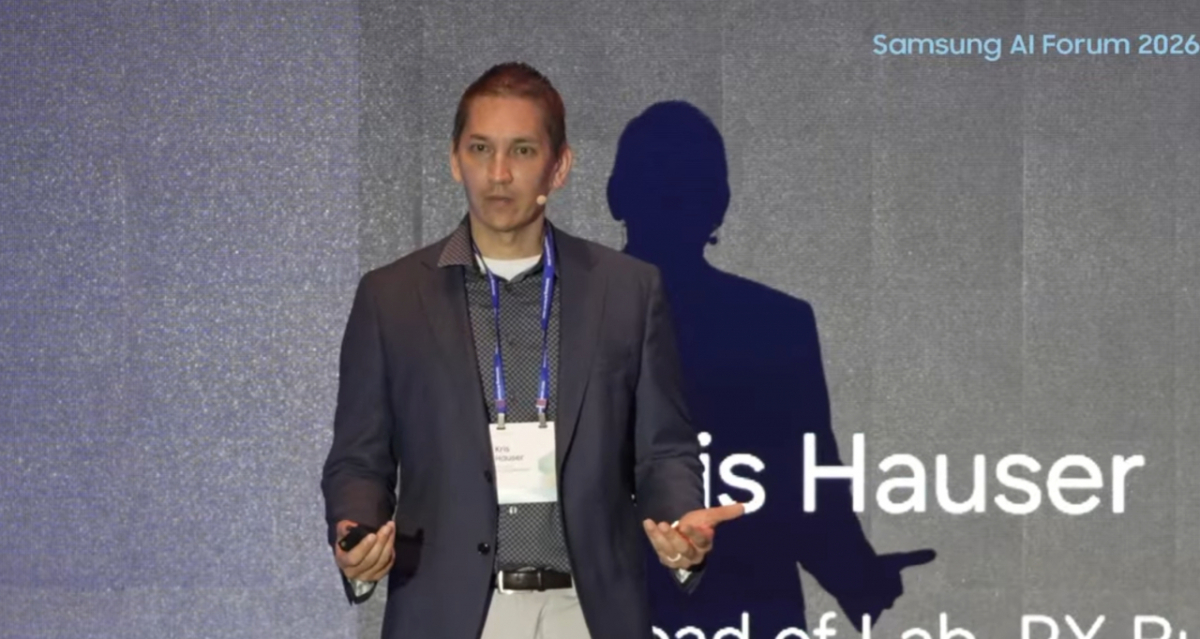
Samsung Electronics is expanding its robotics business to encompass homes, starting with manufacturing sites. The company plans to accelerate the mass adoption of robots by lowering robot prices and AI (artificial intelligence) learning costs, while securing technology that allows users to directly teach robots necessary tasks.
Chris Hauser, Lab Head of Samsung Electronics RX Business Promotion Office, stated at the "Samsung AI Forum 2026" held on the 30th at Samsung Electronics' Seocho headquarters in Seoul's Seocho-gu district, "If robot AI becomes sufficiently advanced so that customers can directly customize their robots, the possibility of large-scale expansion of robots will open up," adding, "Samsung has the potential to sell millions of robots."
In July, Samsung Electronics established the RX (Robotics eXperience) Business Promotion Office directly under its CEO to cultivate robotics as a future growth engine. The RX Business Promotion Office is developing humanoid and industrial robots simultaneously, with plans to prioritize their application in manufacturing sites before expanding into home and service sectors.
Lab Head Hauser noted, "Samsung has over 100 factories and over 100 product lines," adding, "After first studying use cases of industrial robots in manufacturing sites, we will ultimately advance toward home helper robots." He explained that "(in the case of manufacturing home appliances such as refrigerators) not even half of current tasks have been automated."
However, there are many hurdles to overcome before large-scale commercialization. Lab Head Hauser assessed the current technological level of general-purpose robot AI as "equivalent to autonomous driving 10 years ago in 2026." This implies that while feasibility has been confirmed, significant technological advancement is still required for widespread diffusion.
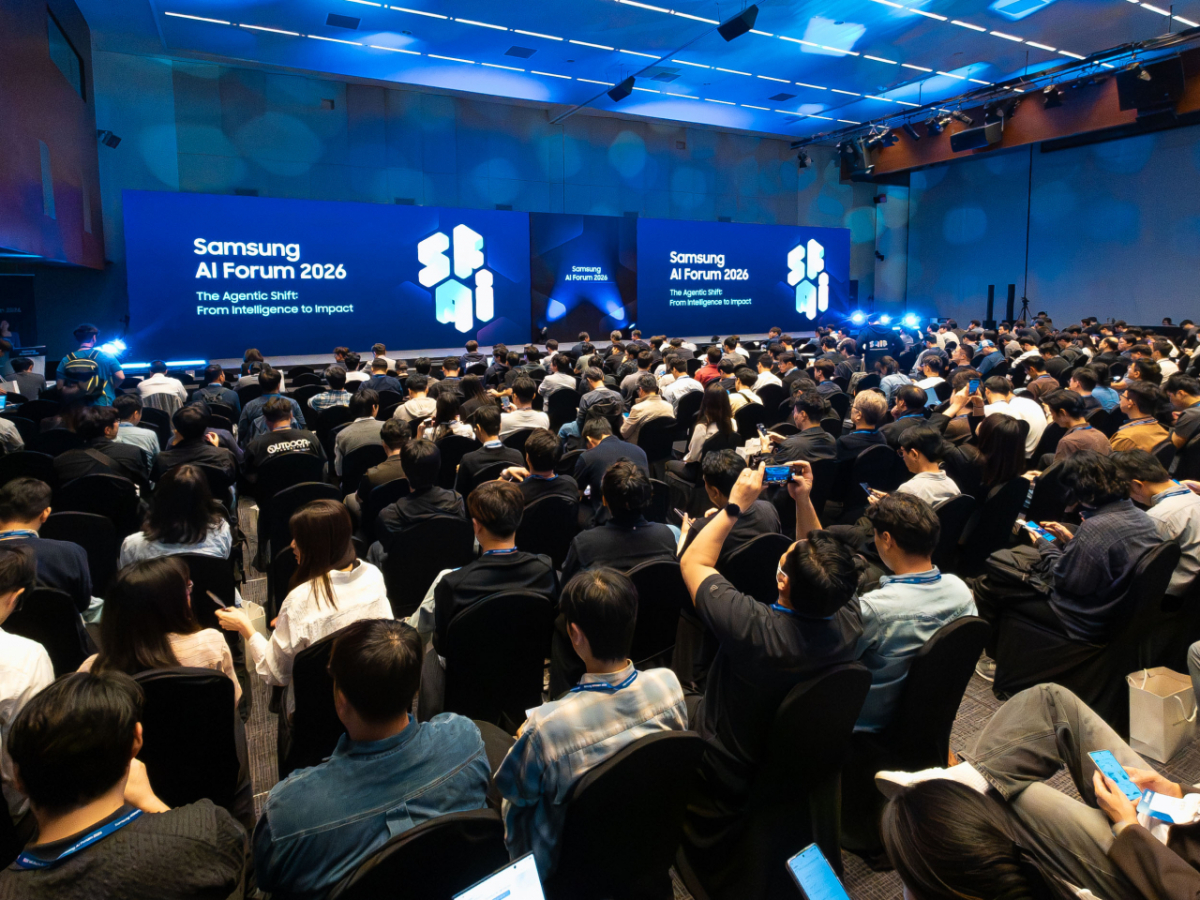
In particular, the reliability required in industrial settings is a different dimension from that in research stages. Lab Head Hauser emphasized that even if a robot's task success rate reaches 99%, it is insufficient for factories, and a success rate of over 99.99% is necessary to deploy them in actual production sites.
Costs are also an issue. Currently, the hardware price of one humanoid robot is approximately $100,000. In addition, Non-Recurring Engineering (NRE) costs for developing AI to perform tasks desired by customers and collecting and learning data amount to approximately $100,000. Operating expenses such as maintenance cost about $20,000 annually, and additional development costs required when switching to new tasks also amount to about $20,000.
Lab Head Hauser described current humanoid robots as "the most expensive workers on Earth, even if they work at the same speed as humans 100% of the time." This means they are not yet economically viable compared to humans or existing industrial robots, which cost approximately $4,000 to $40,000 annually. Therefore, to popularize humanoids, hardware prices must be lowered through mass production while development costs per task must also be reduced through AI advancement.
To overcome cost issues, Samsung Electronics is focusing on a method where users directly teach robots. A representative example is technology that enables robots to learn movements from just one video of a person performing a task. This involves extracting human hand and object movements from the video and connecting them to simulation and reinforcement learning to translate them into actual robot movements.
Lab Head Hauser stated, "When robots are deployed in the real world, they will obtain a much larger volume of data than before," adding, "The RX Business Promotion Office is pursuing both reliability and customizability, and for this, a combination of exploratory research and systematic development is necessary."

 in INDUSTRY

