

Assessments indicate that Hyundai Motor has established itself as a mainstream brand recognized for its quality and technological capabilities in the United States, moving beyond its image as a "value-for-money" brand. This is explained by the growing demand for the HYBE Lead and sales driven by new SUV (Sport Utility Vehicle) models such as the Palisade and Tucson.
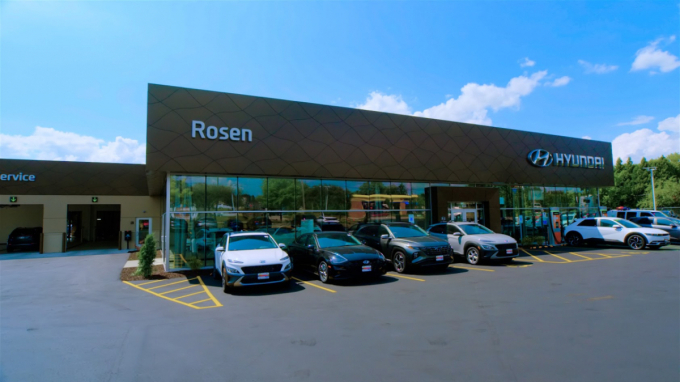
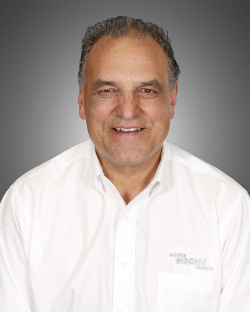
Jeff Rosen, President of the Hyundai Motor U.S. Dealers Association, stated in a written interview with Hyundai Motor's U.S. press corps on the 5th that "Hyundai has been the third-fastest growing mass market brand in the United States over the past five years," adding that "customers are increasingly recognizing that Hyundai provides innovation and cutting-edge technology at reasonable prices." Rosen serves as President and CEO of Rosen Automotive Group, a Wisconsin-based automotive sales group, and has worked in the automotive distribution industry for more than 30 years.
Rosen noted that the HYBE Lead has become a mainstream choice in the U.S. market. He said, "Due to economic uncertainty, consumers are carefully scrutinizing monthly payments, fuel efficiency, and total cost of ownership (TCO)," adding that "the most notable point is how quickly they are adopting the HYBE Lead."
In fact, Hyundai Motor's U.S. sales of the HYBE Lead from January to September this year increased by 54% compared to the same period last year, accounting for 27% of total sales. The share of electrified models, including electric vehicles, stands at 33%. The Palisade, which added a HYBE Lead model last year, is cited by Rosen as the most popular vehicle. Hyundai Motor has developed the next-generation HYBE Lead system, "TMED-II," which improves fuel efficiency by 4.3%, and plans to unveil more than 18 HYBE Lead models in global markets by 2030.
Expectations for the new Tucson were also expressed. Hyundai Motor unveiled the fifth-generation Tucson model in New York on the 1st (local time). The Tucson has sold over 11.1 million units worldwide to date and has maintained its position as Hyundai Motor's top-selling vehicle by model for five consecutive years since 2021. Starting with the Tucson, Hyundai Motor plans to launch more than 100 new and facelifted models globally by 2030. When asked by reporters about sales targets for the Tucson, President Jose Munoz replied, "There is no limit," stating that "dealers are requesting additional allocations every morning."
![[Seoul=NEWSIS] Jose Munoz, Representative Director of Hyundai Motor, poses for a commemorative photo at the "The All-New Tucson World Premiere" held on the 1st (local time) at Sound River Studio in New York, U.S. (Photo provided by=Hyundai Motor) October 2, 2026. photo@newsis.com *Resale and DB prohibited /Photo=Ryu Hyeon-ju](https://thumb.mt.co.kr/cdn-cgi/image/f=avif/21/2026/10/2026100520014622386_2.jpg)
Rosen stated, "The Tucson enjoys support from a wide range of customers, from young people to families with growing children and retired couples," adding that it "strikes an attractive balance between power, off-road performance, on-road handling, and fuel efficiency." He further noted that the model "presents the most bold and new direction in its history" and will "establish itself as one of the unique vehicles in the compact SUV market."
The Santa Fe EREV (Extended-Range Electric Vehicle), scheduled for release next year, is also expected to contribute to sales expansion. By applying a self-developed battery, it achieves a driving range of over 600 miles (approximately 960 km) with less than half the capacity of comparable electric vehicles, thereby reducing production costs.
Regarding the end of electric vehicle tax credits, he explained that "reducing carbon emissions is not determined by a single regulation or subsidy policy alone," adding that it "depends on creating practical and reasonably priced vehicles that customers can choose for themselves."
Concerning U.S. electric vehicle demand, while acknowledging that "it is true that electric vehicle adoption rates are generally higher in western states," he projected that "as charging accessibility improves and more consumers become familiar with the technology, electric vehicle adoption rates will steadily rise in eastern markets as well."

 in INDUSTRY


