

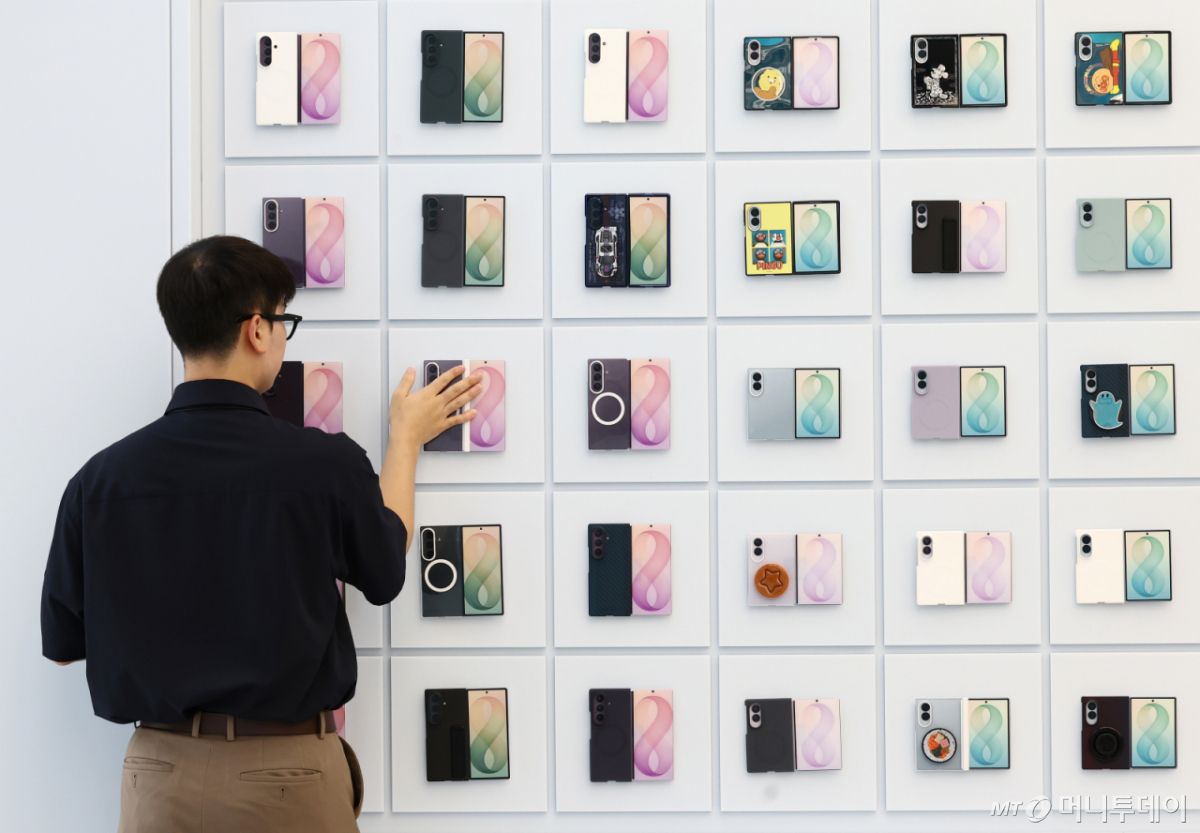
The DX (Device eXperience) Division of Samsung Electronics, which oversees its finished product business, is expected to record an operating loss exceeding 2 trillion won in the third quarter of this year. This is due to a significant increase in cost burdens resulting from the sharp rise in prices of memory semiconductors (hereinafter referred to as "memory"), a core component. There is also growing weight on the possibility that this will be the first annual loss since the establishment of the DX Division.
According to industry sources on the 8th, Samsung Electronics' DX Division appears set to post an operating loss in the third quarter, following the previous quarter. The securities market estimates that the scale of the Q3 operating loss will exceed 2 trillion won. It is widely predicted that the deficit has expanded significantly compared to the second quarter (operating loss of 800 billion won).
The surge in memory prices has hampered the performance of the DX Division. While rising memory prices lead to improved results for the DS (Device Solutions) Division, which handles Samsung Electronics' semiconductor business, they act as a cost burden for the DX Division. This creates a paradoxical situation where a semiconductor boom becomes a negative factor for the finished product business.
In particular, the deficit of the MX (Mobile eXperience) Business Division, responsible for the smartphone business, is expected to have widened. Market research firm TrendForce analyzed that contract prices for LPDDR (Low Power Double Data Rate) 5X, primarily used in smartphones, rose by 70% to 83% compared to the previous quarter in Q2. The firm forecast an additional increase of 8% to 13% in Q3.
According to Samsung Electronics' semi-annual report, mobile memory prices in the first half of this year increased by approximately 211% compared to the annual average of last year. As cost burdens grew, the MX Business Division recorded its first quarterly loss since its launch in the second quarter. Considering the time lag between component procurement and finished product production, the cost burden from rising memory prices is expected to become even heavier as the second half progresses.
The home appliance business also finds it difficult to escape the impact of rising memory prices. This is because the amount of memory installed in appliances is increasing as AI (Artificial Intelligence) features are more widely applied. According to TrendForce, contract prices for 4GB (gigabyte) DDR4 (Double Data Rate 4) memory, primarily used in 4K TVs, have more than quadrupled over the past year. It is estimated that prices rose by more than 60% compared to the previous quarter in Q1 alone. The proportion of DRAM in TV manufacturing costs has also expanded to about 6% to 7%, roughly three times its previous level.
The possibility of an annual loss for the DX Division has also increased. Meritz Securities forecast that Samsung Electronics' DX Division will record an operating loss of approximately 1.3 trillion won for the full year this year. Kim Sun-woo, a researcher at Meritz Securities, stated, "In the set (finished product) business, where the proportion of component costs such as memory is rising sharply, efforts to minimize losses are inevitable amid the transformation into durable goods characterized by future price increases and reduced sales volumes." It was also reported that Samsung Electronics DX Division head Noh Tae-moon shared a sense of crisis with employees in an August management briefing, noting that the division's deficit could continue for some time.
Samsung Electronics plans to defend its market share by expanding sales of premium products even amid this "chipflation" (chip + inflation) situation. The strategy is to aggressively target the market gap created as competitors respond to surging memory prices by raising product prices or reducing production and order volumes for entry-level models.
An industry official said, "While DX Division revenue increased year-on-year in the first half of this year, it fell short of the market growth rate due to factors such as the sharp rise in memory prices," adding, "Efforts to reduce the deficit through material cost savings and cost efficiency will also be pursued concurrently."

 in INDUSTRY
