

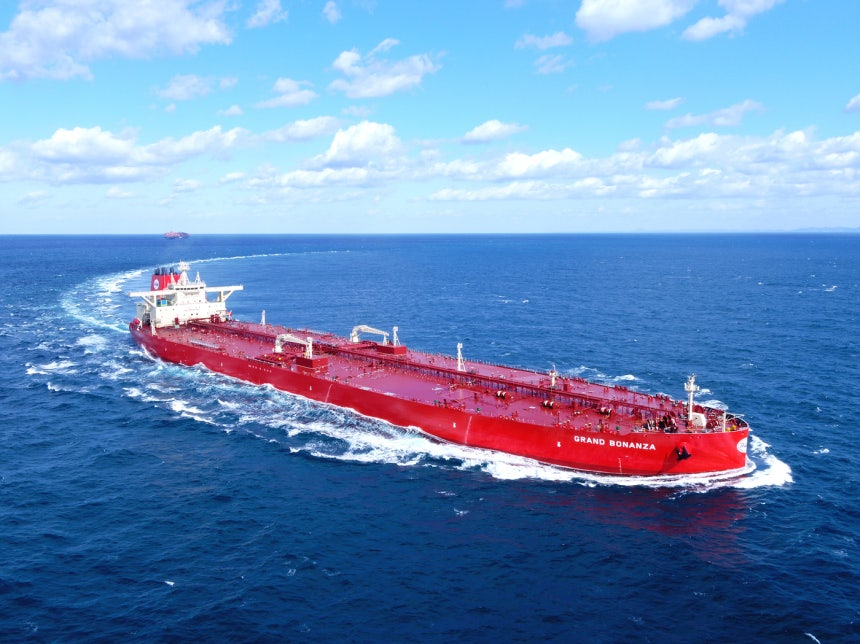
As freight rates for ultra-large crude carriers (VLCCs) continue to soar, domestic shipping companies are expanding their VLCC fleets and successively signing long-term contracts. This is done to secure cargo in advance while rates are high, thereby locking in profits.
According to the shipping industry on the 8th, the VLCC freight rate on the Middle East-China route stood at WS (Worldscale, a tanker freight index) 1203.13 as of the 2nd, up 45.63 points from Jeonju. The daily profit (TCE), after deducting operating costs such as fuel and port charges, was $1,286,655 (approximately 1.72 billion won), a 4.2% increase over the past week.
The strong freight rates stem from a shortage of available vessels. As navigation through the Strait of Hormuz has become difficult, shuttle transport and transshipment at sea have increased, reducing the number of actually available ships. Competition among major Asian shippers to secure vessels has also pushed up rates. The resale price (selling new ships that are completed or nearing completion) for VLCCs immediately available for deployment was $199.26 million, rising by $22.9 million in just one week and significantly exceeding the newbuilding price ($129.46 million).
Domestically, Pan Ocean is the most active. Pan Ocean acquired 10 VLCCs and related businesses from SK Shipping for 973.7 billion won earlier this year. Once deliveries are completed by April next year, its VLCC fleet will expand from the existing two vessels to 12. It also took over long-term transport contracts with entities such as SK Energy that were attached to the acquired vessels. The company has ordered nine newbuilds and plans to increase its VLCC fleet to 21 by 2030. Recently, it extended the charter contract for one VLCC currently lent to Trafigura by three years, at a scale of 148.1 billion won.
HMM, which has a high dependence on container ships, is also increasing its investment in VLCCs. HMM ordered four 300,000-ton-class VLCCs for approximately 780 billion won in March. It currently operates 14 VLCCs and plans to increase the number to 20. The strategy is to diversify revenue sources by increasing the proportion of tankers and bulk carriers in preparation for a slowdown in container shipping market conditions.
The industry expects the VLCC strength to continue for some time, as competition among Asian shippers to secure capacity and avoidance of navigation through the Strait of Hormuz persist. However, freight rates are fluctuating significantly depending on the Middle East situation, and market volatility is also increasing.
An industry official said, "As freight rate directions can change at any time due to shifts in the Middle East situation, shipping lines are focusing on locking in a portion of high freight rates through long-term contracts."

 in INDUSTRY
