

"The Iberian region prioritizes renewable energy sources such as wind power, which has led to lower electricity rates."
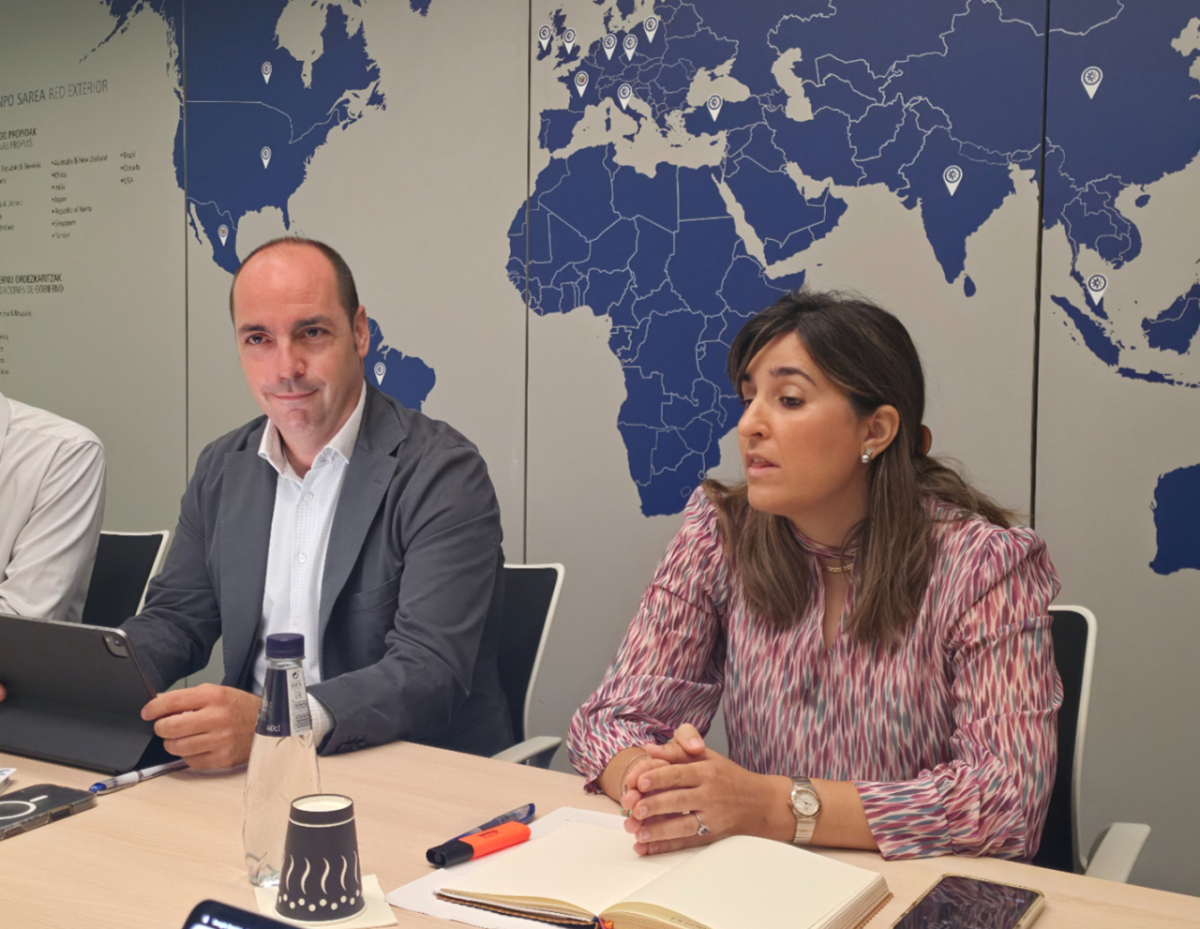
Iñaki Ayende Fernandez de Eribe, Deputy Minister for Energy Transition in the Basque Country, whom we met in Bilbao, northern Spain, on the 30th of last month (local time), explained that this was the reason why Spain and Portugal were less affected by energy price shocks despite the Middle East situation. He stated, "Achieving energy independence is very important," adding, "Securing our own energy allows us to formulate better industrial strategies and contribute to improving the welfare of the entire nation."
According to Ember, a global energy think tank, Spain's average electricity price in March last year, when the Middle East situation erupted, was 42 euros per megawatt-hour (MWh). This is less than one-third of Italy's price (143 euros), which has a high dependence on gas. This is the result of expanding generation facilities centered on wind and solar power, whose fuel costs are "zero." Spain's wind and solar power generation increased by 37% from 2021 to last year.
The energy transition to wind and solar power not only mitigated the shock of surging fossil fuel prices but also became an opportunity for industrial growth. In particular, in the Basque Country, technologies from existing manufacturing industries such as shipbuilding and steel were expanded into the wind industry, creating new revenue sources.
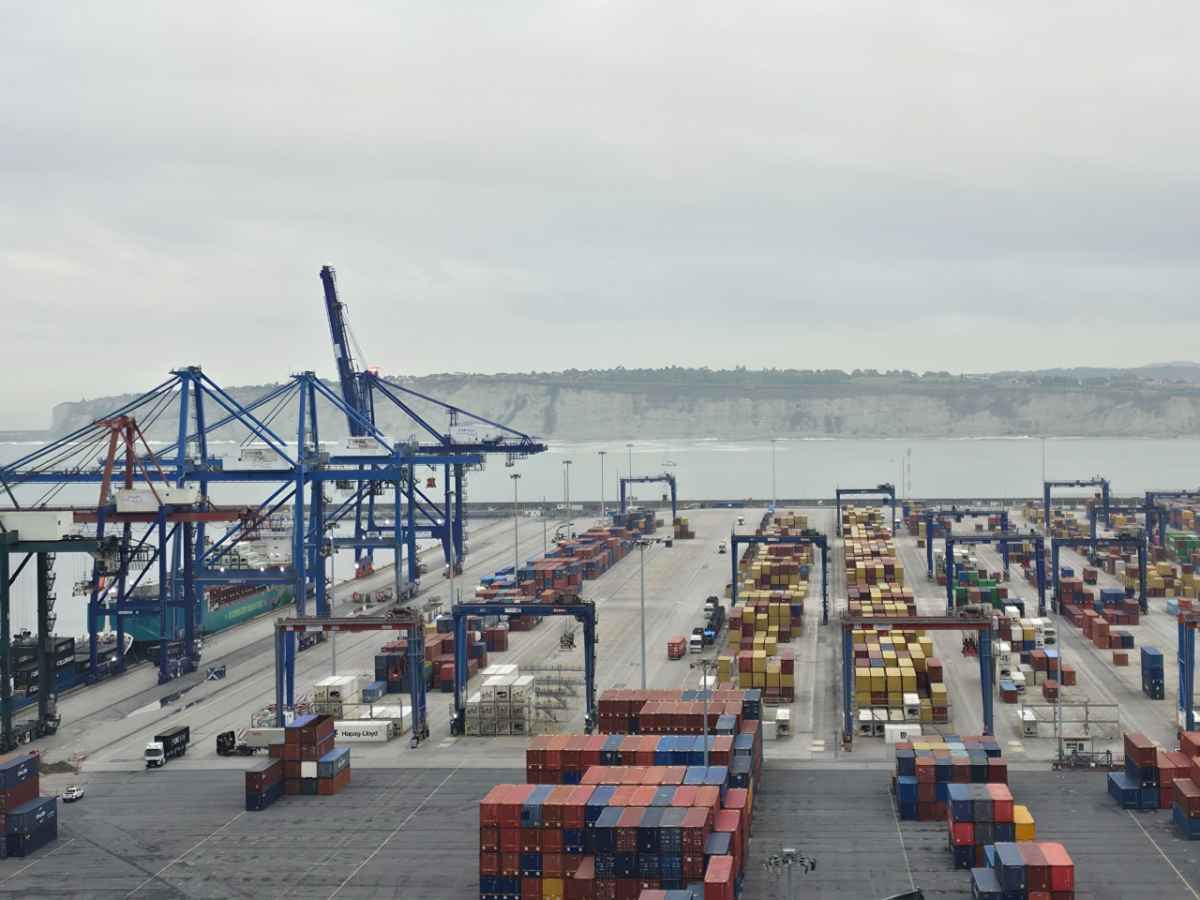
A cross-section of this change could be seen at the Port of Bilbao. When we visited the dock on the 2nd, giant wind turbine blades and towers were piled up in various places. Jon Anasagasti, Head of Business Development and Multimodal Transport at the Port of Bilbao, explained, "Global companies such as Siemens Gamesa and Vestas store various components here before sending them to all parts of the world." 38% of the total area of the port is utilized for the wind industry.
The Basque Country, which holds broad autonomy in tax and fiscal matters, has established itself early on as a major hub for the European wind industry. The region is home to approximately 150 wind-related companies, with about 5,100 employees. The supply chain is so dense that all wind equipment except blades can be produced within the region. An industrial ecosystem where production, logistics, and export are interconnected has formed around the port.
Wind power was not the main industry from the beginning. As the shipbuilding and steel industries declined due to competition with Asian countries, companies had to find a breakthrough. Wind power emerged as a new market where existing welding, forging, and metal processing technologies could be utilized.
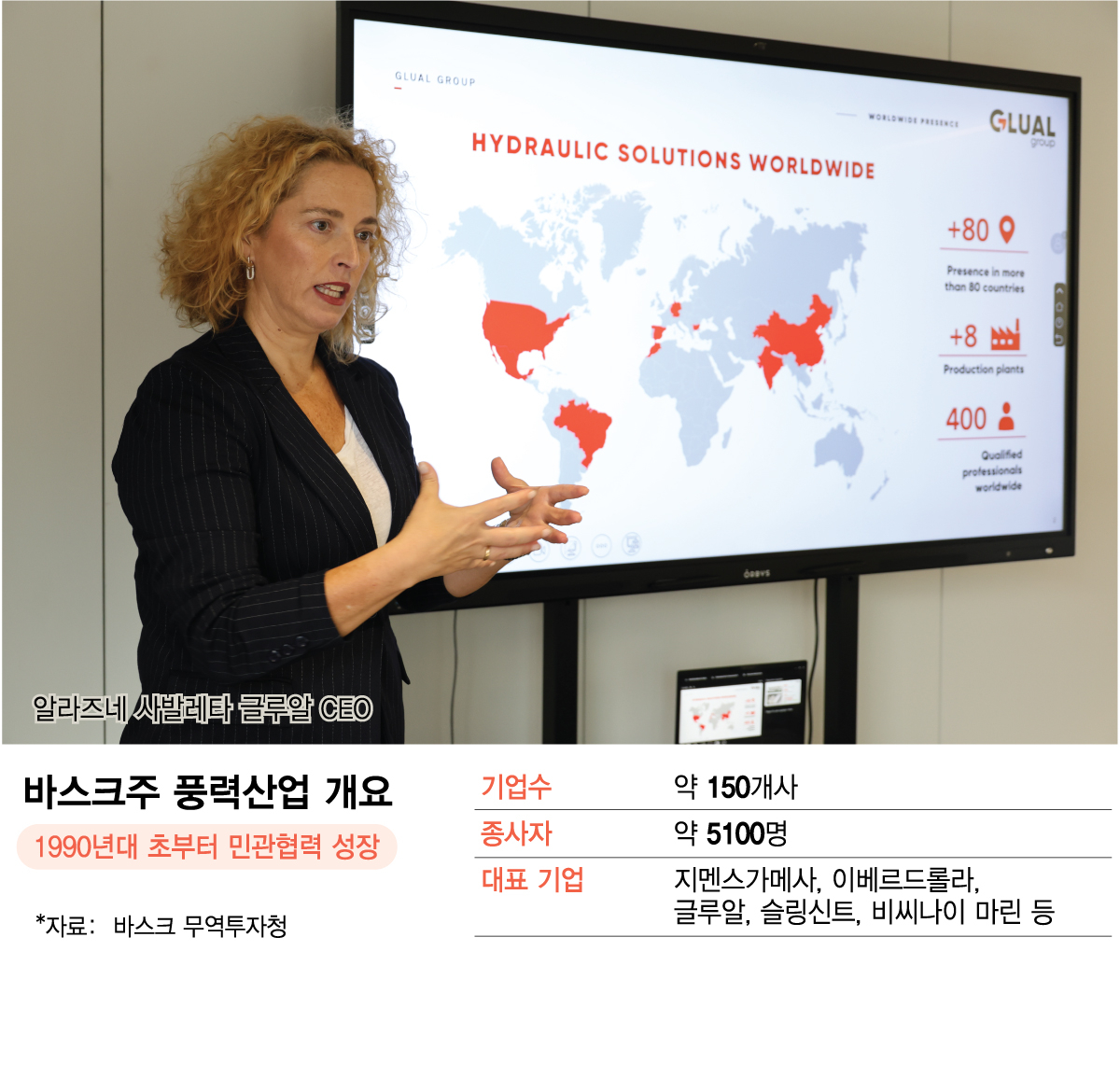
The Gluall Group, established in 1969, is a representative example. This company, which specialized in hydraulic technology for hydropower, expanded its business to hydraulic systems for wind turbines in the early 1990s. Alazne Saballete, CEO, whom we met on the 1st, said, "Because we knew well how hydraulic technology was actually applied, there were no major difficulties in transitioning from hydro to wind," adding, "The share of wind business in total revenue has increased to about 35%."
Public-private cooperation supported this transition. Through a cluster policy started in 1991, the Basque Country connected companies, technology centers, and administrative institutional investors. The energy cluster supported the exchange of technology and knowledge between large corporations and local SMEs (small and medium-sized enterprises), and the regional government invested funds in joint research and development between companies and research institutional investors. The Trade and Investment Office assisted with overseas expansion and finding business partners.
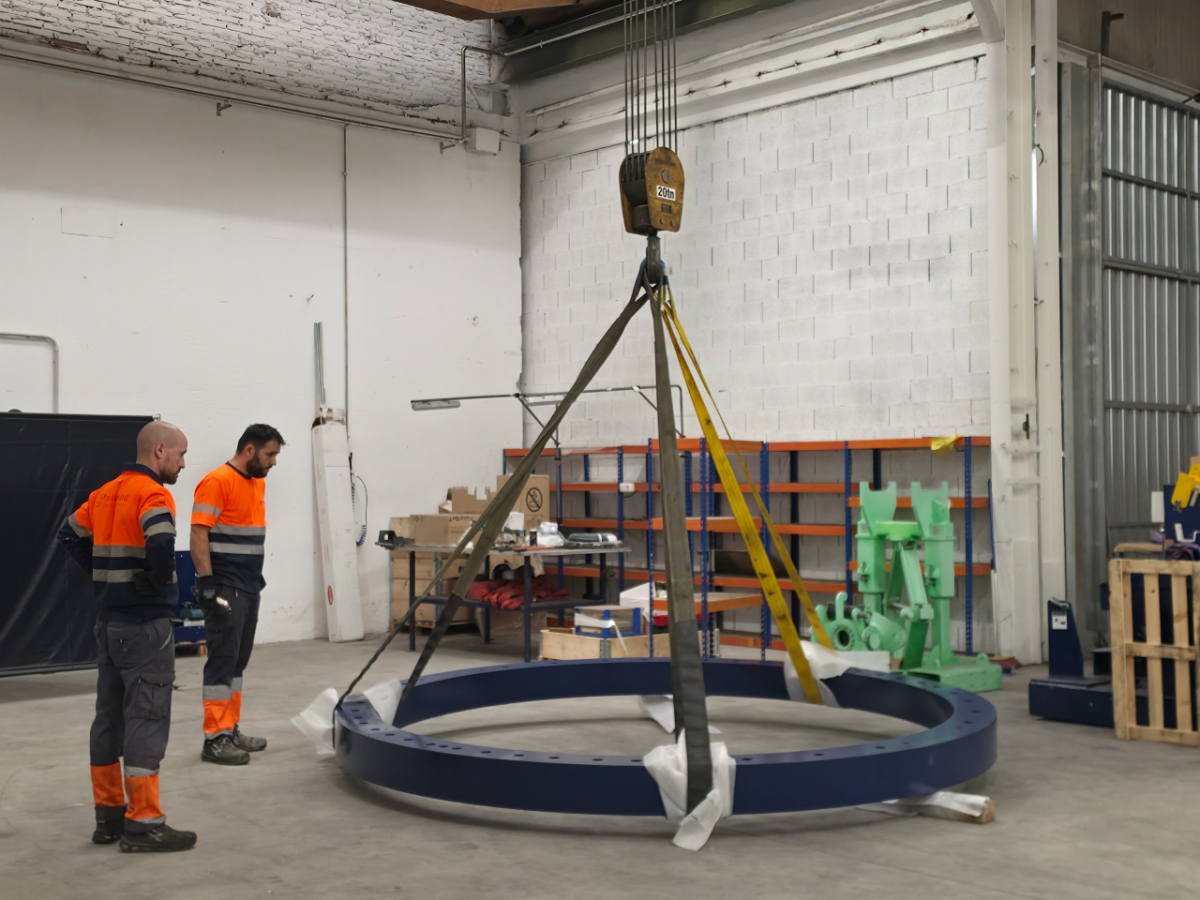
Another characteristic is that they did not rely solely on local power generation demand. Due to geographical conditions and other factors, the Basque Country was not an area with active domestic renewable energy generation. Instead, it grew its manufacturing industry by taking the expansion of wind power in Spain and Europe as its market. Mikel Amundarain Leibar, Director of the Basque Energy Agency, explained that this was "the result of proactively cultivating related companies from the early stages when the renewable energy industry began to grow."
The experience of the Basque Country offers implications for South Korea, which has a foundation in shipbuilding and steel. This is because the expansion of renewable energy can be an opportunity to broaden the market for existing manufacturing industries beyond just securing electricity.
However, a predictable business environment where companies can invest is necessary. Begoña Diaz Gonzalez, Head of Overseas Business at Iberdrola, cited uncertainty in project schedules and regulations as the reason for abandoning past plans to enter South Korea. CEO Saballete said, "South Korea has all the technology and infrastructure needed for the wind industry," adding, "A strategic choice is needed at the national level to build an energy mix."

 in INDUSTRY


