

Who are the Korean customers buying Lamborghinis? In the Korean market, the share of female customers reaches twice the global average, and one in three customers is under 40. Demand for SUVs (Sport Utility Vehicles) as daily drivers accounts for 75% of total sales. This is the background behind the Korean market overtaking China to become Lamborghini's sixth-largest market globally.
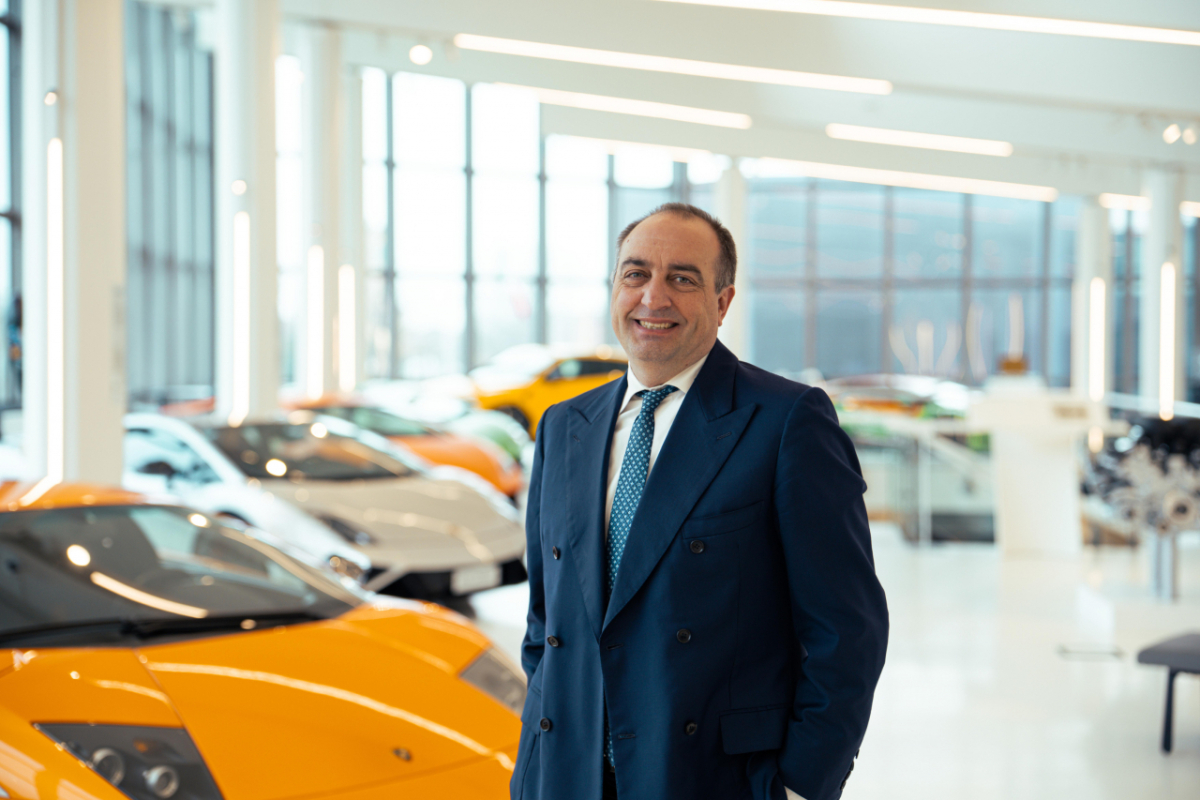
On this matter, Federico Forchini, Lamborghini Chief Marketing and Sales Officer (CMO), stated during a group interview at 'Lamborghini Day Korea 2026' held on the 8th at the Grand Walkerhill Seoul in Gwangjin-gu, Seoul: "Korea is the world's sixth-largest market, surpassing China, and the second-largest in Asia-Pacific." He added, "While we expect this year's sales to yield better results than last year, growth will always be managed in small steps."
The composition of Korean customers differs distinctly from other major markets. SUVs such as the Urus account for approximately 75% of sales in Korea. The share of female customers is about 20%, which is twice the global average of 10%. By vehicle model, the proportion of customers under 40 also reaches about 35%, a figure higher than the global average of 25-30%.
CMO Forchini emphasized, "Korean Urus customers often drive more than 10,000 km annually, effectively using the vehicle every day." He noted, "In Korea, where the customer base is young and the female share is high, it is important to provide experiences tailored to each customer segment."
This is why Lamborghini emphasizes 'experience' over sales in Korea. The company operates a driving program for female customers called 'She Drives a Lamborghini' and provides off-road and track driving events for Urus customers. It is also expanding touchpoints with younger customers through digital channels and motorsport events. This is a strategy to maintain the relationship with the brand even after the purchase of high-priced vehicles.
Service touchpoints are also being expanded. Lamborghini recently moved its Seoul Dongdaemun showroom to Seocho. This was a measure considering both customer showroom visits and vehicle maintenance routes. CMO Forchini stated, "We are preparing additional hubs and symbolic buildings," adding, "We may be able to reveal new plans as early as the end of 2027 or the first quarter of 2028."
The fact that luxury consumption is sensitive to market conditions is a variable. CMO Forchini stated, "Korea is a market where consumer sentiment can change rapidly in response to fluctuations in real estate, stock markets, and interest rates," adding, "We must adjust supply while monitoring both market demand and order backlogs."
The global luxury market is also in a phase of adjustment. Lamborghini's deliveries in the first half of this year were 5,422 units, a 4.6% decrease from the same period last year, but revenue increased by 7.4% to 1.741 billion euros. The expansion of high-priced product share and demand for personalization options drove revenue up. Conversely, operating profit decreased by 8.4% to 395 million euros, and the operating profit margin fell by 3.9 percentage points to 22.7%.
CMO Forchini stated, "Lamborghini's principle is value over volume," adding, "Exclusivity is maintained not by making customers wait, but through a process of carefully reading supply and demand." This means the company aims to manage brand experience and scarcity rather than sales volume, targeting Korea's unique characteristics: female and young customers, and daily SUV demand.

 in INDUSTRY
