

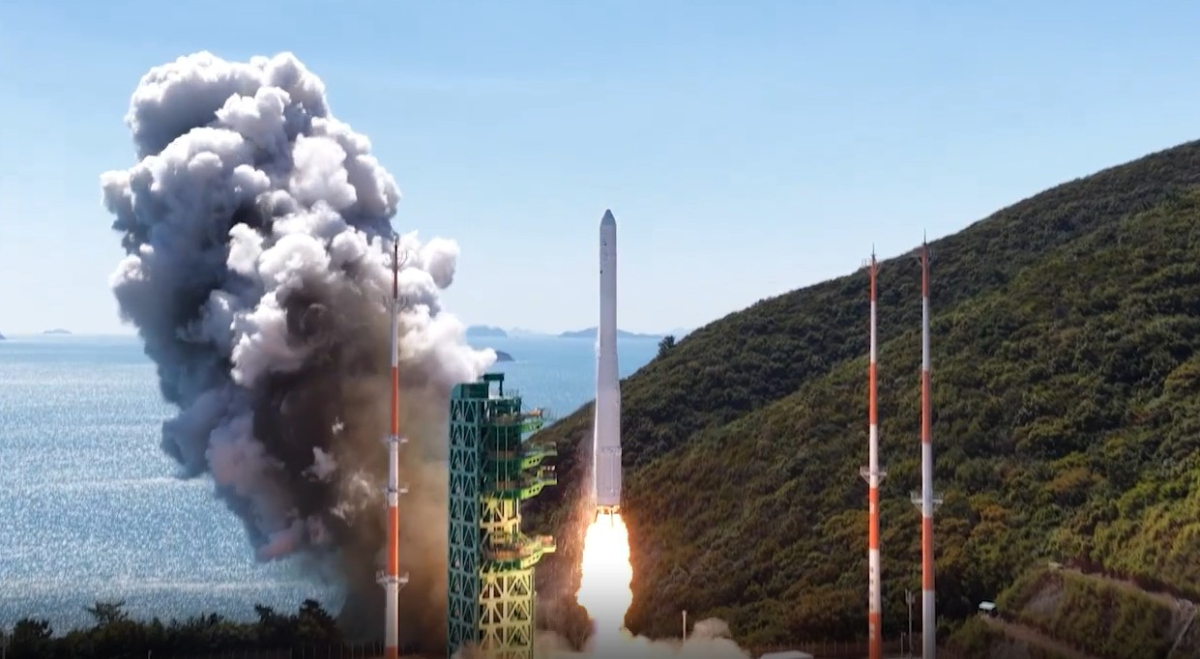
Domestic defense companies are expanding their reach into the aerospace market based on existing capabilities such as rocket propulsion institutional investors, military communications, and aircraft design. This move to secure an early foothold comes as a private-sector-led era in the space industry is fully underway worldwide.
According to industry sources on the 16th, Hanwha Aerospace recently presented “investment in artificial intelligence (AI) and space technology” as part of its medium- to long-term growth strategy at a CEO briefing for analysts, alongside aggressive overseas contract wins and global business expansion. The company is already handling launch vehicle system integration and the manufacturing of engines and core components in the space launch and transportation sector, and has also secured design and manufacturing capabilities for thrusters in the satellite propulsion system field.
On the 30th of last month, it also began full assembly of a demonstration body for reusable launch vehicle technology. The plan is to complete verification by 2028 and secure core technologies for launch vehicle reusability similar to SpaceX’s “Falcon 9.” SpaceX, which was the first in the world to successfully commercialize reusable launch vehicles, significantly reduced launch costs per kilogram by reusing the first-stage rocket of the Falcon 9.
Hanwha Aerospace plans to lay the groundwork for the reuse of the first stage of next-generation launch vehicles, scheduled for the mid-2030s, and accelerate its entry into the global space transportation service market by leveraging price competitiveness. In the long term, it aims to expand its business scope to include space exploration. Group-level investment toward becoming “Korea’s SpaceX” is also gaining momentum. The Hanwha Group intends to invest a total of 55 trillion won in aerospace and AI by 2040.
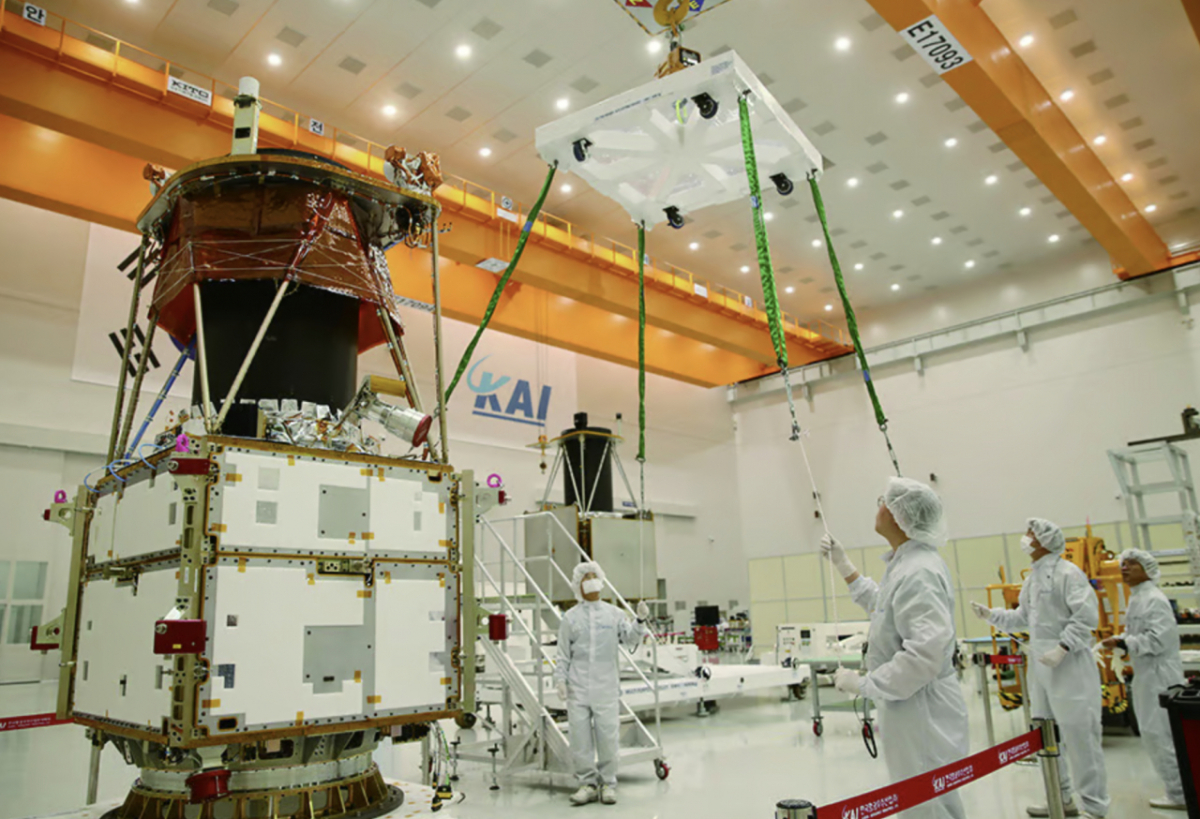
KAI (Korea Aerospace Industries) is also accelerating its space business, focusing on satellite system integration and launch vehicle projects. For the fifth Nuri launch, it manufactured the fuel and oxidizer tanks for the first-stage propellant and was responsible for the overall system assembly. Recently, it has expanded its business scope to include 6G low-orbit communication satellites and microsatellites, targeting the global market. To meet demand for satellite constellations, it has also established a production system at the Space Center in Sacheon, South Gyeongsang Province.
Some companies have demonstrated their intent to expand aerospace business through organizational restructuring. Hyundai Rotem reorganized its existing Defense Solutions (DS) Business Division into the “AD (Aerospace & Defense) & RH (Robot & Hydrogen) Business Division” in the second half of this year. It participated in building test facilities for propulsion institutional investor systems during the Nuri development process, and is currently pursuing the acquisition of next-generation propulsion technologies such as methane engines, ducted ramjet engines, and hypersonic engines. Following its win of a project to develop methane engine technology for reusable launch vehicles from the Agency for Defense Development last year, it also secured a project from the Agency for Defense Development (ADD) on airframe structure and core propulsion institutional investor technologies for long-range air-to-air guided missiles.
LIG Defense & Aerospace (LIG D&A) established a space business division last year and declared its entry into the space industry. In April of the same year, it was selected as the developer for Cheonan Satellite No. 5, South Korea’s first geostationary satellite led by a private entity. The goal is to complete development in 2031. Additionally, LIG D&A invested approximately 100 billion won to complete a satellite radar system at the Daejeon House, capable of simultaneously performing satellite assembly and testing.
An industry official said, “With companies participating en masse in the fifth Nuri launch, steps toward a private space era are accelerating domestically as well,” adding, “Given the strong technical relevance, entering the space business is a natural trend.”

 in INDUSTRY

