

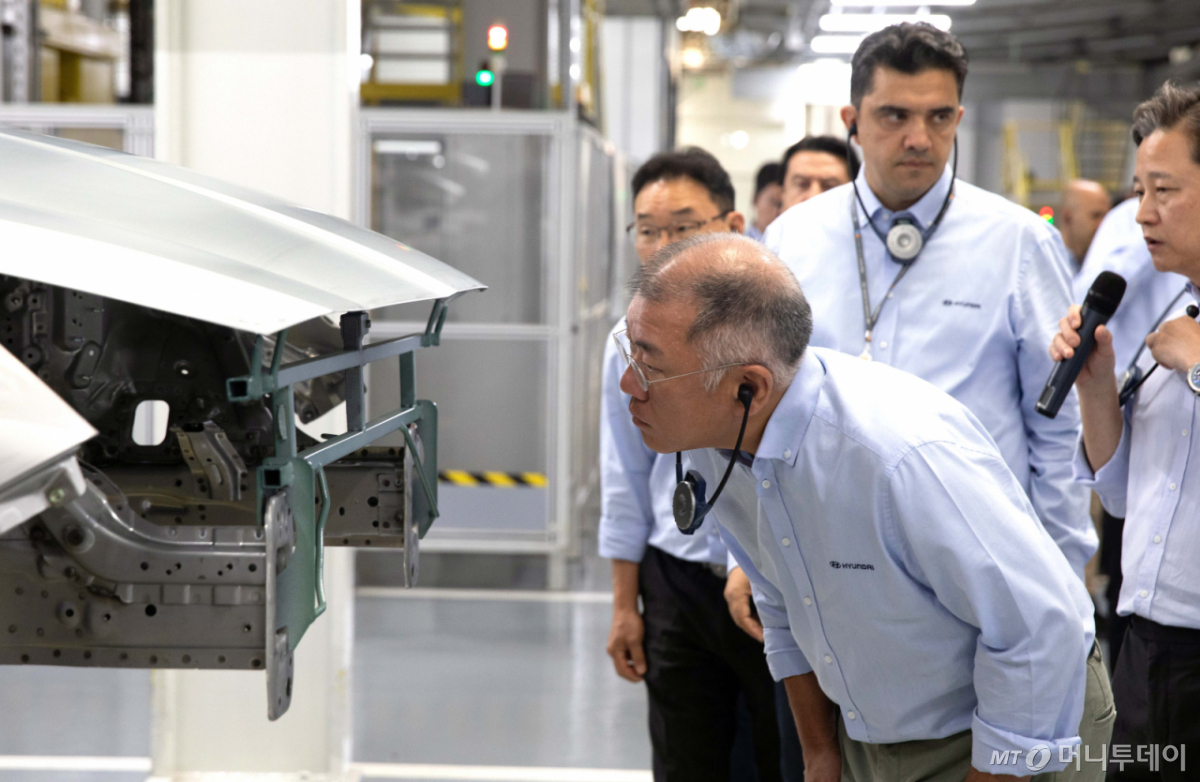
As the European Union (EU) accelerates the introduction of regulations favoring intra-regional production to counter the offensive from Chinese electric vehicles, the burden on Hyundai Motor and Kia is growing. For the Hyundai Motor Group, which operates production facilities in Europe, a strategy that localizes not only the expansion of electric vehicle production but also parts procurement has become critical.
The core of the Industrial Acceleration Act (IAA), currently being pushed by the EU, is applying European-made preference criteria to public procurement and certain vehicle purchase support programs. France and Germany have already agreed on the 16th to a plan requiring that 70% of the value of automotive parts, excluding batteries, be sourced from Europe. They also intend to apply separate intra-regional production standards for batteries. While this is not yet a finalized regulation for the entire EU, the direction has become clear: regulating not only finished vehicle production but also the parts supply chain.
The scope of countries eligible for "European-made" recognition is also a point of contention. France and Germany proposed granting preferential treatment to some European countries, including EU member states and the United Kingdom, but South Korea and Turkey were excluded from this scope. Previously, in last month's European Parliament session, discussions took place arguing that EU-origin status should not be granted solely on the basis of being a Free Trade Agreement (FTA) partner country. Although the final legislative outcome remains to be seen, the eligibility of vehicles exported from South Korea for support programs could change.
In particular, Hyundai Motor has been producing the compact electric vehicle Ioniq 3 at its Izmit plant in Turkey since August last year. Although the plant received an investment of 250 million euros to supply the European market, if Turkey is excluded from the eligible scope, vehicles produced there may face difficulties in receiving certain support benefits.
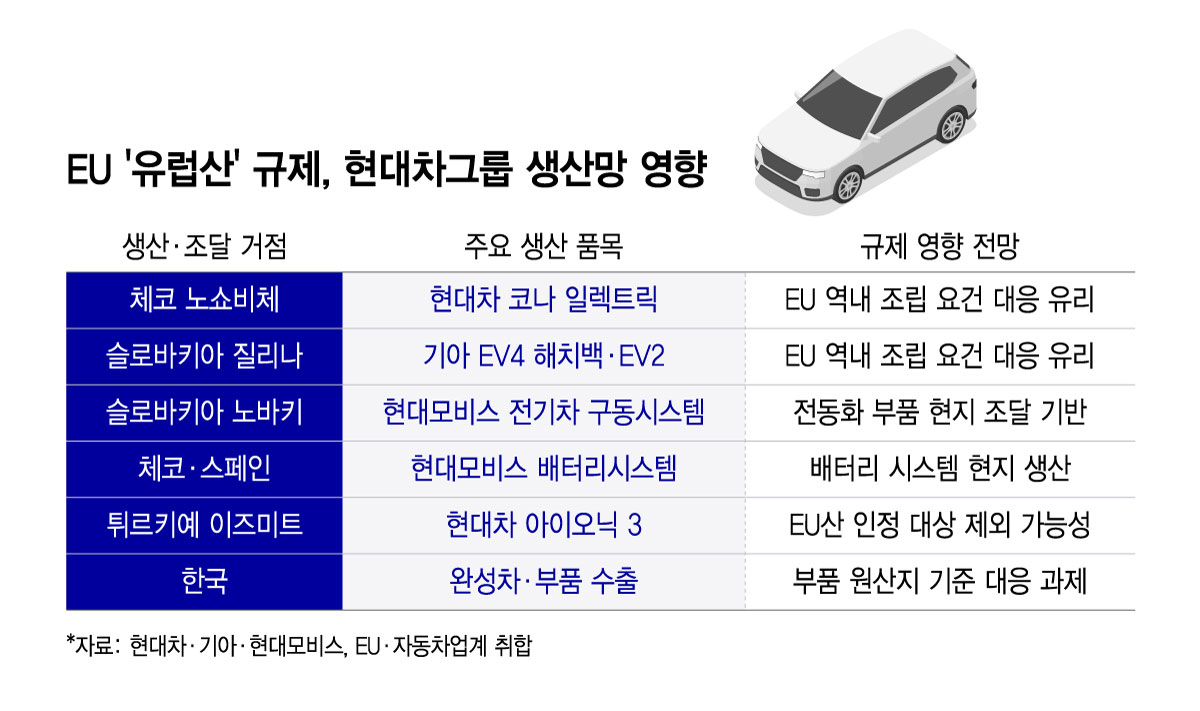
The Hyundai Motor Group is leveraging its already established production networks in EU member states as a foundation for its European market strategy. Hyundai Motor produces the Kona Electric in Nosovice, Czech Republic, while Kia began producing the EV2 hatchback this year in Zilina, Slovakia, following the launch of the EV4 hatchback there last year. Electric vehicles manufactured at intra-regional plants hold an advantage in meeting assembly location requirements.
Alongside finished vehicle production, the group is also expanding its production base for electrification parts within Europe. Hyundai Mobis began operating an electric vehicle drive system plant with an annual capacity of 280,000 units in Nova Kie, Slovakia, last month, following an investment of approximately 250 billion won. Combined with battery system plants already operating in the Czech Republic and Spain, this has expanded local production hubs for electrification parts. While these facilities provide a foundation for supplying parts to European finished vehicle manufacturers, the challenge remains of separately meeting origin criteria for individual components such as battery cells.
Hyundai Motor plans to increase its European electric vehicle sales from 116,000 units last year to over 420,000 units by 2030. Kia also aims to expand the share of electric vehicles in its total European sales from 23% last year to 66% by 2030. As both companies intensify their efforts to capture the European electric vehicle market, their production hub operations and parts procurement strategies are expected to be influenced by the EU's "European-made" recognition criteria.

 in INDUSTRY

