

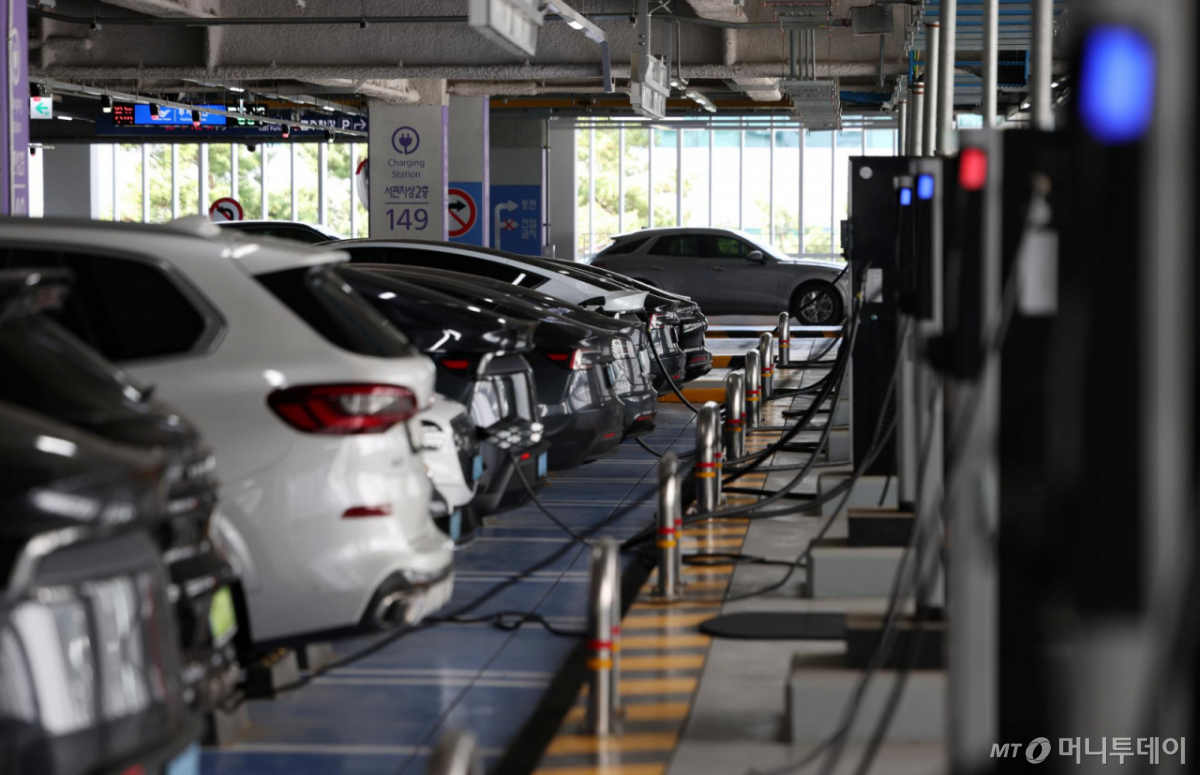
The South Korean electric vehicle market is also being rapidly eroded by Chinese-made vehicles. Due to low tariff rates that have lost their function as import barriers and generous subsidies that do not distinguish between imported and domestic products, the market share of domestically produced electric passenger cars has fallen below the "50% wall" for the first time in history.
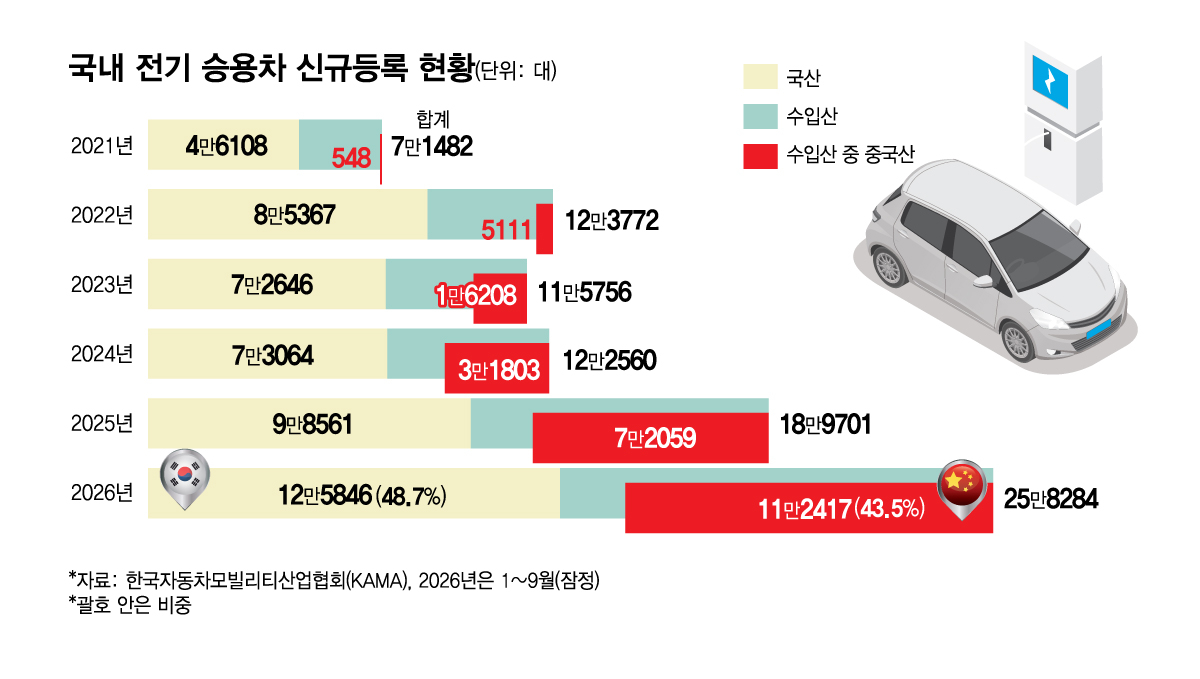
According to data compiled by the Korea Automotive Mobility Industry Association (KAMA) on the 22nd, among the newly registered domestic electric passenger vehicles from January to September this year (258,284 units), imported vehicles accounted for a market share of 51.3% (132,438 units), pushing the domestic share (48.7%) below 50%.
This is the first time that the domestic market share has fallen below 50% since 2022, when annual new registrations of electric passenger vehicles exceeded 100,000 units and mass adoption began. Judging by the trend, there is a high probability that the proportion of imported vehicles will increase further during the remaining three months.
Chinese-made electric vehicles back up this trend. Chinese-made electric passenger vehicles sold a total of 112,417 units from the beginning of the year through September, accounting for a 53.5% share and making up the majority of imported vehicles.
Major models from Chinese brands such as BYD and Zeekr, along with Tesla—which produces most of its volume in China and exports it to South Korea—are gaining attention in South Korea as "cost-effective models." In fact, according to the Korea Automobile Importers Association (KAIDA), Tesla sold a total of 89,148 units, while BYD sold 20,137 units.
Critics point out that while Chinese-made electric vehicles are accelerating their global market offensive using low prices as a weapon, and major countries such as the United States and the EU (European Union) have simultaneously raised import barriers, South Korea is effectively standing by.
The tariff rate imposed by South Korea on Chinese-made electric vehicles is 8%, which is significantly lower compared to the United States (up to 127.5%) and the EU (up to 45%). There is also criticism that by providing large-scale purchase subsidies regardless of whether vehicles are domestic or imported, South Korea is encouraging the spread of Chinese-made electric vehicles domestically.
Kim Pil-soo, a professor in the Department of Future Automotive Engineering at Daelim University Cha Gong-hak-bu (Prof.), stated, "If the government finds it difficult to raise tariffs due to concerns over trade disputes, it must devise support measures for domestic production at the pre-completion stage of vehicles where there are no dispute concerns.
" He emphasized, "The recent decision by the government to introduce a domestic production tax credit while excluding electric vehicles from the scope of application is a major mistake and they must be included."

 in INDUSTRY

