

Long-term supply agreements (LTAs), which had been centered on memory semiconductors, are expanding beyond semiconductor components into the power infrastructure sector, including power equipment. This is the result of a combination of supply shortages driven by increased artificial intelligence (AI) investment and competition among big tech companies to secure volumes in advance. Long-term supply agreements appear to be establishing themselves as a new transaction standard in the AI industry.
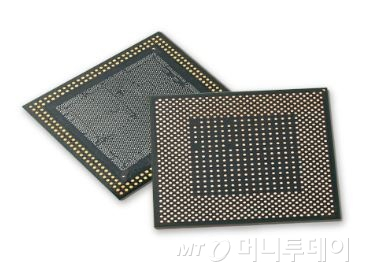
According to industry sources on the 22nd, Samsung Electro-Mechanics recently signed a long-term supply agreement worth over 1 trillion won for flip-chip ball grid array (FC-BGA) substrates with U.S. electric vehicle company A. The deal is reportedly structured so that Company A provides an advance payment and supports part of the costs for expanding production lines.
Samsung Electro-Mechanics also announced on the previous day that it had formed a strategic business partnership with NVIDIA to supply package substrates for AI semiconductors over multiple years. While the duration was not disclosed, it is expected to be at least three years or more. The contract size is estimated at approximately 2.6 trillion won. Samsung Electro-Mechanics has signed more than 10 long-term supply agreements for FC-BGA and multilayer ceramic capacitors (MLCC) with global big tech companies this year alone.
LG Innotek is also expanding its FC-BGA long-term supply agreements based on advance payments from big tech firms. Cho Ji-tae, Senior Executive Vice President of LG Innotek's Package Solution Business Unit, stated at the 'Media Tech Day' in June, "We are specifically discussing expansion investments for FC-BGA with two customers."
This expansion of long-term supply agreements is the result of aligned interests between big tech companies and component manufacturers seeking to minimize bottlenecks as supply shortages of key components worsen due to surging AI demand. Package substrates for AI semiconductors are produced according to specific customer requirements, making it difficult to expand supply in the short term. Big tech companies secure long-term volumes by supporting equipment investment, while component manufacturers reduce their investment burden based on stable demand.
Long-term supply agreements are also spreading beyond semiconductor components into the power infrastructure sector. LS Electric signed a long-term supply agreement for distribution solutions worth 168.9 billion won with a global big tech company on the 19th, marking its first such deal in history. While switchgear panels have relatively short lead times and long-term contracts were not common in this area, the company explained that securing stable volumes has become important as supply shortages persist due to the expansion of AI data center construction.
According to global construction consulting firm LineSite, the lead time (the period from order to delivery) for switchgear panels and switchgear equipment in North America has lengthened to 30 to 40 weeks, which is two to three times longer than usual. An industry official explained, "It is so severe that heavy switchgear panels are being shipped by air rather than by sea." Similar trends are also observed in the fields of distribution and power equipment, transformers, and bus ducts, with HD Hyundai Electric, Hyosung Heavy Industries, and Gaon Cable recently signing long-term supply agreements.
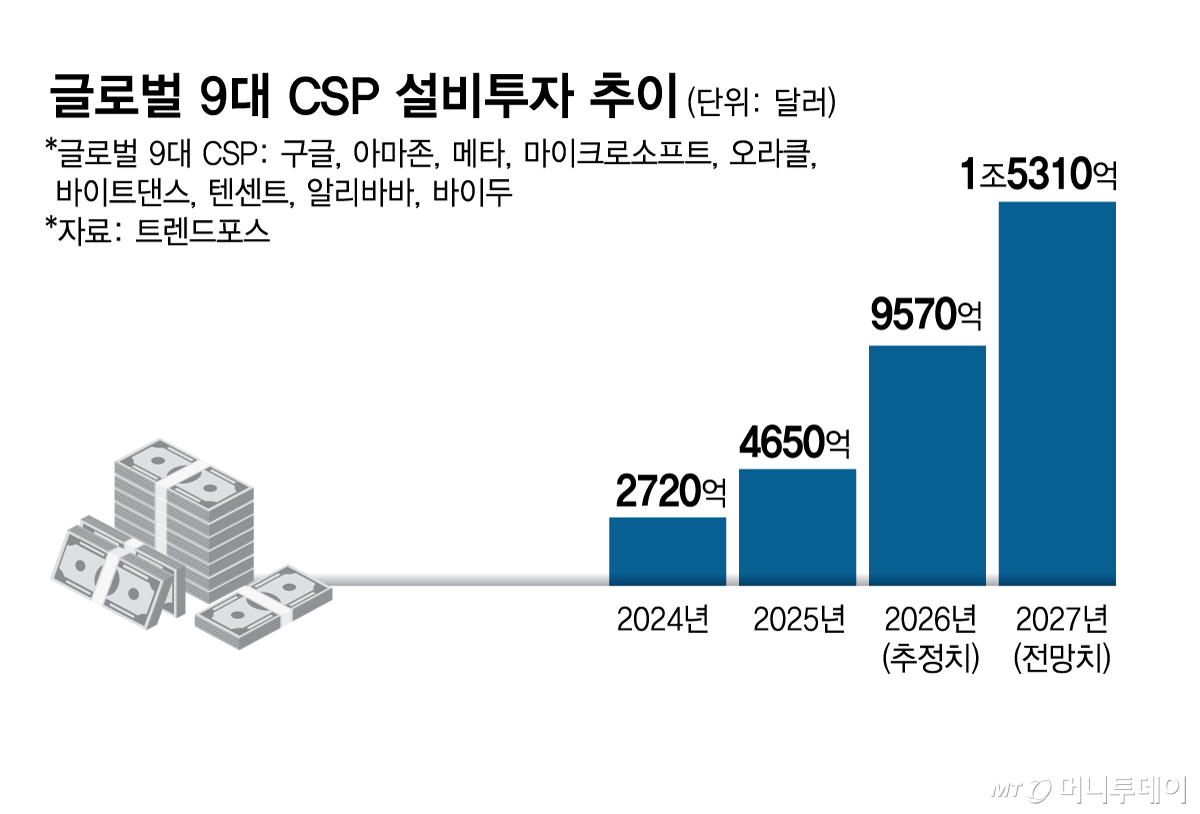
As big tech companies increase their capital expenditure, the trend of expanding long-term supply agreements is expected to continue. Meta recently raised its capital expenditure forecast for this year by $5 billion in its earnings announcement and signaled aggressive investment for next year as well. Market research firm TrendForce expects the capital expenditure scale of the world's top 9 cloud service providers (CSPs) to reach $1,531 billion (approximately 202.58 trillion won) next year.
Elon Musk, CEO of Tesla and SpaceX, also predicted during an earnings announcement conference call on the 20th (local time), "Shortages of superintelligence computing resources will persist for a long period," adding, "The constraints in building superintelligence will manifest in power, cooling, and infrastructure rather than chips."
An industry official said, "In AI infrastructure investment, a shortage of even one key component can disrupt the entire schedule," adding, "Competition to secure volumes through long-term supply agreements will become even more intense."

 in INDUSTRY

