

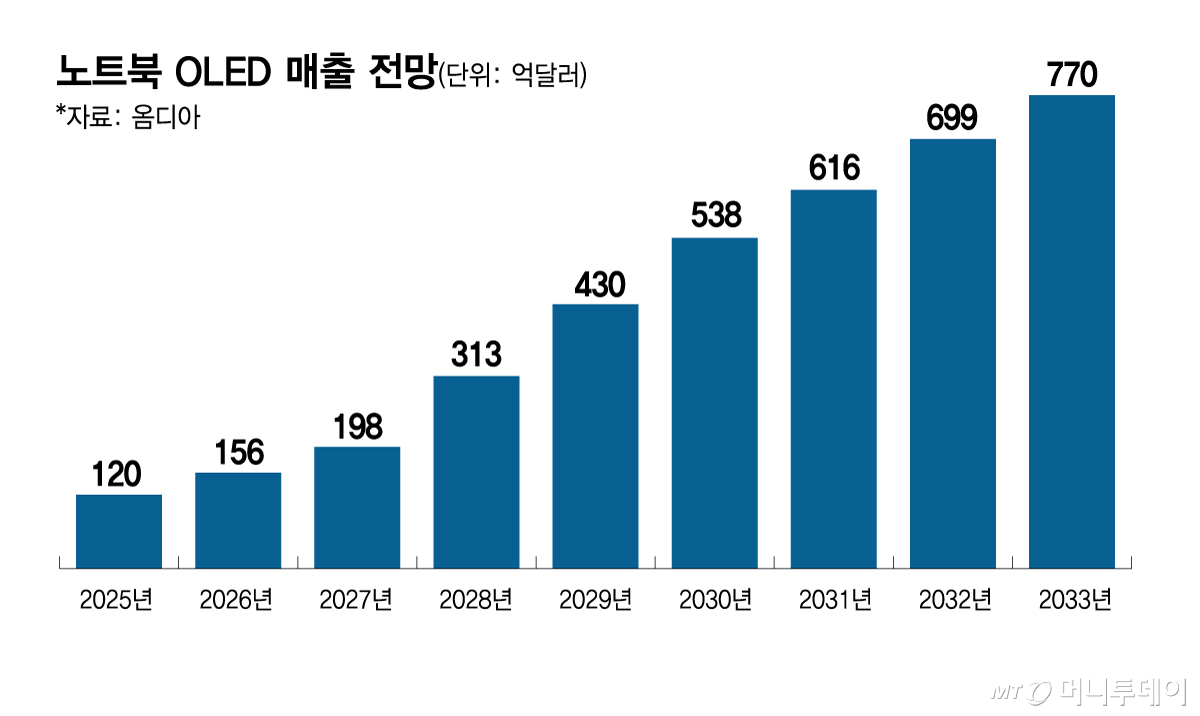
As Apple equips its new MacBook with a touchscreen OLED (organic light-emitting diode) panel, the transition to OLED in laptop displays is expected to accelerate. Despite rising manufacturing costs driven by "chipflation" (chips + inflation), the laptop OLED market is projected to maintain steady growth. Expectations for business expansion among domestic display companies such as Samsung Display and LG Display have also grown.
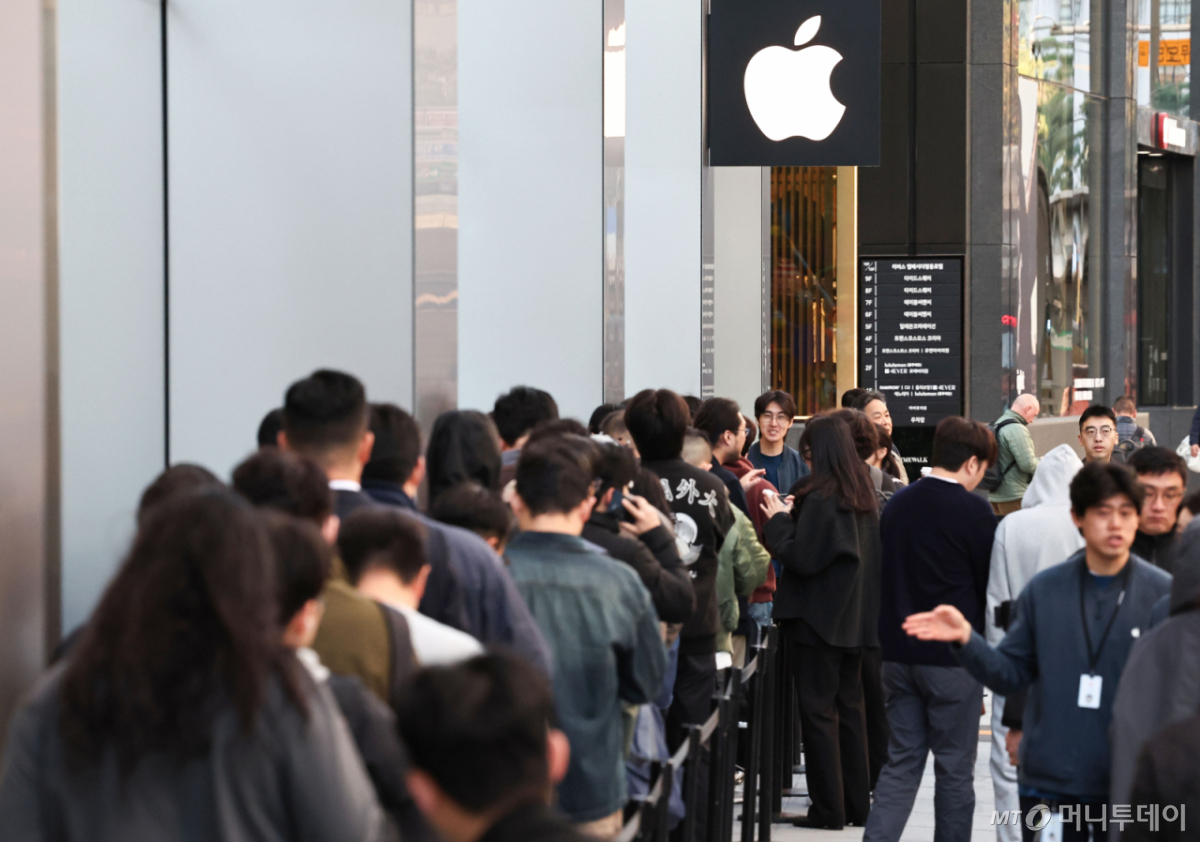
According to industry sources on the 26th, Apple is expected to hold a new product launch event in Los Angeles, U.S., on the 28th (local time) and unveil a new MacBook Pro equipped with a touchscreen OLED panel. This will be the first time Apple has applied a touchscreen to a MacBook. The new products are expected to be released in two sizes: 14 inches and 16 inches.
OLED offers higher contrast ratios and faster response speeds than LCD (liquid crystal display), leading to increased adoption, particularly in premium IT (information technology) products. Even as rising memory semiconductor prices increase manufacturing cost burdens for IT devices, the laptop OLED market is expected to continue its growth trajectory. Market research firm Omdia forecasts that laptop OLED revenue will expand from $15.6 billion (approximately 20.6482 trillion won) this year to $77 billion (approximately 101.9172 trillion dollars) by 2033.
It is known that Samsung Display will exclusively supply the initial batch of OLED panels for the new MacBook. According to Omdia, as of the third quarter this year, Samsung Display holds approximately 87.7% market share in the laptop OLED market. In the fourth quarter, its share is expected to rise to about 88.3%, driven by the "Apple effect."
Samsung Display began operating an 8.6-generation OLED production line at its Asan campus in Chungnam this year, moving to expand IT-oriented OLED production capacity. The 8.6-generation OLED uses a glass substrate 2.25 times larger than the existing 6th generation, allowing for the production of more panels per cycle. Industry observers assess that the results of Samsung Display's proactive investment in IT-oriented OLED have become tangible with the supply to Apple's new products.
Heo Cheol, Senior Vice President and Head of Planning Team at Samsung Display, emphasized during the second-quarter earnings announcement conference call last quarter, "We have stably secured the performance and quality demanded by the market through the Yangsan experience and process technology accumulated in mobile OLED."
LG Display has launched an offensive in the laptop OLED market with its HYBE-led OLED 'Tandem ATO (Advanced Thin OLED),' which boasts high brightness, long lifespan, and high efficiency. Tandem ATO is a technology that stacks two layers of OLED emissive material, reducing power consumption by up to 40% compared to existing OLEDs while tripling brightness and doubling lifespan. It is also up to 44% thinner and 52% lighter, making it advantageous for slimming and lightening laptops. Global PC manufacturers such as Dell have also adopted LG Display's Tandem ATO.
Additionally, the company plans to expand its IT-oriented OLED business by prioritizing the application of next-generation process technology 'FLiPP' (Flip), which forms OLED pixels without a metal mask, to laptops and monitors.
An industry official stated, "The IT panel market is somewhat sluggish due to the aftermath of chipflation, but the transition to OLED is proceeding actively." The official added, "With Apple's entry into the market, if major manufacturers such as HP, Lenovo, and Dell also introduce OLED laptops with similar specifications and price competitiveness, momentum for market expansion will gain strength."

 in INDUSTRY

