

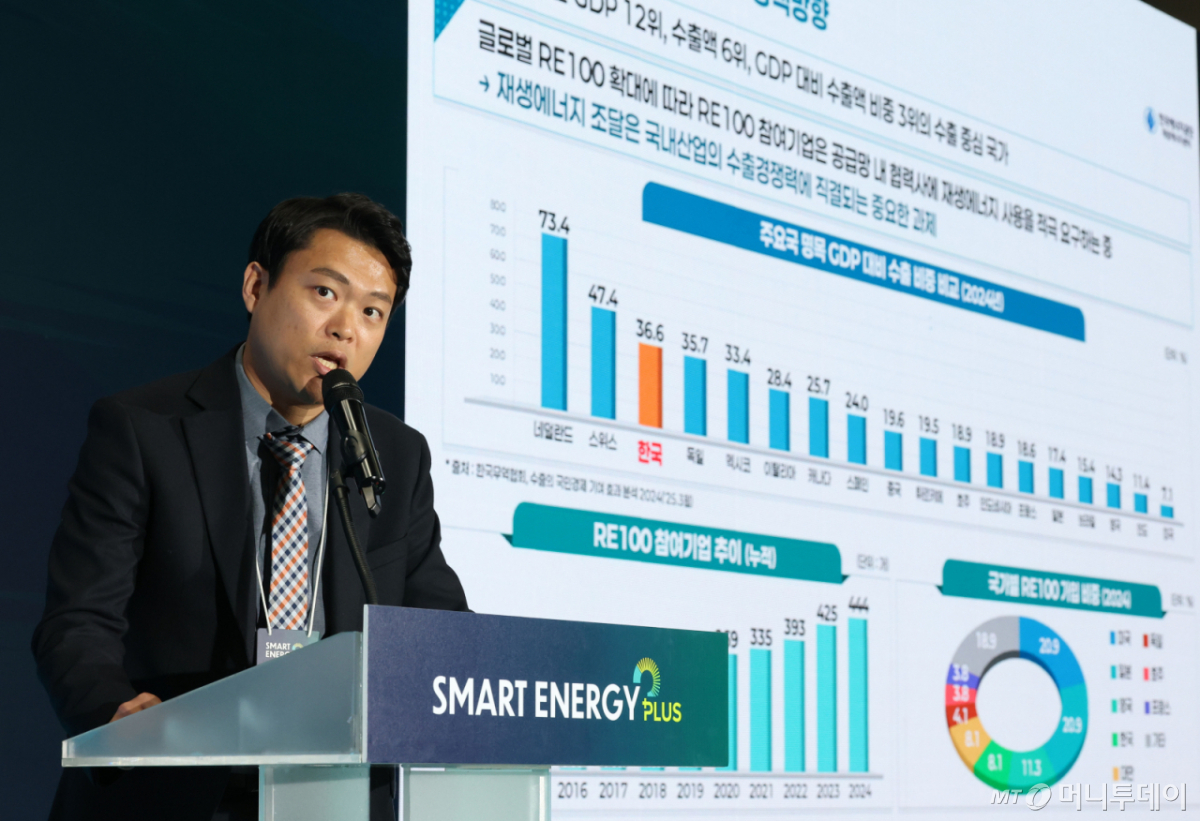
As renewable energy emerges as a key factor determining corporate competitiveness, suggestions have been made that predictable policies are needed to support companies' power procurement. It is argued that companies should be given more options beyond solar power by diversifying generation sources and utilizing Energy Storage Systems (ESS), while also expanding supply infrastructure such as the power grid.
Sessions discussing the expansion of renewable energy and corporate procurement strategies were held at 'Smart Energy Plus (SEP) 2026,' which took place in Hall B of COEX in Samsung-dong, Seoul, on the 29th.
At the Carbon Neutrality Academy networking session themed "Changing Environments: Corporate Renewable Energy Procurement Strategies," Cho Yeong-jun, Director of the Sustainable Management Institute at the Korea Chamber of Commerce and Industry, stated, "Companies that need to purchase renewable energy over the long term must make decisions with a 10- or 20-year outlook." He added, "Prices and policies must be stable enough for companies to invest with confidence."
The gap between policy changes and corporate procurement schedules was also cited as a challenge. Song Ki-seop, Team Leader of the Energy Platform Business at Hyundai E&C, said, "Companies need to make decisions by next year, or at the latest the year after, in order to meet their 2030 targets." He explained that while the government's direction for expanding adoption is clear, it remains uncertain when and at what price companies can secure supply volumes.
Diversification of procurement strategies was also called for. Kim Seung-hee, Senior Manager at KEI Consulting, noted that international standards for calculating carbon emissions are shifting to prioritize whether renewable energy is supplied during the actual hours electricity is consumed. This means that if daytime electricity rates drop, the cost-saving effect of solar Power Purchase Agreements (PPAs) may also diminish. She suggested combining solar power with ESS, stating, "It is important not only to consider how much and when to buy solar power, but also to think about how to shift supply to evening and nighttime hours to align with global standards and improve economic efficiency."
Heo Su-hyeon, Team Leader of the RE100 Policy Team at the Korea Energy Agency, stated, "Considering high energy import dependence and an export-oriented economic structure, expanding renewable energy is necessary." She presented key policy directions such as creating a marine wind power industry ecosystem, expanding sites for solar installation, and improving setback distance regulations. She added, "We are also promoting the construction of PPA supply-demand matching platforms to support corporate renewable energy procurement, as well as subsidies for transmission and distribution usage fees."
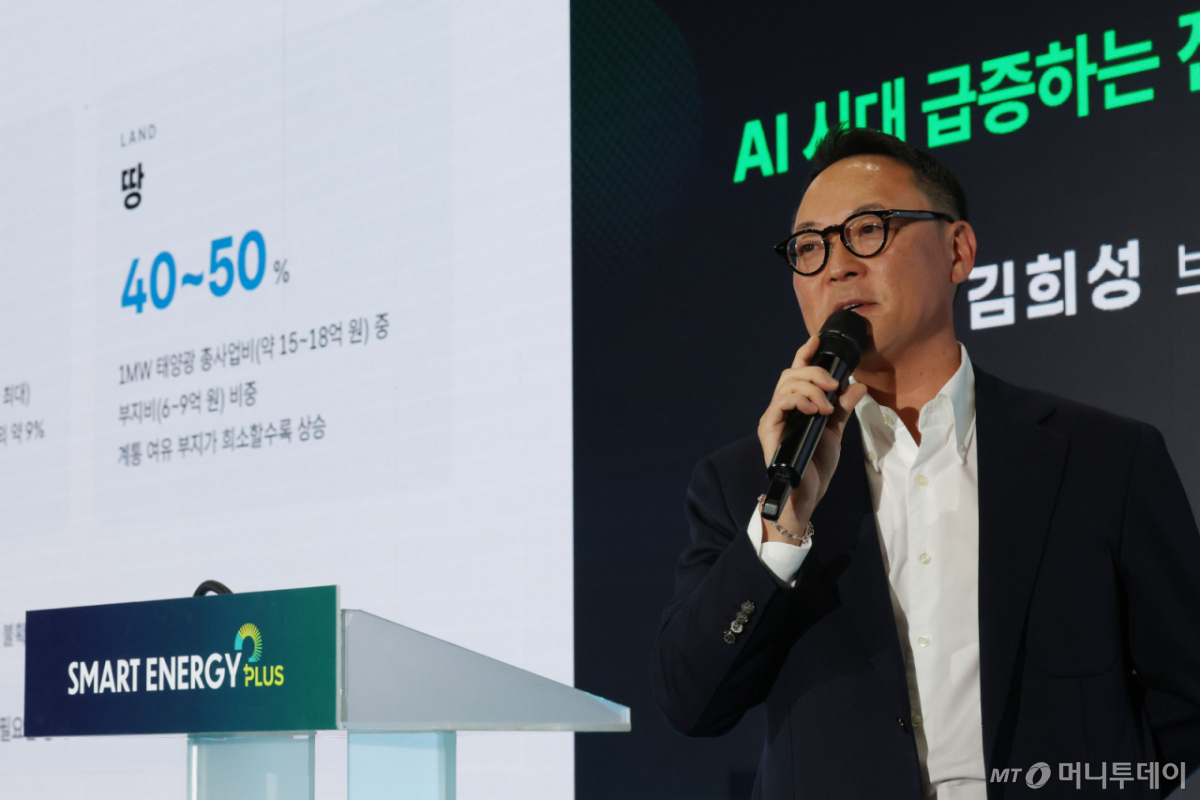
In a preceding conference session, Kim Hee-seong, Chairman of Brite Energy Partners, cited the movie "Moneyball," which depicts building a competitive team with a limited budget, as an example. Regarding the government's 2030 target of deploying 100 GW (gigawatts) of renewable energy, he said, "I generally support the broad direction," while emphasizing, "It is good to set ambitious goals, but metrics must be detailed." He argued that policy performance should be evaluated using specific indicators such as actual generation output, grid connection feasibility, and track record in reducing curtailment, rather than simply the amount of renewable energy equipment installed.
Chairman Kim pointed out, "The utilization rate of renewable energy generation facilities is only 15 to 20 percent," adding, "Even with the same capacity, the actual generation output is much lower." He further stated, "It is important to emphasize not just installed capacity, but targets for specific generation levels or increasing the share of renewable energy in total generation to a certain percentage by a specific year."

 in INDUSTRY

