

As the "blue wave," in which the Democratic Party took control of both the Senate and the House of Representatives in the U.S. midterm elections, became a reality, calculations within the domestic industry have become complex. While beneficiary sectors such as renewable energy are being mentioned, opinions are gaining momentum that there will be no change in trends such as America First, protectionism, and strengthened China containment.
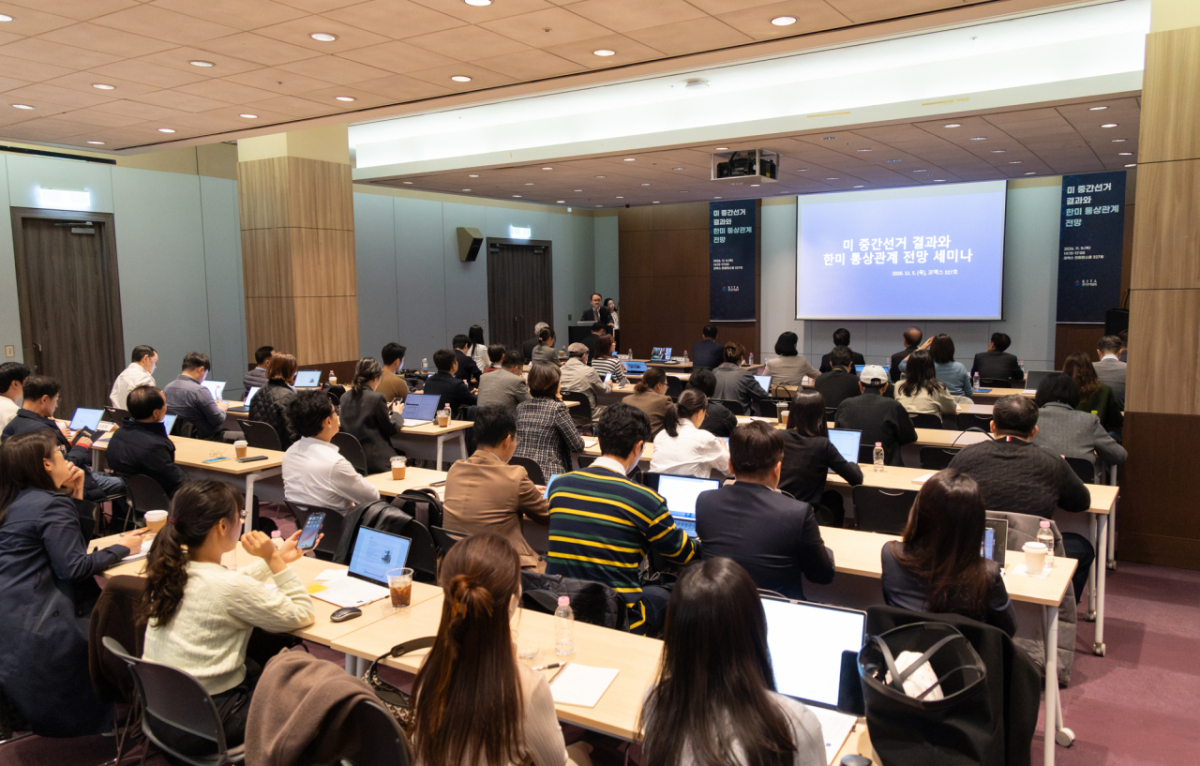
The Korea Trade Association held a seminar titled "U.S. Midterm Election Results and Outlook for U.S.-Korea Trade Relations" at COEX in Samsung-dong, Seoul on Thursday. The event was organized to examine the results of the U.S. midterm elections and the direction of trade policy in the latter half of the Trump administration's term, and to discuss current U.S.-Korea trade issues such as the implementation of investments in the U.S. and non-tariff barriers. More than 100 officials from the trade industry and related agencies attended.
In the discussion, AI (artificial intelligence) data centers and fossil fuels were cited as sectors that could lose momentum following the Democratic Party's midterm election victory. These are industries where President Donald Trump had been pushing hard, while the Democratic Party has taken a skeptical stance. Sectors that could gain momentum included renewable energy, which the Democratic Party has traditionally favored.
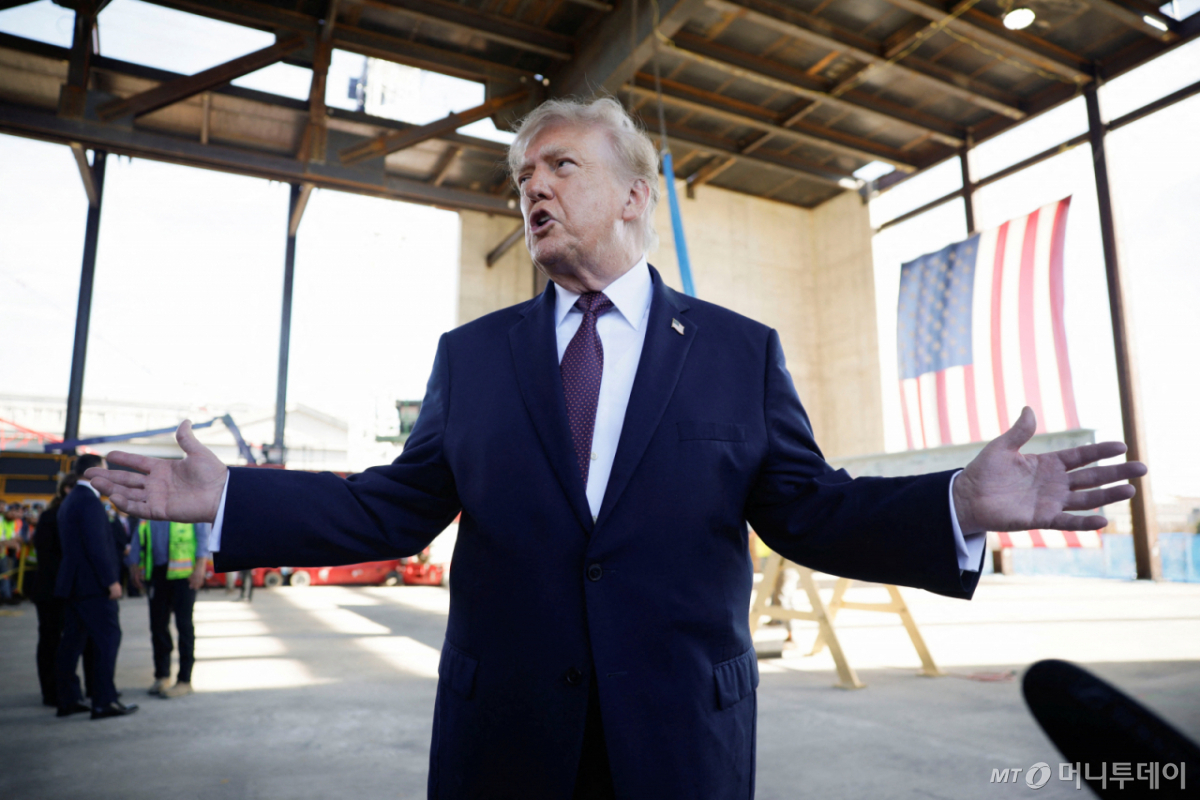
There is strong support for the forecast that there will be no change in the broad framework of U.S. trade policy. Since President Trump can exercise his veto power, it is virtually difficult to overturn existing legislation, and protectionism and China containment are policies that the Democratic Party could actually pursue more aggressively. Looking at tariffs alone, there is precedent where those imposed during Trump's first term were not revoked during the Biden administration.
Professor Ha Sang-eung of the Department of Political Science and International Relations at Sogang University explained at the seminar, "The reason for President Trump's midterm election defeat lies in 'neglect of people's livelihoods,' but the Democratic Party also has no choice but to prioritize how to lift up the domestic middle class and marginalized people," adding that "their fundamental perspective will differ from multilateralism and liberalism."
Professor Heo Yoon of the Graduate School of International Studies at Sogang University also stated, "At least regarding China containment, there is no difference between the Democratic Party and the Republican Party, and the Democratic Party has traditionally supported protectionism," adding, "Korea's position could be perceived as a route for indirect exports to China, so measures need to be prepared for this."
Jang Sang-sik, President of the Korea Institute for International Trade Policy under the Korea Trade Association, expressed concern about the possibility of increasing risks. He stated, "In a divided government situation, if conflicts between the legislature and the executive branch are prolonged, it could affect administrative procedures related to investments in the U.S.," suggesting that "it is necessary to check whether safety devices such as contribution caps and umbrella-type profit sharing are functioning properly."
The domestic industry is currently focusing on the possibility of strengthened regulations on U.S. AI data centers and a boom in renewable energy. Looking at just the battery industry, expectations for benefits from eco-friendly energy policies and concerns over data center regulations intersect. As the Democratic Party secured influence in Congress, there is an aspect where expectations have risen regarding the sustainability of battery production tax credits and ESS (Energy Storage System) investment tax credits under the IRA (Inflation Reduction Act). On the other hand, if conditions for data center permits become complex, there is a possibility that new orders for ESS and others could be delayed.
Researcher Kang Jin-hyuk of Shinhan Investment Corp stated in a report, "Even if AI demand is sufficient, political and social costs can act as noise in the process of converting it into actual computing supply," adding, "Going through delays in data center groundbreaking and operation could widen the gap between previously announced real investment plans and actual execution."
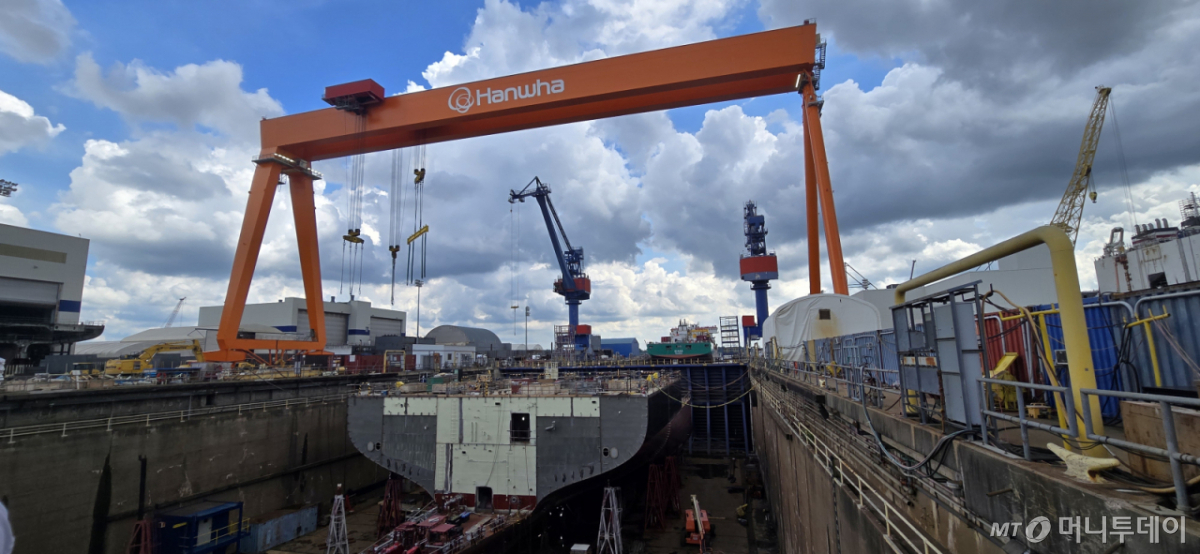
Regarding MASGA (Make American Shipbuilding Great Again), which the Trump administration has emphasized, the majority view is that its direction will be maintained. Given that the structure of U.S. decline and China's rise remains, from the U.S. perspective, it faces a situation where it must rebuild the shipbuilding industry by any means necessary.
Researcher Lee Min-jae of NH Investment & Securities mentioned, "The large battleships mentioned by President Trump may not be easy to promote as projects, but auxiliary ships and small combat vessels cited as MASGA cooperation targets are backed by strong demand from the U.S. Navy, so they will proceed without change." There are voices saying that opportunities for ship maintenance, repair, and overhaul (MRO), supply of ship blocks, and projects utilizing local U.S. shipyards will become relatively more important.

 in INDUSTRY


