

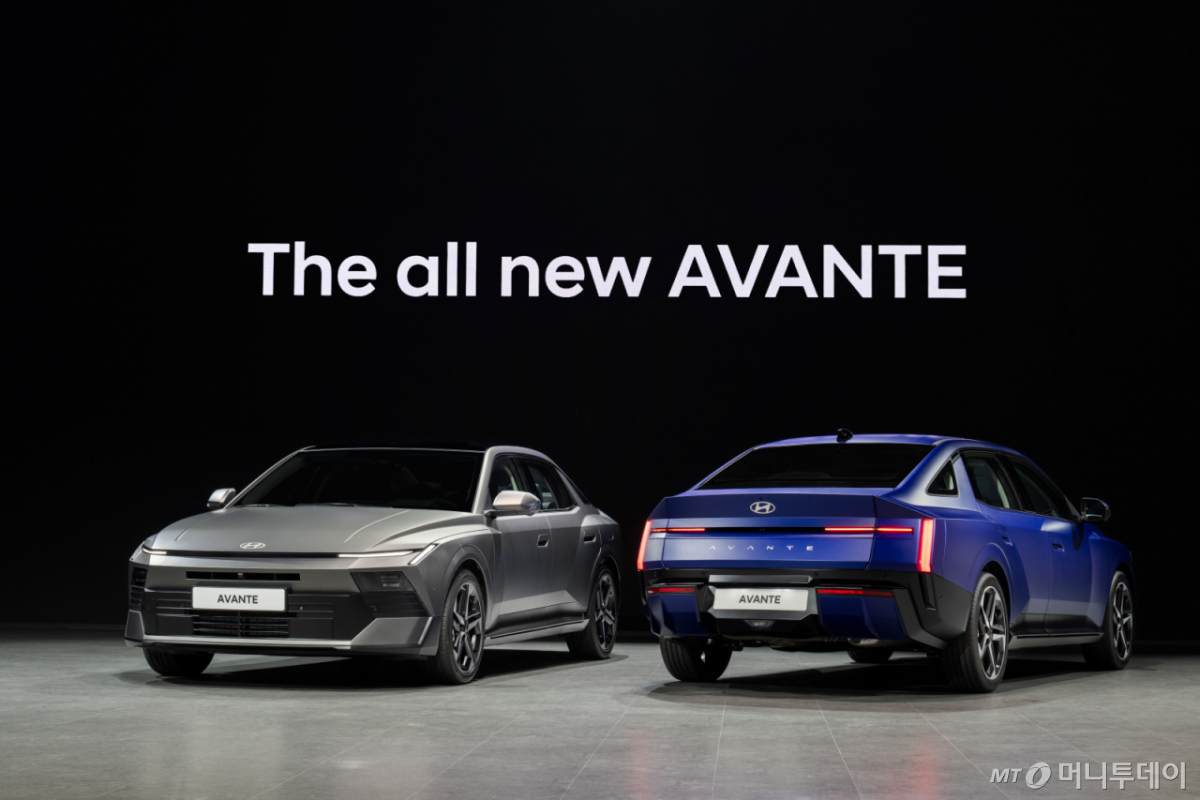
Hyundai Motor and Kia, which raised new vehicle prices by incorporating next-generation infotainment systems, are grappling with pricing decisions. As sales of the Avante, a key model, have fallen short of expectations, the Hyundai Motor Group is considering adjusting specifications while also deliberating over the price level of the facelifted Kia K5, the first model to feature the same system.
According to industry sources on the 9th, domestic sales of the Avante last month totaled 5,730 units, a decrease of 21.6% from the previous month and 4.7% compared to the same period last year. The eighth-generation Avante, launched in August, features the next-generation infotainment system 'Pleos Connect' as standard across all trims. With an enlarged body, the starting price for gasoline models rose by 3.36 million won, from 20.62 million won to 23.98 million won. The starting price for the Hybrid model also increased by 3.87 million won, and adding all optional features to the top-tier trim pushes the price over 40 million won.
Hyundai Motor has determined that price concerns are affecting sales and is reviewing countermeasures. At a recent Non-Disclosure Agreement (NDR) meeting with domestic institutional investors, the company explained that price resistance to the new Avante was greater than anticipated and initial reactions fell short of expectations. It also mentioned plans to adjust certain specification configurations to reduce the financial burden on buyers. In contrast, the new Tucson, which began full-scale sales at the end of last month, is reported to have a favorable flow of initial contracts, as such market reactions were reflected during the pricing stage.
The industry views that the price hike had a more significant impact on sales due to the segment's characteristic high demand for first-time car buyers. The domestic competitive environment is also challenging. Hyundai Motor analyzes that while Chinese-made electric vehicles are entering the market at low prices, its own new vehicle prices have risen, broadening the range of vehicles consumers compare. Nevertheless, the company takes a cautious approach, noting that short-term price cuts or expanded incentives could burden the brand. As the importance of service accessibility grows with increasing imported car sales, the company plans to leverage its domestic service network as a competitive advantage.
Kia also acknowledged at a recent NDR meeting that there is indeed price resistance due to the inclusion of Pleos Connect. However, it emphasized that the system, which integrates smartphone functions on a large screen and allows users to ask AI (artificial intelligence) questions via voice while continuously updating based on usage pattern data, can enhance convenience by reducing in-vehicle operation during driving.
Attention is also focused on what price level will be set for the facelifted K5 model scheduled for release next March. The system is expected to be installed for the first time in a Kia passenger car, and industry sources suggest the possibility of a price increase. Previously, the Grandeur also received Pleos Connect during its facelift last May, with the base trim price rising by 3.87 million won from 37.98 million won to 41.85 million won.
The Hyundai Motor Group is focusing on reducing cost burdens. It plans to apply new features starting from higher vehicle classes before expanding them to all classes, and to jointly develop a Software-Defined Vehicle (SDV) platform with Kia to reduce the development cost burden per vehicle.

 in INDUSTRY
