

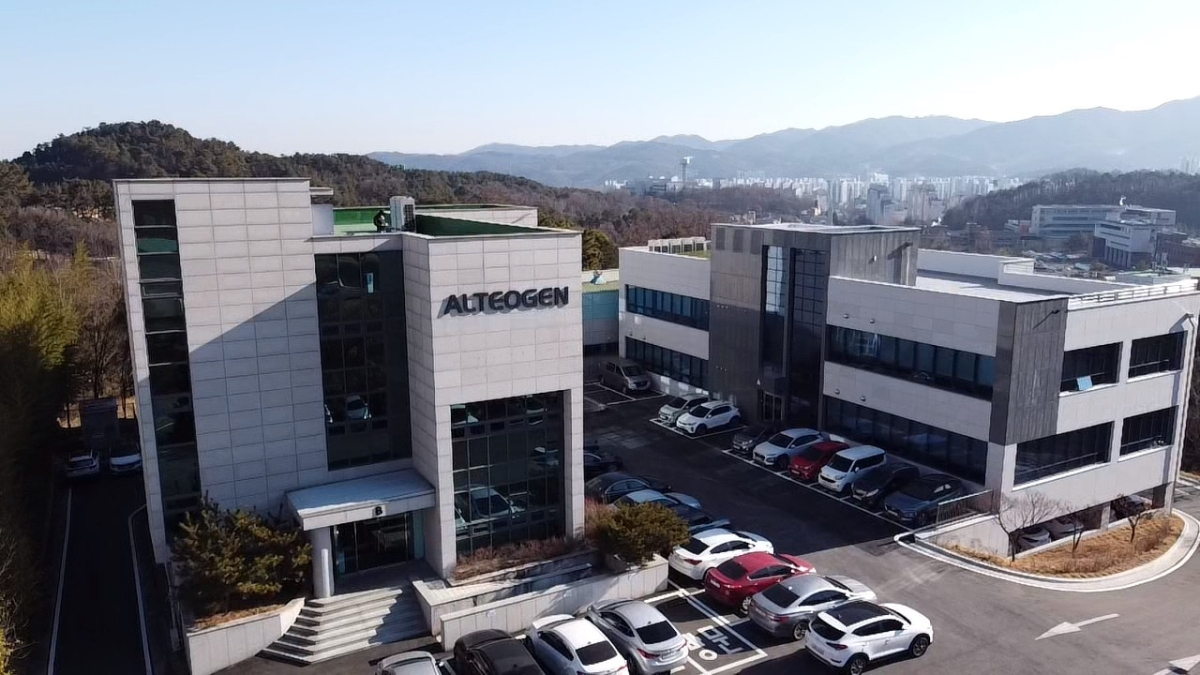
Alteogen has sought to ease concerns that U.S. drug price cuts could undermine its business prospects, saying the impact will vary by product. The company also maintains that formulation technology remains valuable as a patent protection strategy.
Under the Inflation Reduction Act (IRA), the U.S. government has introduced a Medicare drug price negotiation program that allows it to negotiate prices directly with pharmaceutical companies for high-cost medicines. MSD's blockbuster cancer drug Keytruda is expected to be selected for price negotiations in 2027, with the negotiated price likely to take effect in January 2029.
MSD developed a subcutaneous (SC) version of Keytruda using Alteogen's Hybrozyme technology, whose key ingredient is ALT-B4. The strategy aims to maintain patient demand while extending and protecting the drug's market exclusivity through patents.
However, concerns spread to Alteogen after the U.S. government said certain SC formulations could be grouped with their original drugs for price negotiations.
This raised the possibility that even if the same marketing authorization holder switches an existing drug from intravenous (IV) to SC administration, the new formulation could still be subject to price negotiations.
Investors worried that this could hurt Alteogen's earnings linked to Keytruda SC sales. Alteogen shares fell as low as 152,500 won on Monday, setting a 52-week low.
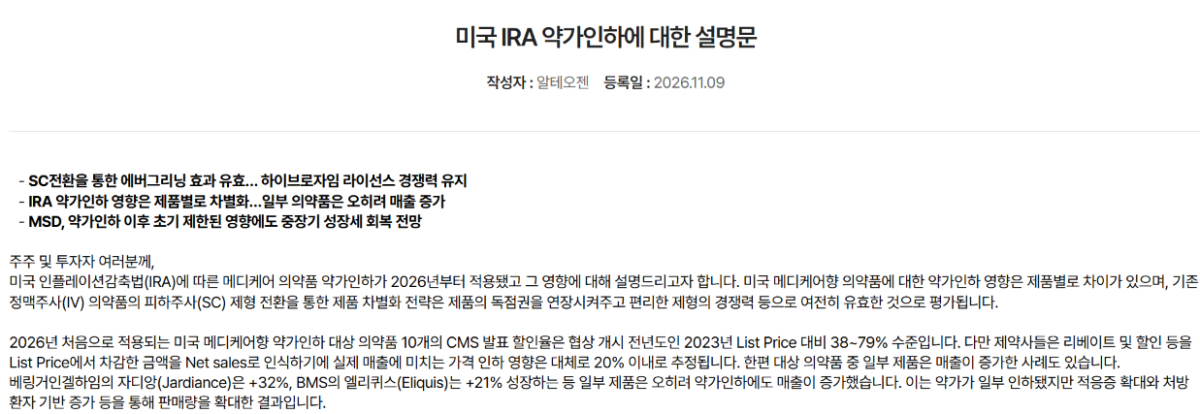
In a statement posted on its website, Alteogen cited Boehringer Ingelheim's Jardiance and Bristol Myers Squibb's Eliquis, saying their sales grew 32 percent and 21 percent, respectively, despite price cuts, thanks to expanded indications and increased prescriptions.
The company also said the discounts for the 10 drugs subject to the first round of U.S. Medicare price cuts this year ranged from 38 percent to 79 percent compared with 2023, the year before negotiations began. However, after accounting for rebates and discounts, the actual price reduction is estimated at around 20 percent, it said.
Alteogen also argued that the inclusion of SC formulations in price negotiations should be viewed separately from global pharmaceutical companies' patent protection strategies. The company said it has signed 10 Hybrozyme licensing agreements with global pharmaceutical companies since 2019.
"The evergreen strategy based on ALT-B4 patents, which involves filing and registering follow-on patents to extend market exclusivity and protection periods, remains valid, and we expect market demand to continue," the company said.
MSD said during its third-quarter earnings presentation that it expects an initial, limited impact on sales from IRA pricing, but anticipates a relatively rapid return to growth. Keytruda SC, marketed in the United States as Keytruda Qlex, generated $830 million in sales in the third quarter, up 79.3 percent from the previous quarter, demonstrating its market competitiveness.
As of the third quarter, SC formulations accounted for 9.7 percent of Keytruda sales. MSD expects the conversion rate to rise to 30 percent to 40 percent by next year.
"Despite IRA price cuts, we believe the fundamental demand for switching to SC formulations and the technological competitiveness of Hybrozyme remain intact," Alteogen said. "We will strengthen our mid- to long-term growth foundation by expanding global partnerships and commercialization."

 in THEBIO

