

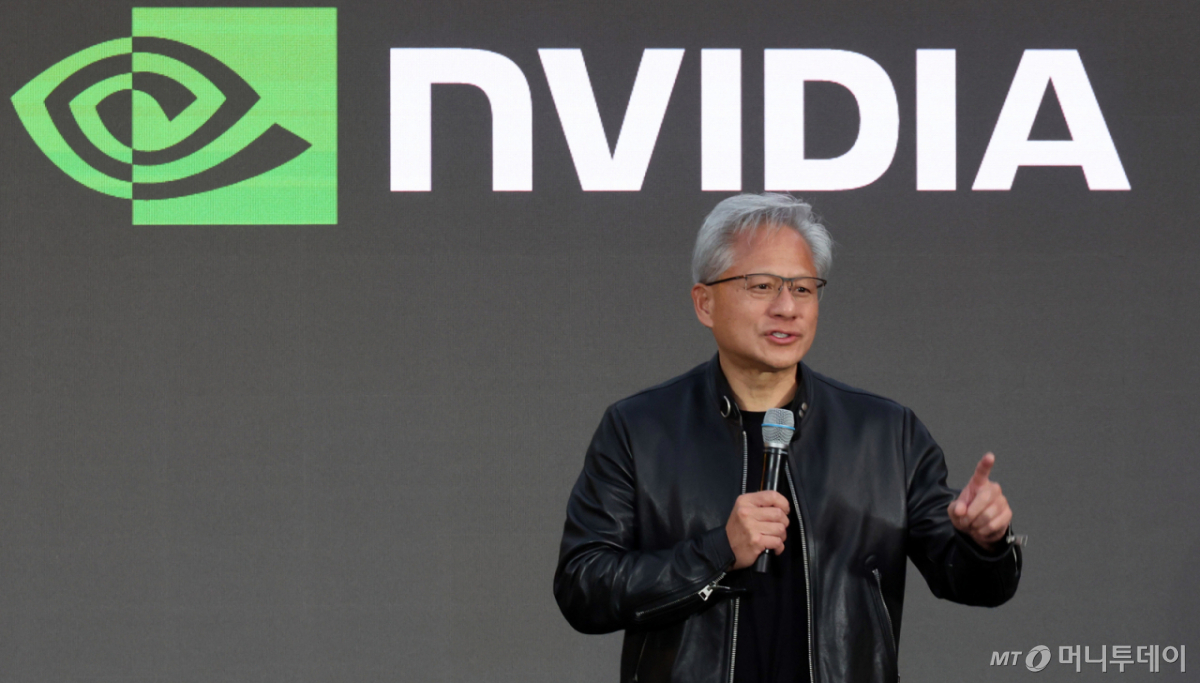
Concerns are growing over a potential slowdown in artificial intelligence (AI) data center investments following the "blue tsunami" victory of the Democratic Party in the U.S. midterm elections. This uncertainty in the AI industry has been further amplified by the affair scandal involving Jensen Huang, CEO of NVIDIA.
Nevertheless, the supplier advantage in the memory semiconductor market, led by Samsung Electronics and SK hynix, is not expected to be easily shaken. This is because demand has already been secured in advance through long-term supply agreements (LTAs), and there is room to adjust the pace of capital expenditure.
According to electronics industry sources on the 9th, UBS, a global investment bank, analyzed in a report on AI semiconductors released after the U.S. midterm elections that "while political opposition may delay data center projects, change their locations, or increase costs, it is unlikely to fundamentally alter demand."
With the Democratic Party's victory in the U.S. midterm elections, the likelihood of stricter regulations on AI data center construction has increased. In particular, Democratic candidates who campaigned on limiting new data center construction and strengthening electricity cost burdens were elected as governors in major data center investment regions such as Texas, Ohio, and Georgia.
Consequently, concerns are emerging that if permits for new data centers are delayed or construction is halted, the growth in demand for High Bandwidth Memory (HBM) and DRAM installed in AI accelerators and servers could slow down. Goldman Sachs expects that approximately 45% of the planned expansion in data center capacity in the U.S. could be affected by political regulations.
Controversies surrounding NVIDIA, a key player in the AI semiconductor market, are also a variable. Amidst CEO Huang's admission of an extramarital affair and suspicions regarding his partner's ties to Chinese intelligence agencies, the NVIDIA board of directors has launched an independent investigation.
Given that CEO Huang has played a leading role in the global AI industry, the outcome of the investigation could impact investment sentiment across the entire AI sector. NVIDIA maintains that there is currently no evidence suggesting a leak of national security information or company secrets.
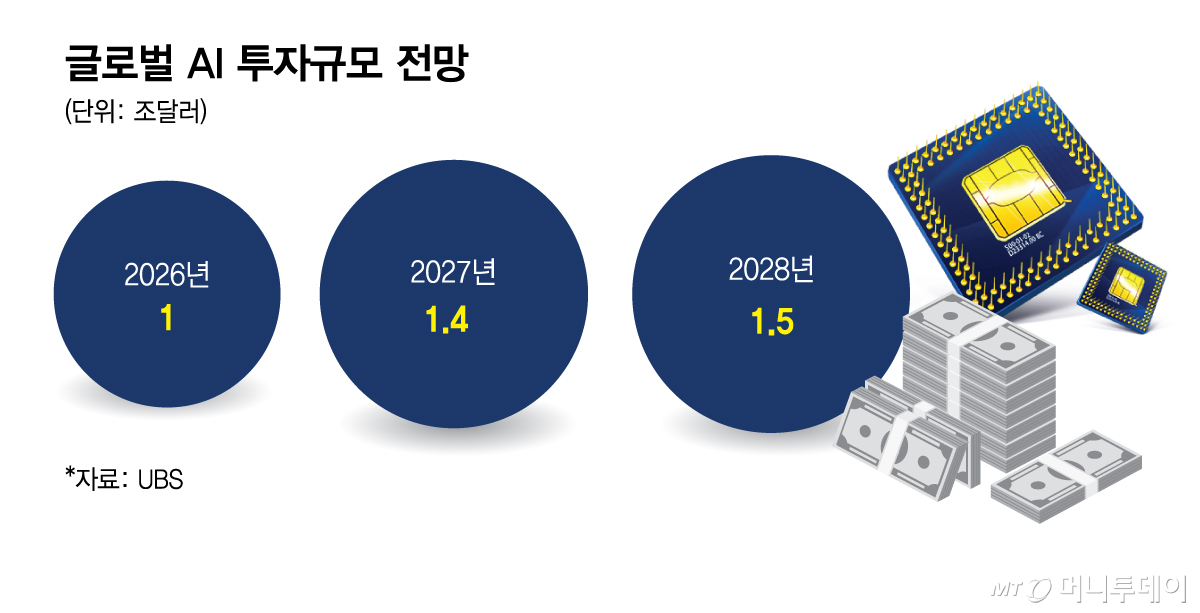
However, it is assessed that such uncertainties are unlikely to immediately lead to an oversupply in the memory market. A significant number of data center construction plans have already been permitted, and industry views suggest that even if some projects are delayed, AI infrastructure investment itself will not shrink but rather see a postponement in execution timing. UBS forecasts that global AI-related capital expenditure will expand from $1 trillion this year to $1.5 trillion by 2028. This represents a 50% increase in investment scale over two years.
The fact that Samsung Electronics and SK hynix have already secured a substantial portion of future production volumes through long-term supply agreements also supports the memory boom. Samsung Electronics has signed LTAs with 10 major global customers and is currently negotiating with another 10. Some existing contract customers are requesting additional volumes. Samsung Electronics expects to secure 60% to 70% of its 2030 production capacity through long-term supply agreements.
SK hynix has also signed LTAs with 14 major global customers and is discussing contract extensions with some of them. DRAM and HBM volumes for the next three years are effectively sold out. The volume secured through current LTAs accounts for more than 50% of total production capacity for 2027 to 2028.
Cards remain in hand to respond even if demand decreases more than expected. A representative example is the "Shell First" strategy, which involves constructing production facilities first and bringing in semiconductor manufacturing equipment according to demand.
The actual production capacity of a semiconductor plant is secured only after equipment is installed and operated inside the cleanroom. Memory manufacturers can manage the pace of supply expansion by proactively preparing cleanrooms while adjusting the timing of equipment installation based on market conditions.
If the growth in demand slows, this approach prevents oversupply by delaying equipment introduction. At its Q3 earnings announcement last month, Samsung Electronics explained that it "plans to continue a supply management policy of proactively securing cleanrooms, closely monitoring changes in demand, and flexibly executing equipment introductions."
Predictions of further increases in memory prices remain. With the average selling price (ASP) of DRAM reaching an all-time high, SK hynix forecasted that memory supply shortages could continue until 2030. Industry observers also predict that the ASP of HBM next year could rise by more than double compared to this year.
An industry official stated, "Not only data center operators and server manufacturers, but also mobile and automotive companies are seeking LTAs," adding, "Even if data center demand decreases somewhat, it is highly likely that memory demand in other sectors will compensate for it."

 in INDUSTRY

