

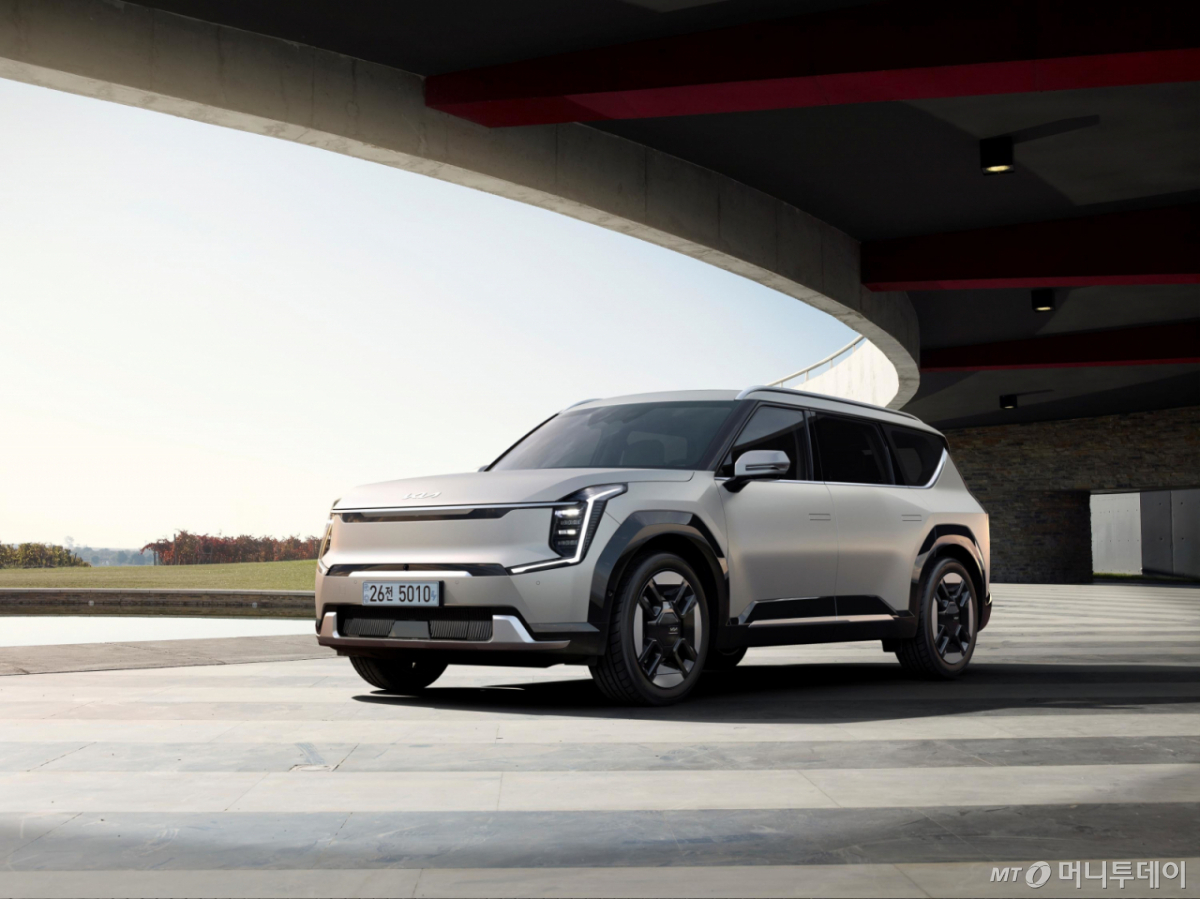
Kia is facing growing profitability pressures in the U.S. and domestic markets as it ramps up electric vehicle (EV) sales. The company's strategy is to secure EV market share first, even at the expense of immediate profits, and then offset losses with its hybrid vehicles.
According to industry sources on the 11th, Kia's per-vehicle incentives in the U.S. are $1,800 for internal combustion engine (ICE) vehicles and $2,000 for hybrids. For EVs, the incentive is $12,000, six times that of hybrids. This resulted from widening discounts after U.S. EV demand softened following the expiration of tax credits.
The burden is significant even when compared to the U.S. market average. According to Kelley Blue Book, a U.S. automotive pricing information firm, the average incentive for EVs in the U.S. was approximately $6,100 per vehicle in September last month, equivalent to 11% of the transaction price. Kia is spending nearly twice the industry average. Last month, Kia focused on expanding sales by offering cash discounts of up to $10,000 for the EV9 and $5,000 for the EV6. Based on this, Kia's U.S. EV sales last month reached 3,649 units, a 174.2% increase year-on-year.
Domestically, Kia has also seen profitability decline as it lowered prices to boost sales. After Tesla's market share rose, Kia cut its EV prices in the second quarter. Since then, the domestic market has become the area where Kia's EVs post the largest losses. Sales have surged significantly, allowing Kia to surpass 100,000 annual EV sales for the first time among global automakers this year.
In Europe, unlike in Korea and the U.S., Kia is generating profits from its EVs. Europe is Kia's largest market, accounting for 50% of its EV sales. The shares for Korea and the U.S. are 25% and 8%, respectively. In Europe as well, Kia increased incentives by approximately 1,000 euros in the second quarter to compete with Chinese manufacturers, but it maintained a profitable structure. The price gap with Chinese EVs has narrowed from 30% to around 15%.
For now, Kia is prioritizing sales expansion over profit. This calculation stems from the belief that securing market share early as the EV market grows will allow for lower costs through economies of scale. It appears Kia is filling the gap in EV profits with its hybrid vehicles. Hybrids are highly profitable and are seeing concentrated demand in the U.S. Kia's U.S. hybrid sales last month reached 27,409 units, more than double the figure for the same period last year.
Kia is also working to reduce EV costs. Specifically, it plans to cut the costs of key components such as batteries, motors, and heat pumps by approximately 10% annually over three years. The goal is to improve EV profitability within two to three years by simultaneously expanding sales and reducing costs. Kia believes that once the burden of raw material prices and the impact of Middle East conflicts subside, it can restore its operating profit margin to the high 7% or around 8% level next year.
An industry official explained, "If you lose market share when the EV market is growing, it is difficult to regain it." The official added, "It was judged that maintaining sales volume, even if profitability drops slightly, is better for future growth." They continued, "The key is how quickly we can lower EV costs while holding on with hybrids."

 in INDUSTRY
