

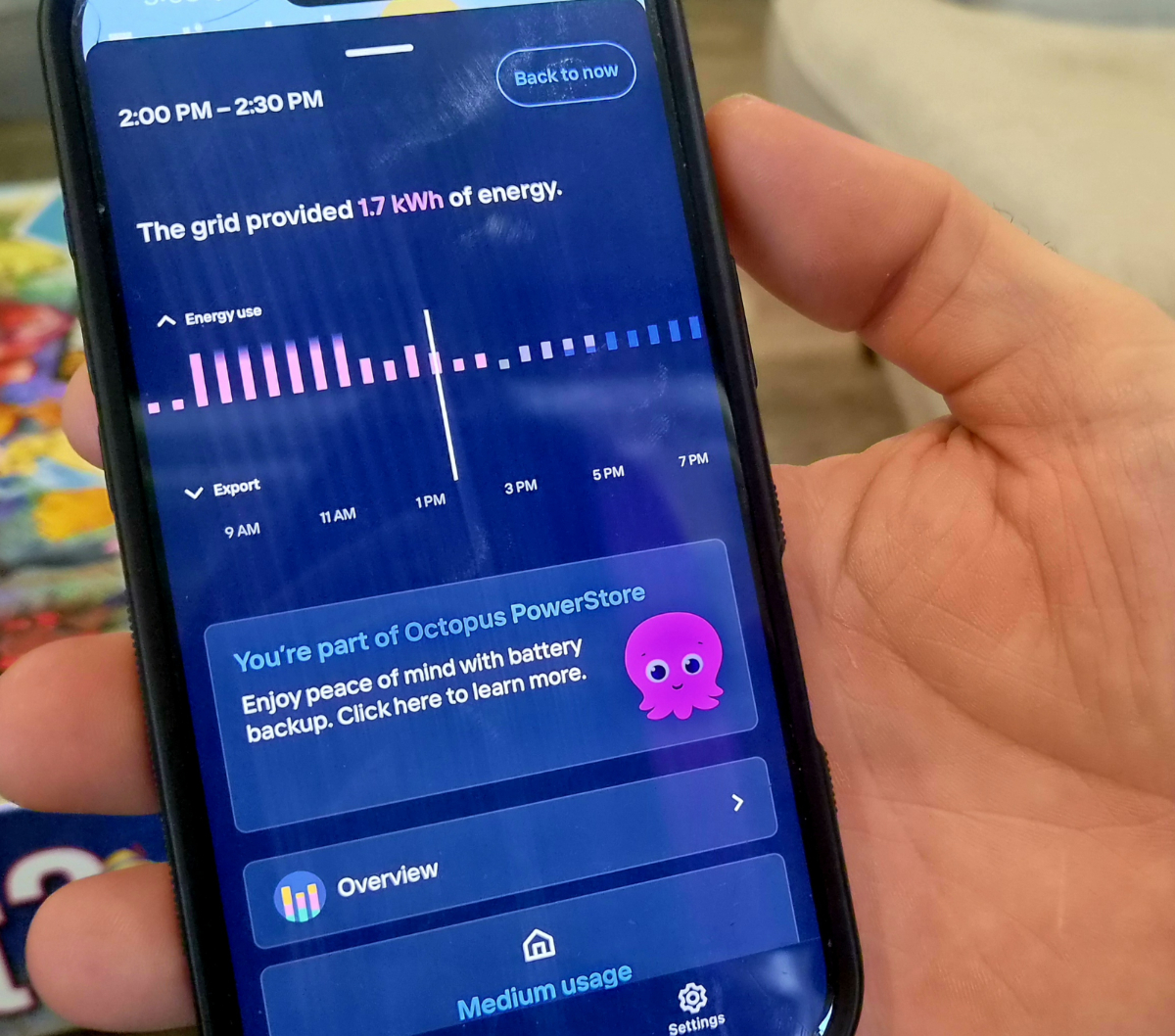
"Usually, from 6 p.m. to midnight, my home runs on battery power."
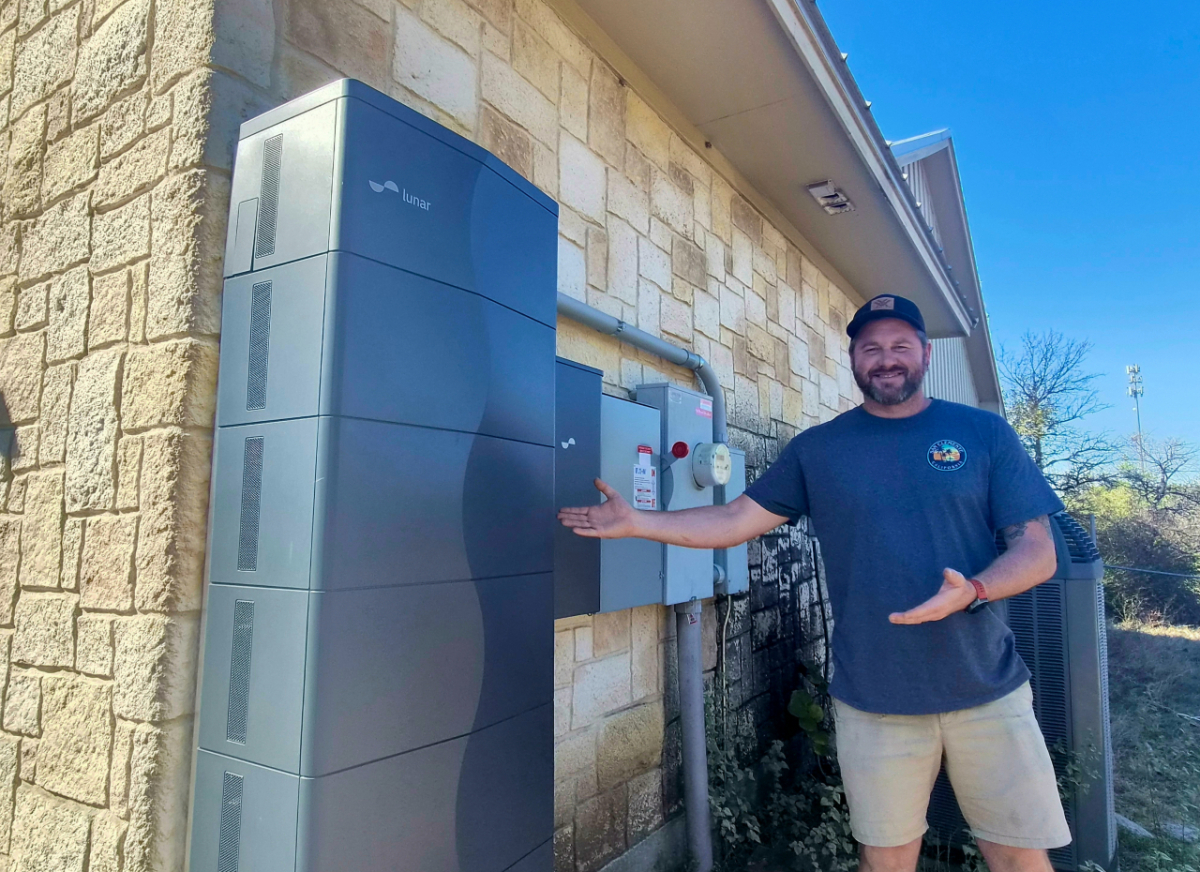
Nick Davis, met at his home in Fort Worth, Texas, on the 5th of last month (local time), checks the flow of electricity within his household using a smartphone app. The app screen displays in real time when the residential battery installed in his yard is charging and discharging. The electricity usage habits of the Davis family, who are raising two children, remain the same as before. What has changed is the "time slot" during which they draw electricity from the grid. When regional electricity demand spikes in the evening, the Davis home lights up using battery power charged in advance during the day, rather than drawing from the grid.
The reason he installed a residential battery three months ago was the Texas blackout of February 2021. At the time, temperatures dropped to near minus 16 degrees Celsius due to a winter storm, and his home lost power for five days. The family had to leave their home to escape the cold. A diesel generator for blackout preparedness cost between $20,000 and $30,000, which was a burden. Thus, the alternative he found is "PowerStore," a residential battery subscription service by electricity retailer Octopus Energy. For just $45 per month (approximately 60,000 won) with no initial installation cost, one can rent and use a battery with a capacity of 30kWh (kilowatt-hours). In return, the company remotely controls the timing of charging and discharging.
When asked if he had experienced any blackouts since installing the battery, he said, "I didn't feel any blackout at all," and checked the app records. In reality, there were a total of five blackouts lasting 8 minutes and 19 seconds during that period. Davis stated, "The lights didn't even flicker, so I didn't even know a blackout had occurred."
Shifting EV charging times: A two-for-one benefit of grid relief and driver compensation
For consumers like Mr. Davis, it serves as blackout preparedness, but what electricity company Octopus focused on was the regular evening hours. As the sun sets, solar power generation drops sharply, while household cooling and appliance demand reaches its peak. At this time, if each household uses the electricity stored in their batteries, the burden on power plants and transmission lines is reduced.
Octopus bundles the batteries of PowerStore subscriber households in Texas into a single virtual power plant (VPP). It charges during times when electricity is abundant and cheap, then supplies battery power to homes or sends it back to the grid during peak electricity usage hours when the grid is congested. This electricity becomes a resource that earns money by directly participating in the wholesale electricity market. The principle is that because Mr. Davis's home received its evening electricity in advance during midday, the grid had spare capacity to send elsewhere at the same time, and Mr. Davis was able to reduce his electricity bill.
Electric vehicle charging works the same way. Even if you plug in the charger at 6 p.m. after work, it is sufficient if charging is completed before leaving for work the next morning. There is no need to charge specifically during the time when neighbors are preparing dinner and turning on air conditioners. Octopus delays charging to late-night hours with low electricity demand, obtaining customer consent. Although the total amount of electricity consumed by consumers remains the same, "demand flexibility," which reduces grid burden by adjusting the timing of electricity use, is a structure that benefits both consumers and companies.
Solving data center power shortages with grid flexibility
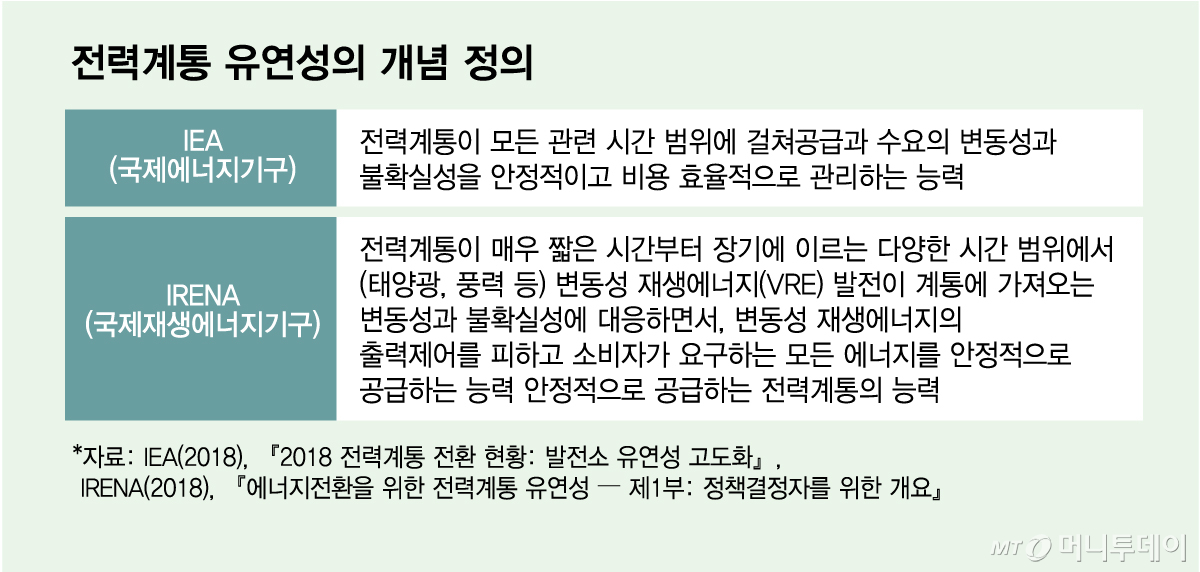
This kind of power system flexibility extends as one solution to the power shortage problem caused by AI data centers. First, by adjusting the charging and usage times of batteries, electric vehicles, and appliances in thousands or tens of thousands of households to secure spare capacity in transmission and distribution networks during peak electricity usage hours, it becomes possible to supply power to large-scale new facilities like data centers without building new power plants or transmission lines.
In particular, in the United States, capacity and transmission fees are determined based on usage during the highest demand hours of summer. Therefore, if flexibility increases, data centers can be built quickly in that region with residents' consent without raising electricity rates.
Big tech companies have also focused on this "spare capacity." A representative case is Google's agreement last month to build a 1GW (gigawatt) scale VPP in areas under the jurisdiction of PJM, the power system operator for the U.S. East and Midwest, in partnership with demand response company Voltree. Google provides funding, while Voltree bundles batteries, smart thermostats, and industrial equipment to reduce electricity usage during times when power supply is tight. Customers who participate in savings receive compensation. Octopus took on the role of connecting residential power sources, such as home batteries, to the Google-Voltree VPP.
This method is called the "BYOC (Bring Your Own Capacity)" model, where data center operators directly secure the necessary power margin through ensuring power system flexibility. Nick Chaset, head of Octopus Energy's U.S. subsidiary, met in San Francisco on the 9th of last month (local time), stated, "The solution to the data center power problem can come from the participation of 100,000 or 500,000 individual consumers."
Data centers: Delay non-urgent computations
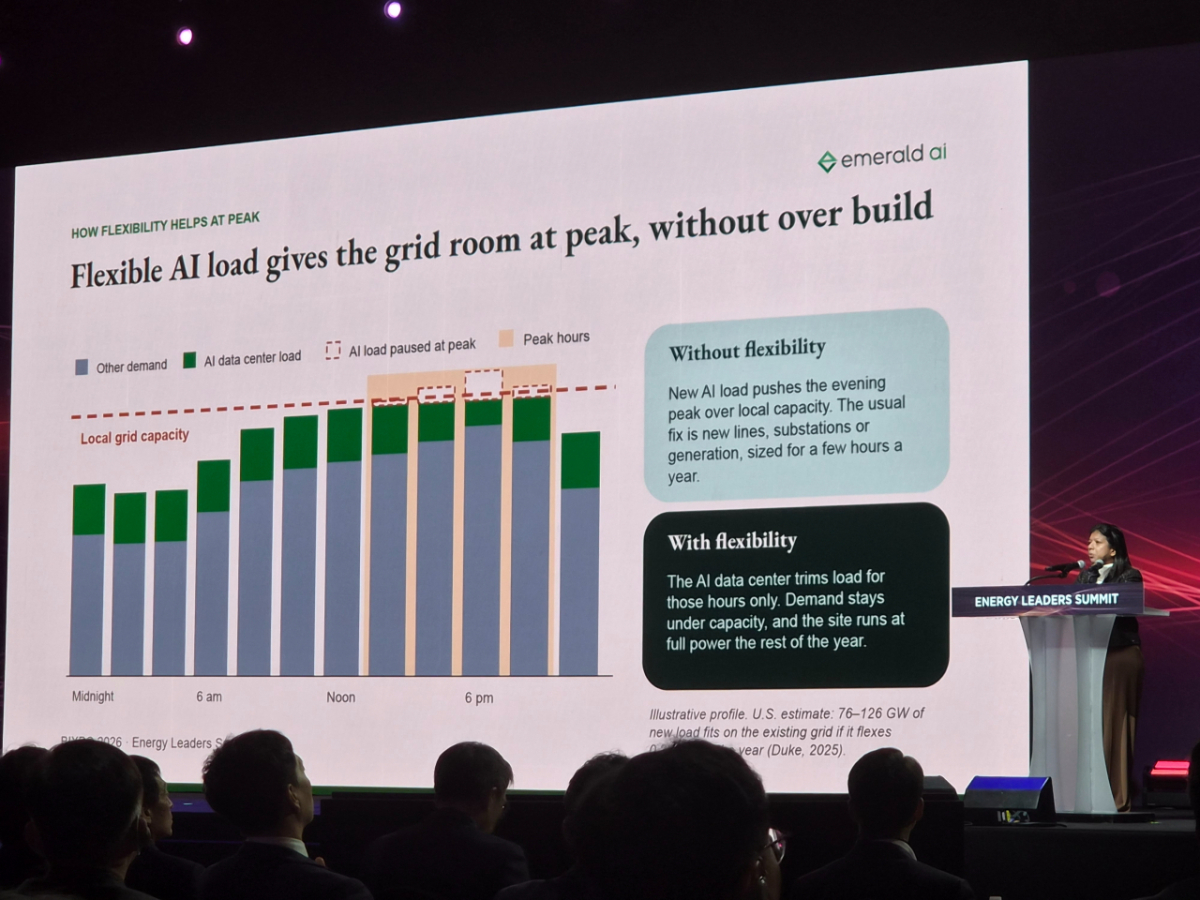
Another pillar of the solution is viewing data centers themselves as flexible electricity demand sources. Just as electric vehicle drivers have the flexibility to complete charging before leaving for work the next day, there are tasks in data centers that can be slightly delayed. Mansi Xia, Head of Product at Emerald AI, which develops software to adjust data center computations according to power system conditions, explained in a presentation at BIXPO on the 5th: "Among data center computations, less urgent ones can have caps placed on the power used by graphics processing units (GPUs), or the tasks themselves can be moved to nights when electricity demand subsides."
There are also cases where this has been applied in actual data centers. In August last year, in California, U.S., as cooling demand surged around sunset, a local power company sent a signal to an AI data center asking it to reduce electricity usage. While Emerald AI's software slowed down the processing speed of less urgent computations upon receiving the signal, tasks requiring immediate response to users continued to run. According to NVIDIA, power consumption dropped from 4MW (megawatts) to 3MW at the time.
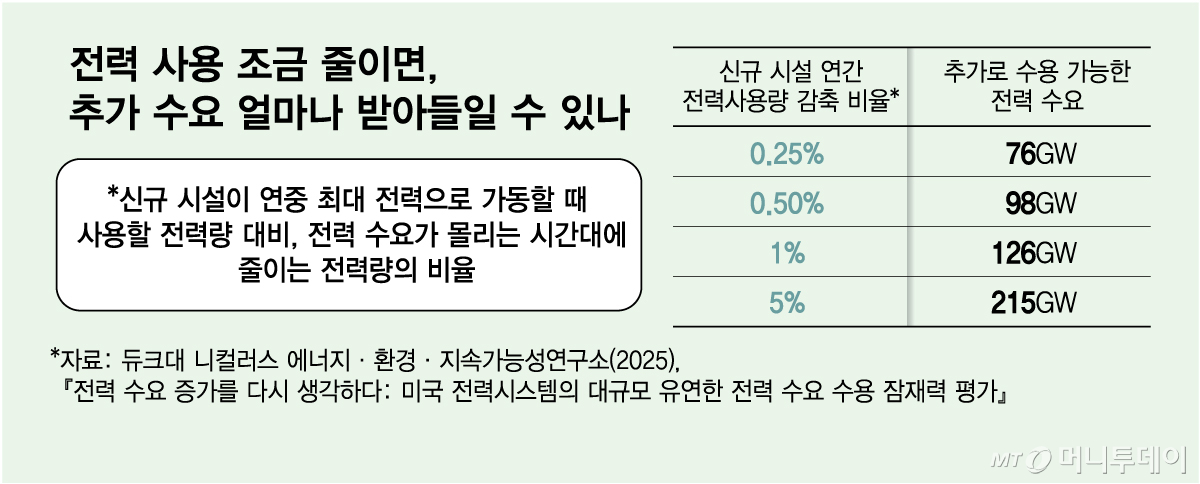
If data centers use less electricity only during the few hours when electricity demand is highest, more data centers can be supplied with power through existing grids before building new transmission and distribution networks. Researchers at Duke University in the U.S. analyzed 22 power system operating regions within the United States and estimated that if large-scale new power-consuming facilities like data centers reduce their peak annual power usage by 0.25%, they could accommodate an additional 76 gigawatts (GW) of electricity demand.
Mark McGranahan, a research fellow at the U.S. Electric Power Research Institute (EPRI), stated in the same BIXPO presentation that demand adjustable at peak usage times, from household electric vehicle charging to data center computations, should be reflected in power system investment plans. For example, if a region needs to increase distribution lines due to cooling demand for a few hours on summer evenings, one should first calculate how much power residential batteries can supply and how much data centers can reduce usage during that time. He said, "To change investment decisions based on how much flexibility can be secured, that flexibility must also be reflected in planning."
※This special coverage was supported by the Korea Journalists Association and Climate Media Hub.

 in INDUSTRY


