

Expectations are growing that domestic solar and battery industries will benefit from the passage of the energy permitting reform bill by the U.S. Senate. The bill includes provisions to impose the costs of power supply for data centers and grid expansion on operators, as well as to simplify the permitting procedures for renewable energy generation projects. Analysts suggest this could lead to an expansion of power generation and Energy Storage System (ESS) projects in the U.S., along with increased demand for equipment.
According to industry sources on the 24th, the U.S. Senate passed the "Energy Permitting Reform Bill" on the 19th (local time). The bill stipulates that operators must directly bear the costs associated with power supply or grid expansion caused by data centers. Environmental review procedures for ESS will also be simplified. The bill will be finalized after receiving House approval and the President's signature.
The solar industry expects that once the bill is enacted, construction starts and equipment orders for pending power generation and ESS projects, which have been delayed due to permitting issues, will be accelerated. This is because the bill aims to minimize project delays by specifying deadlines for processing permits for renewable energy generation projects and simplifying procedures. In fact, the Solar Energy Industries Association (SEIA) estimated that under a medium-to-long-term scenario assuming the introduction of the bill, net new solar capacity in the U.S. from 2028 to 2035 would increase by 167 gigawatts compared to the current system.
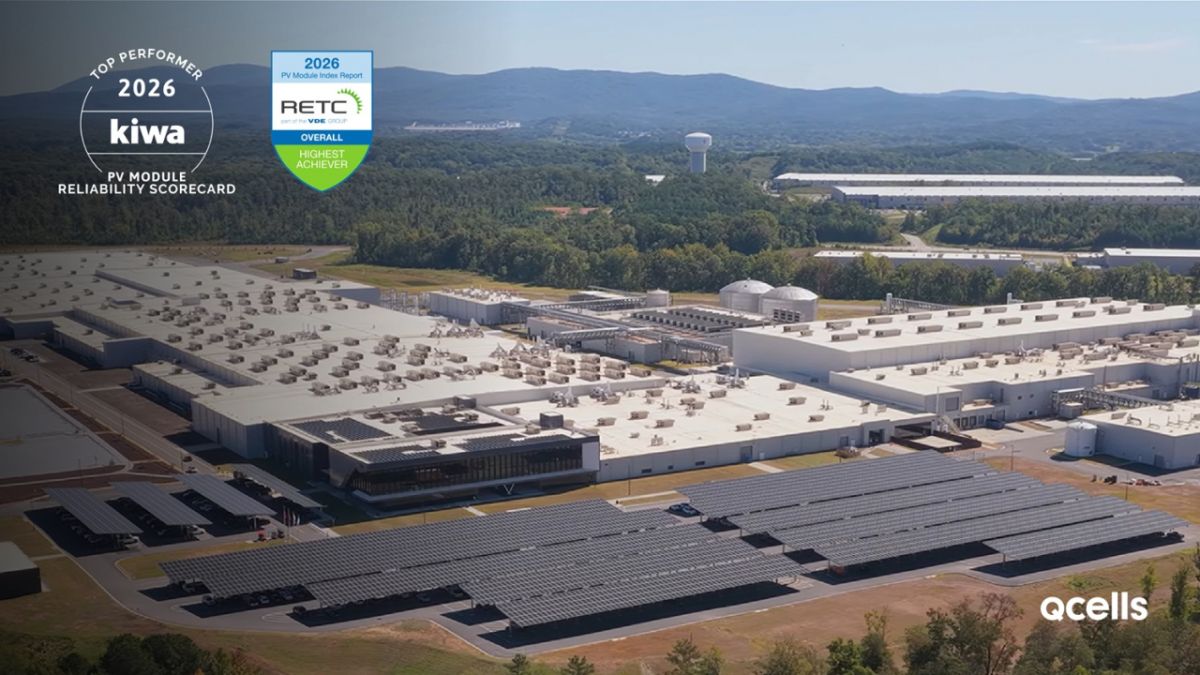
Hanwha Solutions' Q-Cells division (hereinafter Hanwha Q-Cells) expects benefits centered on its local production facilities in the U.S. Hanwha Q-Cells began commercial production of solar cells at its Cartersville plant in Georgia, U.S., last May. Following the establishment of a domestic solar value chain in the U.S., ranging from ingots to wafers, cells, and modules, the company has also established a product manufacturing system that meets the Domestic Content Act (DCA) requirements for U.S.-made components. The increase in module demand due to the expansion of solar projects in the U.S. is expected to strengthen the supply competitiveness of Hanwha Q-Cells, which possesses local production infrastructure.
OCI Holdings is also expected to benefit from the expansion of the U.S. solar market. It is projected that the company will be able to expand supply contracts with U.S. customers based on non-Chinese polysilicon produced in Malaysia. OCI Holdings' annual polysilicon production capacity is approximately 35,000 tons, and it is expected that most of its production volume from next year onward will be sold through long-term supply agreements (LTAs) with U.S. customers.
The increase in ESS demand accompanying the expansion of solar power generation is a positive factor for domestic battery companies. As the share of renewable energy in power generation increases, demand for ESS installations to ensure the stability of power supply may also rise.
The battery industry plans to respond to such demand based on local production facilities in North America. LG Energy Solution aims to secure a production capacity of over 50 GWh by the end of this year by establishing five major ESS complex manufacturing hubs in North America, including its Michigan Holland and L-H Battery Company Ohio plants, Ultium Cells Tennessee and Michigan Lansing plants, and NextStar Energy Ontario plant in Canada. Samsung SDI will begin producing Lithium Iron Phosphate (LFP) batteries for ESS from the fourth quarter of this year by converting part of its electric vehicle production line at its Indiana plant, a joint venture with Stellantis called Star Plus Energy (SPE). SK On is also converting some of its electric vehicle battery production lines at its Georgia plant into LFP battery production lines for ESS, and will commence mass production in the second half of the year.

 in INDUSTRY
