

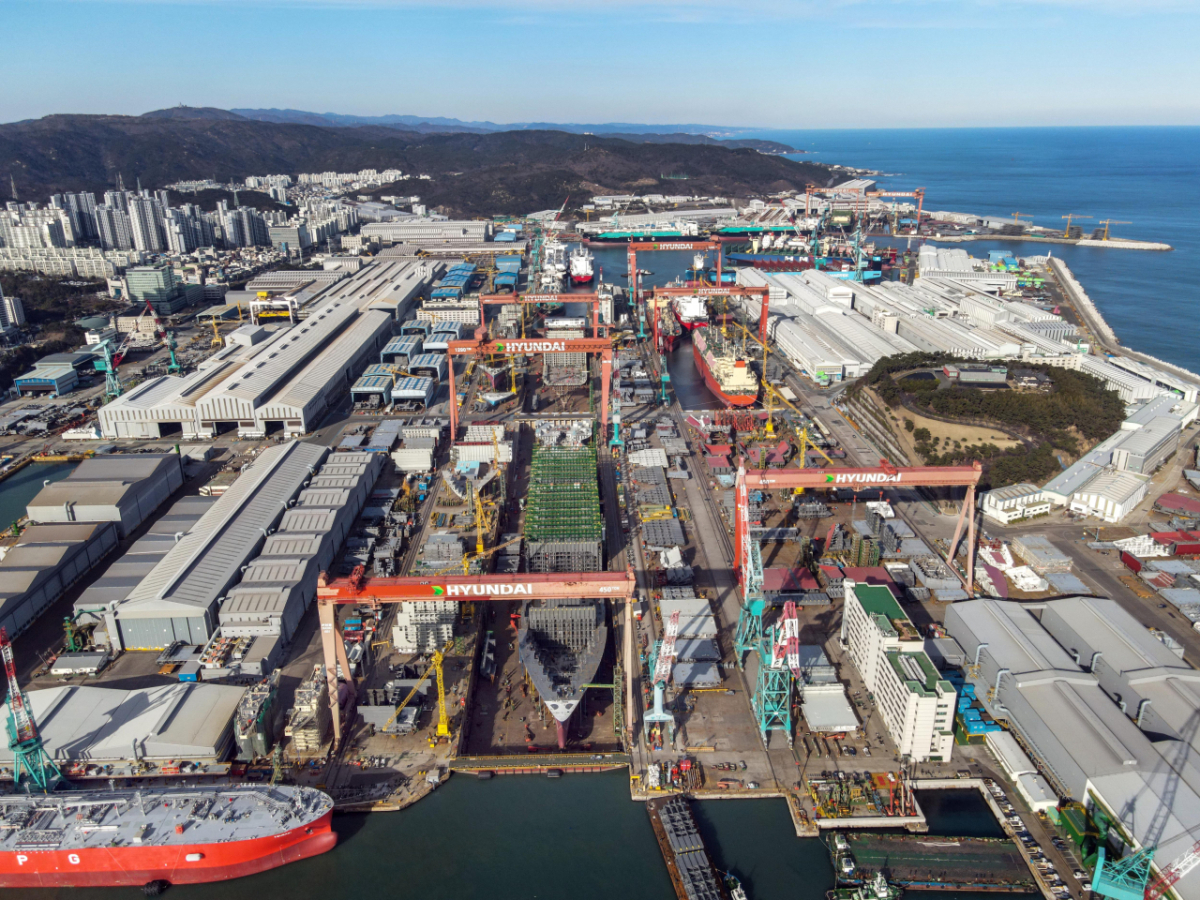
The labor-management relations at HD Hyundai Heavy Industries stand at a turning point after approximately 10 years. This is as demands have emerged within the union to dissolve the company branch system and transition to a local chapter under a regional branch, in order to jointly respond to large-scale restructuring and corporate division.
According to shipbuilding industry sources on the 25th, some delegates of the HD Hyundai Heavy Industries Branch of the National Metalworkers' Federation requested the executive committee to convene an extraordinary delegate assembly to discuss a proposal to dissolve the existing company branch system and change the organizational structure to the HD Hyundai Heavy Industries Chapter under the Ulsan Branch of the Metalworkers' Federation. A majority of 49 out of 85 total delegates (57.6%) signed the request for convening. The executive committee of the HD Hyundai Heavy Industries Branch has currently received this request and is conducting internal discussions. Whether to change the organizational structure, as well as specific procedures and methods, have not yet been decided, and the executive committee of the HD Hyundai Heavy Industries Branch maintains a stance of deliberating thoroughly given that it is a significant matter.
The reason the HD Hyundai Heavy Industries union has maintained the company branch system since 2017 was to jointly respond to large-scale restructuring and corporate division at the time. While the Metalworkers' Federation generally adheres to the principle of a regional branch system that groups unions by region, it exceptionally permitted the establishment of a company branch when the employment and survival of approximately 15,000 union members were threatened by HD Hyundai Heavy Industries' restructuring and the separation of affiliated companies. This was to ensure that even if legal entities were separated, the unions of affiliated companies could belong to a single organization and respond jointly.
The background behind recent demands for dissolving the company branch includes changes in the business environment due to a shipbuilding boom. Those demanding organizational restructuring argue that since the shipbuilding industry has emerged from a long period of stagnation, and since the industries of affiliated companies—such as shipbuilding, construction machinery, and power equipment—are different, the existing organizational structure under a single company branch should be improved. The intent is to strengthen bargaining rights at the regional branch and central levels of the Metalworkers' Federation while expanding the autonomy and initiative of unions in each affiliated company.
Those demanding the dissolution of the company branch cite changes in the business environment due to the shipbuilding boom as a necessity for organizational restructuring. In their request for an extraordinary delegate assembly, they stated that "the historical and environmental conditions that made it unavoidable to maintain the company branch system have changed," and noted that "the current branch maintains an unreasonable organizational structure where unions from different industries and workplaces, such as the Construction Machinery Chapter and the Electric Chapter, are organized under a company branch centered on shipbuilding." They further emphasized, "Now is not the time to rest on the vested interests of being a large enterprise company branch; we must return to the industry-wide union model, strengthen regional branches and central bargaining rights, expand the autonomy and initiative of each business unit, and restructure the organizational system to align with bargaining, welfare, and response to current issues."
From HD Hyundai Heavy Industries' perspective, a point of interest is how the bargaining structure and solidarity methods will be handled in future internal union discussions. Under the existing company branch system, unions of affiliated companies have responded jointly centered on the HD Hyundai Heavy Industries Branch, but if transitioning to a regional branch system, opportunities for solidarity and joint bargaining with unions at other workplaces within the Ulsan region could expand.
On the other hand, field organizations within the HD Hyundai Heavy Industries union, such as the Hyeontuhoe (HD Hyundai Heavy Workers' Struggle Committee), the Democratic Union of HD Hyundai Heavy Industries Workers, and Uri Hamkke (Together Us), have successively issued newsletters opposing the dissolution of the company branch. They argue that dissolving the company branch in a situation where industry-wide bargaining has not been normalized contradicts previous decisions by the Metalworkers' Federation, as it could weaken solidarity and joint struggle response capabilities among affiliated company unions. They stated, "Why do the Hyundai Motor Branch, Kia Motors Branch, and Ssangyong Motors Branch maintain their branch forms and fight without any problems?" and added, "We will keep a close watch to see if the long-standing wish leading from branch dissolution to withdrawal from the Metalworkers' Federation is being enforced on the ground right now."

 in INDUSTRY
