

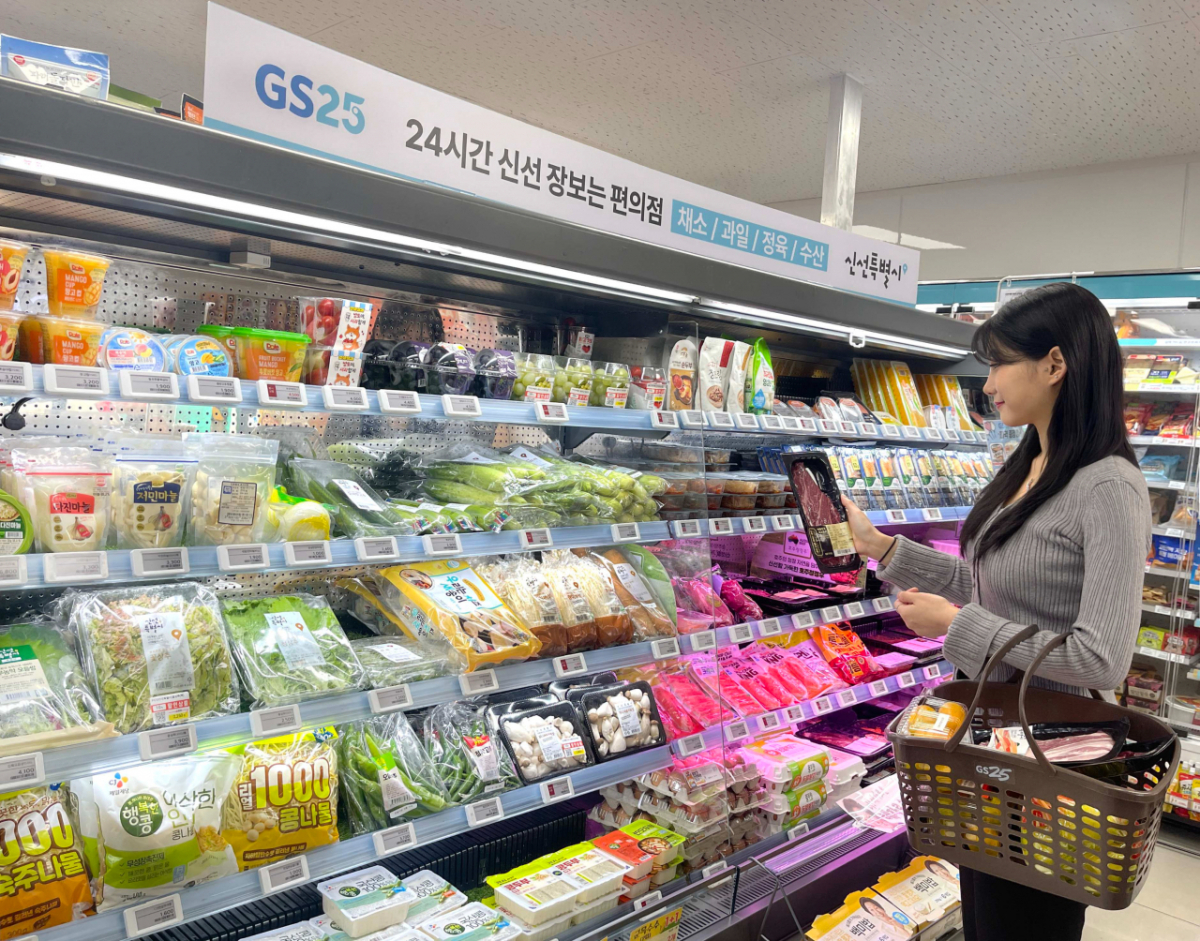
#Mr. A, in his 40s, only learned late last weekend that the corporate supermarket (SSM) located in an apartment complex commercial building was legally required to close on its designated day off. Having missed placing an e-commerce order the night before, he browsed delivery apps to order food and accidentally found a convenience store selling pre-packaged pork, pumpkin, potatoes, and other items. Fresh vegetables and meat ordered from the store were delivered to his doorstep within 30 minutes.
Convenience stores are boosting their competitiveness in the fresh food market beyond just ready-to-eat meals. This trend is driven by regulations requiring large department stores and SSMs to close on specific days, combined with targeting the demand for small-package fresh foods among households of three or fewer members, leading to rising sales.
According to industry sources on the 27th, GS Retail's convenience store chain, GS25, plans to expand its Fresh Concept Store (FCS) locations to 1,100 stores by the end of this year.
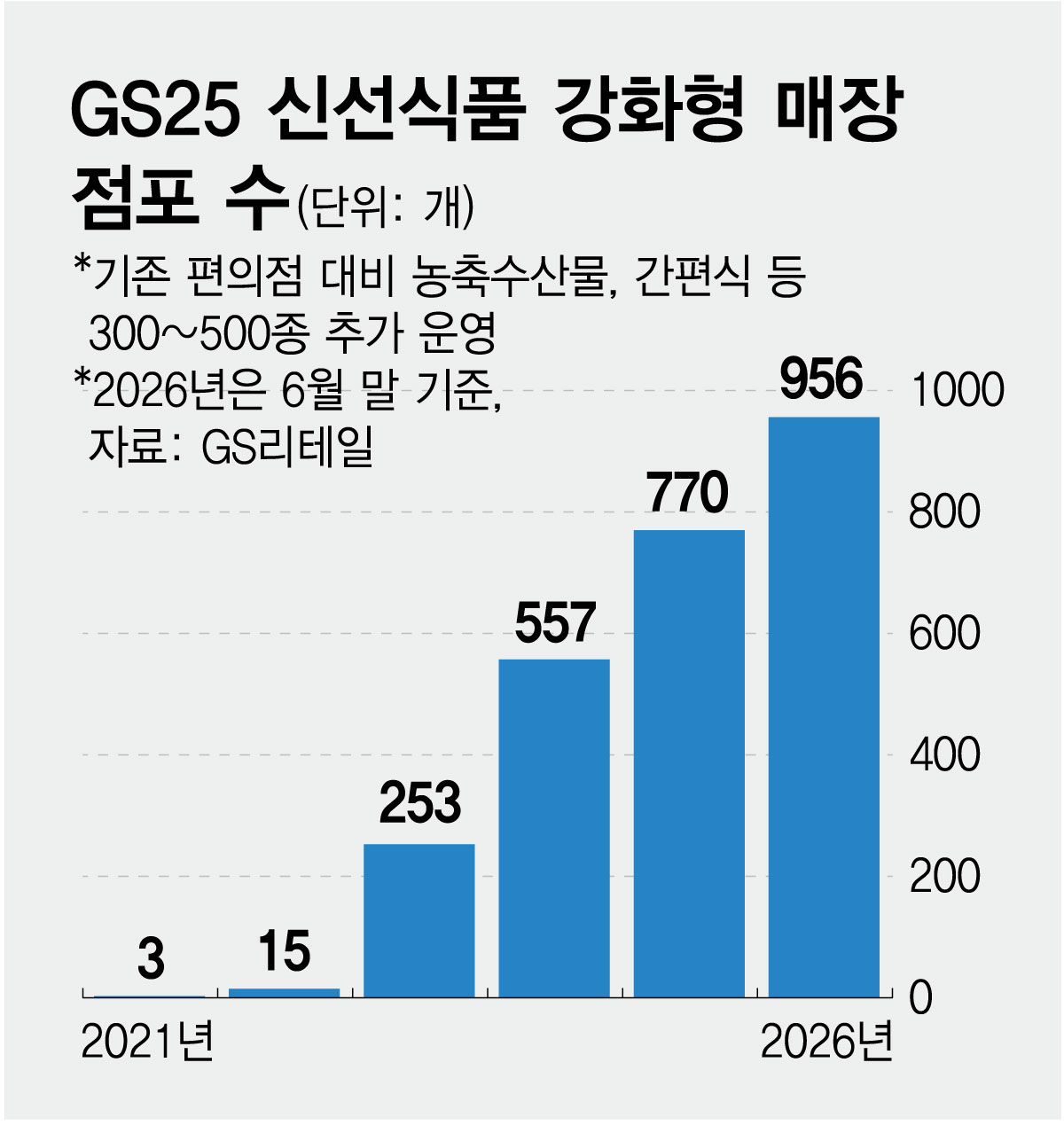
The number of GS25 FCS stores has shown a steady annual increase: from 3 stores when first launched in 2021, to 15 in 2022, 253 in 2023, 557 in 2024, and 770 in 2025. As of the end of June this year, the count has reached 956 stores, with projections to surpass 1,000 locations soon.
FCS stores operate by expanding the range of grocery items—including agricultural products, livestock, seafood, seasonings, tofu, and ready-to-eat meals—to over 300 to 500 types compared to conventional convenience stores. New stores are being opened primarily in residential areas with high demand from 1- and 2-person households living in apartments or officetels, while existing stores operating on plots of 50 pyeong (approximately 165 square meters) or larger are being renovated and relaunched as FCS locations.
GS25's strategy to capture the grocery shopping market has been successful. In the first half of this year, sales of fresh food through GS25's quick commerce (rapid delivery) service increased by 450% compared to the same period last year. It is reported that average daily sales at FCS stores exceed those of regular stores by more than 1 million won. This translates to monthly sales of approximately 0.3 billion won and annual sales exceeding 360 million won. The company explains that orders for small-portion fresh food items, such as "Real Fresh Eggs" (15 eggs per pack during the egg shortage) and "One-Meal Seasoned Meat" in 200g packs, account for a high proportion of transactions.
Sales from the pre-order service for fresh food, where customers can order seasonal seafood and produce that are difficult to handle at regular convenience stores in advance and pick them up at nearby stores on designated dates 2 to 4 times a month, also quadrupled compared to the same period last year.
GS Retail's price competitiveness for FCS stems from integrated purchasing volumes with SSM "GS The Fresh." Additionally, it has secured competitiveness by simultaneously supplying fresh food-focused private brand (PB) products like "Fresh Special City" and small-portion value-concept PBs like "Real Price" across both channels.
While e-commerce excels in early morning delivery for orders placed the night before, and large department stores have expanded their delivery networks to within two hours for online orders within a 2-3 km radius of their stores, convenience stores are establishing their presence in the market by delivering small-package fresh food within one hour of ordering. This strategy leverages the strength of nearby channels to deliver orders as quickly as possible and targets the niche market created by business hour restrictions on large department stores and SSMs.
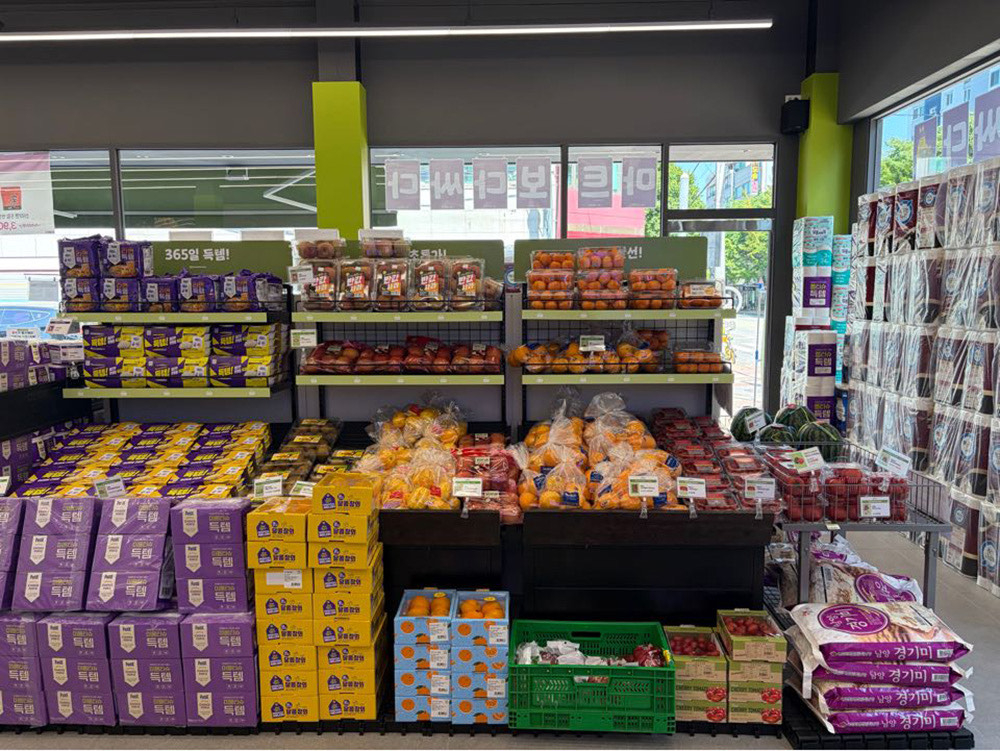
Convenience store chain CU is currently operating about 110 "grocery-specialized stores." Compared to regular stores, these locations feature an assortment of primary products like fruits and vegetables, along with small-sized staple ingredients centered on room-temperature and frozen storage. Recently, it opened three "CU Smart Grocery" stores in Sinchon, Seoul; Suwon, Gyeonggi Province; and Yeonsu, Incheon. The proportion of food ingredient sales at these three locations is approximately ten times higher than that of regular stores (1.5%).
Seven-Eleven is also currently operating over 100 fresh-food-specialized stores. During the mandatory closing days of nearby large department stores in Seoul and the metropolitan area this month, sales of fresh foods such as fruits (81%), eggs (50%), and vegetables (24%) increased significantly compared to Jeonju.
It is expected that convenience stores will gain even greater influence in the small-package fresh food market going forward. An industry executive stated, "As demand for nearby, small-portion grocery shopping expands, sales of fresh foods at convenience stores are growing rapidly," and added, "We will further refine the design of fresh-food-specialized stores to match location characteristics, commercial area features, and customer demands, establishing them as familiar channels for customers."

 in LIVING


