

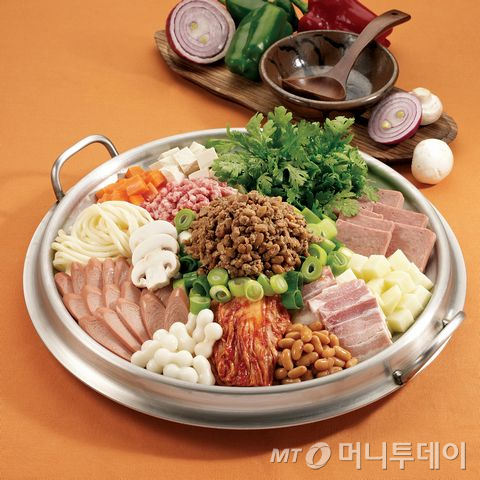
'Nolibu,' a first-generation Korean food franchise known as the 'National Budae Jjigae,' has finally filed for reorganization at the court after 39 years since its founding. Industry analysts suggest that the company pursued profitability by expanding its brands in an octopus-like manner, but new ventures failed to take root, and it even lost competitiveness in its core brands, Budae Jjigae and Bossam, which proved to be a fatal mistake.
According to industry sources on the 7th, Nolibu filed for the opening of corporate reorganization proceedings at the Seoul Bankruptcy Court on the 31st of last month. The case was assigned to Division 15 of Reorganization (Presiding Judge Kim Yun-seon), and the court issued a comprehensive injunction on the 4th. The examination hearing for the representative is scheduled for the 11th.
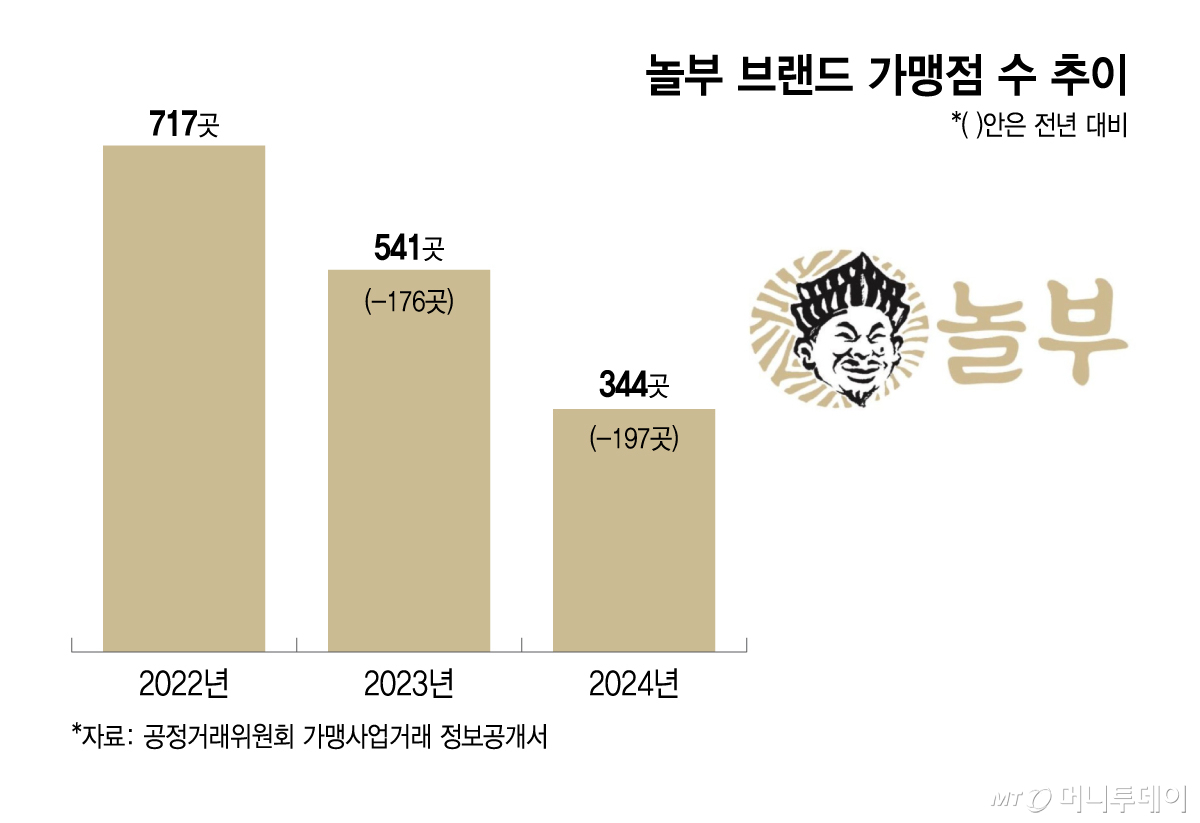
Before filing for reorganization, Nolibu's franchise business had been steadily declining. According to the public disclosure document registered in January (as of the end of 2024), Nolibu holds 33 brands, but only 12 of them have physical stores. MoneyToday's survey of franchise store numbers by brand shows that total franchise locations dropped from 717 at the end of 2022 to 541 at the end of 2023, and further halved to 344 by the end of 2024.
The number of franchise stores for core brands also shrank significantly. During the same period, Nolibu Budae Jjigae decreased from 246 locations to 156, and Nolibu Bossam Jokbal fell from 134 to 63. In particular, Nolibu Bossam Jokbal saw only four new openings last year, while contract terminations reached 44. 'Samgyeop Bonneung' (155 locations → 64) and 'Gongsugan' (43 locations → 9), which had aimed to capitalize on the delivery boom, were also hit hard.
'Nolibu' is a first-generation Korean food franchise that started as a small bossam restaurant in Seoul in 1987 and gained popularity with bossam and budae jjigae during the 1990s and 2000s. In November 2011, it became a hot topic when Morgan Stanley Private Equity (PE) acquired 100% of the company for 111.4 billion won. In 2010, the year before the acquisition, sales were 111.3 billion won with approximately 700 stores.
After the acquisition, Nolibu expanded its brands to include seolleongtang (beef bone soup), coffee, bunsik (snack foods), and jjimdak (braised chicken). By March 2021, it held 33 brands according to Fair Trade Commission registration standards, surpassing Daebon Korea (22 brands). During the COVID-19 period, it also gained traction with 'Nolibu Kitchen,' an edit shop concept that operated multiple delivery brands from a single kitchen, and 'Samgyeop Bonneung,' a delivery samgyeopsal restaurant.
However, its size and performance moved in opposite directions. Sales dropped from 120 billion won in December 2016 to just 40.3 billion won by 2021. According to IB industry sources, Morgan Stanley PE reportedly began exploring a sale as early as 2017. In August 2022, it sold a 57% stake to an Envie Holdings consortium for 20 billion won, stepping down to become the second-largest shareholder (43%). This amount was less than half of the original acquisition price. Subsequently, Envie Holdings secured 100% ownership.
Even after welcoming a new owner, performance remained stagnant. According to the audit report, Nolibu's sales last year were 63.84938 billion won, a 16.1% decrease from the previous year. Operating losses reached 8.69486 billion won, approximately 15 times higher than the previous year (584.8 million won), while net loss for the period was recorded at 13.92866 billion won.
Experts point to reckless expansion as the cause of failure. Professor Lee Jong-woo of the Department of Distribution and Marketing at Seoul National University stated, "Because budae jjigae was successful, a private equity fund acquired the company and launched multiple food service brands, but all failed." He added, "In the end, they couldn't even protect their existing brands." He further explained, "Recently, the dining trend has shifted toward value-for-money and single-person meals, which does not align well with budae jjigae meant for group dining. This ultimately leads to lower turnover rates, triggering a vicious cycle of margin deterioration and price hikes."
Kim Sang-hoon, Secretary General of the Korean Franchise Industry Association, also noted that "unlike the past boom in franchising, overall operating costs such as raw materials and rent have increased significantly, intensifying market competition," citing this as another cause.
Meanwhile, the unique background of Nolibu's current Kim Yong-wi (CEO) is also drawing attention. Kim (CEO) served as an institutional investor at the Cheong Wa Dae Public Relations Office during the Lee Myung-bak administration and later worked as a personal photographer for Yoon Suk-yeol Jeon (President).

 in LIVING

