

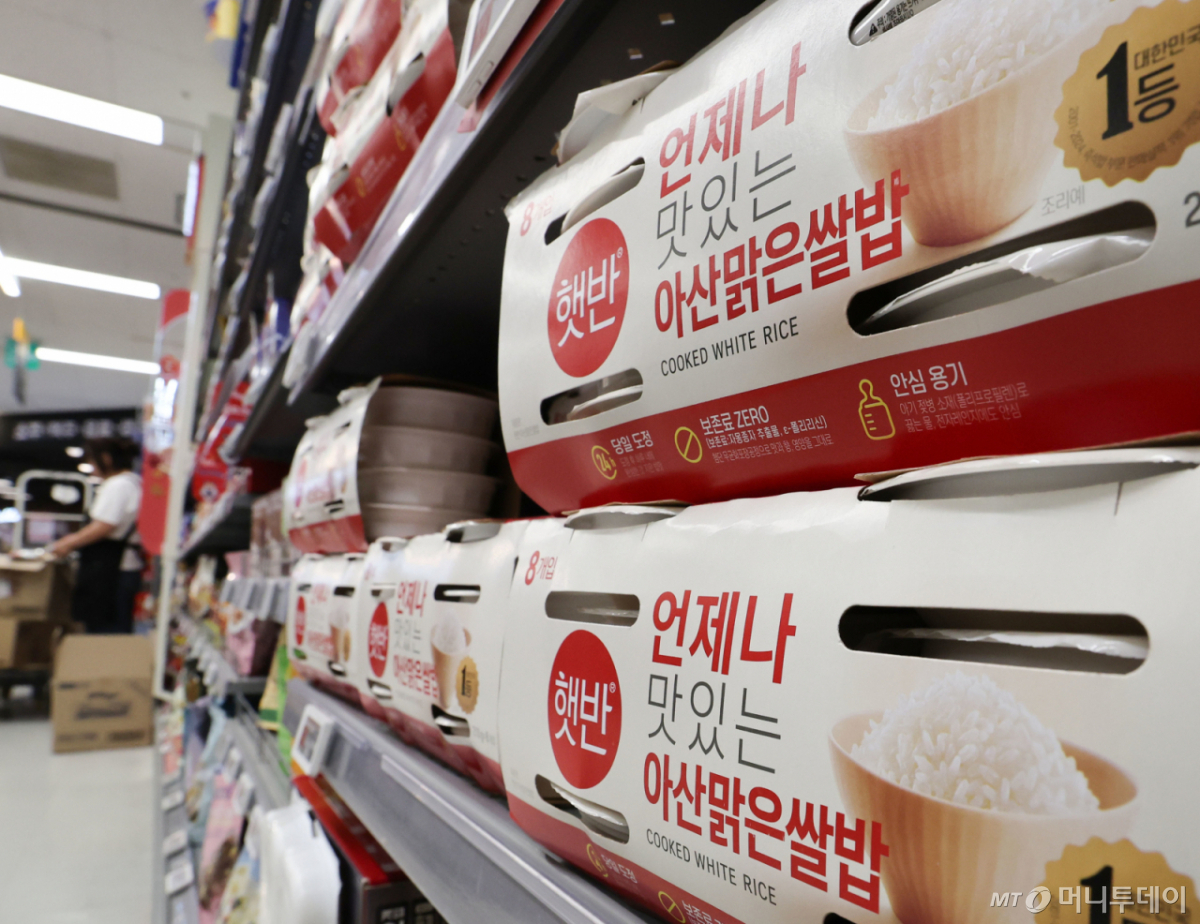
CJ CheilJedang announced on the 11th that its second-quarter revenue reached 4.195 trillion won and operating profit stood at 161.9 billion won. Excluding CJ Logistics, these figures represent a 10.2% year-on-year increase in revenue and an 18.4% decline in operating profit compared to the same period last year.
On a consolidated basis including its subsidiary CJ Logistics, revenue totaled 7.3621 trillion won and operating profit amounted to 257.6 billion won. These figures reflect a 9.5% increase and an 18.5% decrease, respectively, compared to the same period last year.
In the food business segment, revenue reached 2.8441 trillion won and operating profit was 70.9 billion won. While revenue grew by 5.8%, operating profit declined by 21.3%. Revenue increased due to sales of global strategic products (GSP) such as dumplings and Hanbap overseas, along with the launch of new domestic products. However, profitability slowed somewhat due to weak domestic demand, high oil prices increasing cost burdens, and rising raw material prices.
Among food business segments, overseas performance stood out. In particular, revenue in the Americas region rose 10% year-on-year, attributed to increased sales through major distribution channels centered on dumplings and Hanbap, according to CJ CheilJedang. During the same period, Europe saw a 19% increase, the Asia-Pacific region a 21% rise, and China a 5% growth in revenue.
Domestic food business revenue reached 1.3369 trillion won, up 1.4% year-on-year. Although the materials business was affected by high exchange rates and slowed down, sales performance of new products based on H&W (Health & Wellness) helped offset the decline.
The bio-business segment recorded revenue of 1.3509 trillion won, a 20.8% increase year-on-year, while operating profit fell to 9.1 billion won, down 15.9% from the same period last year. Revenue growth was driven by expanded sales of specialty amino acids such as arginine and isoleucine, as well as lysine. However, profitability slowed somewhat due to intensified market competition for high-margin products like tryptophan and a reverse base effect from last year's profits.
Meanwhile, non-operating losses were recorded at -23.9 billion won in net income, reflecting foreign exchange transaction losses and derivative instrument valuation losses due to rising exchange rates and grain prices. Fines for collusion on starch, sugar, and flour were already accounted for as contingent liabilities in last year's financial statements.
CJ CheilJedang plans to enhance strategic execution aligned with the essence and purpose of its business, based on recent business segment rebalancing starting from the third quarter. The lifestyle food business segment aims to expand sales of key GSP products such as dumplings and Hanbap in line with global K-food growth trends, while defending profitability through strategies targeting high-margin categories domestically.
A CJ CheilJedang official stated, "We will accelerate the expansion of K-food into new global territories by leveraging global strategic products like dumplings and Hanbap, and focus on improving profitability through expanded bio-business sales and reductions in manufacturing costs and fixed expenses."

 in LIVING
