

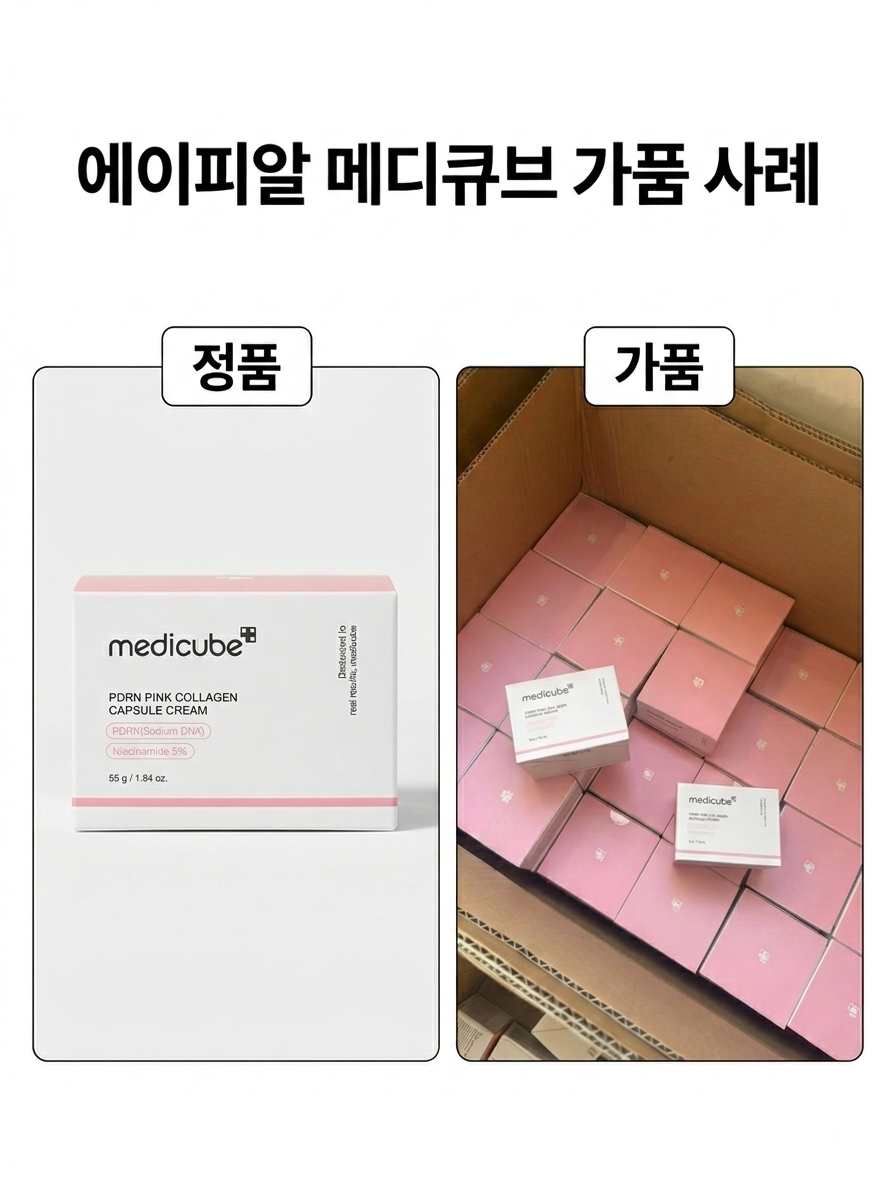
As the global popularity of K-beauty rises, counterfeit and similar products imitating domestic cosmetic brands are spreading beyond Asia to Europe. Cases have emerged where not only product appearance but also product names, packaging, detailed pages, and even the brand image of 'K-beauty' are being exploited, increasing the burden on domestic companies to respond.
According to the beauty industry on the 11th, APR confirmed that last month, customs officials at Timișoara Airport in Romania seized over 100 suspected counterfeit units of its brand MediCube's 'PDRN Pink Collagen Capsule Cream'. The seized products are said to be so similar in appearance and container design to genuine items that consumers cannot distinguish them with the naked eye.
Until now, K-beauty counterfeits were mostly distributed in Asian regions such as China, Hong Kong, Taiwan, Vietnam, and Japan. This seizure in Romania is a case showing that the distribution scope of K-beauty fakes has expanded to Eastern Europe.
The methods of product imitation are becoming increasingly sophisticated. A Chinese cosmetic brand is selling products on Amazon and Lazada using product names identical or similar to MediCube's 'Collagen Night Wrapping Mask' and 'No More Pore Pad'. The brand applied colors used by MediCube, such as pink and light green, to its packaging, and cases were confirmed where past model images and product detail pages were directly plagiarized.
Notably, even though they are Chinese brands, some have claimed to be 'Korean Beauty,' and search results on online platforms have shown the term 'KOREA.' Critics point out that counterfeit products are evolving beyond simply copying popular items to exploiting the reputation Korean brands have built and the origin image of 'Made in Korea.'
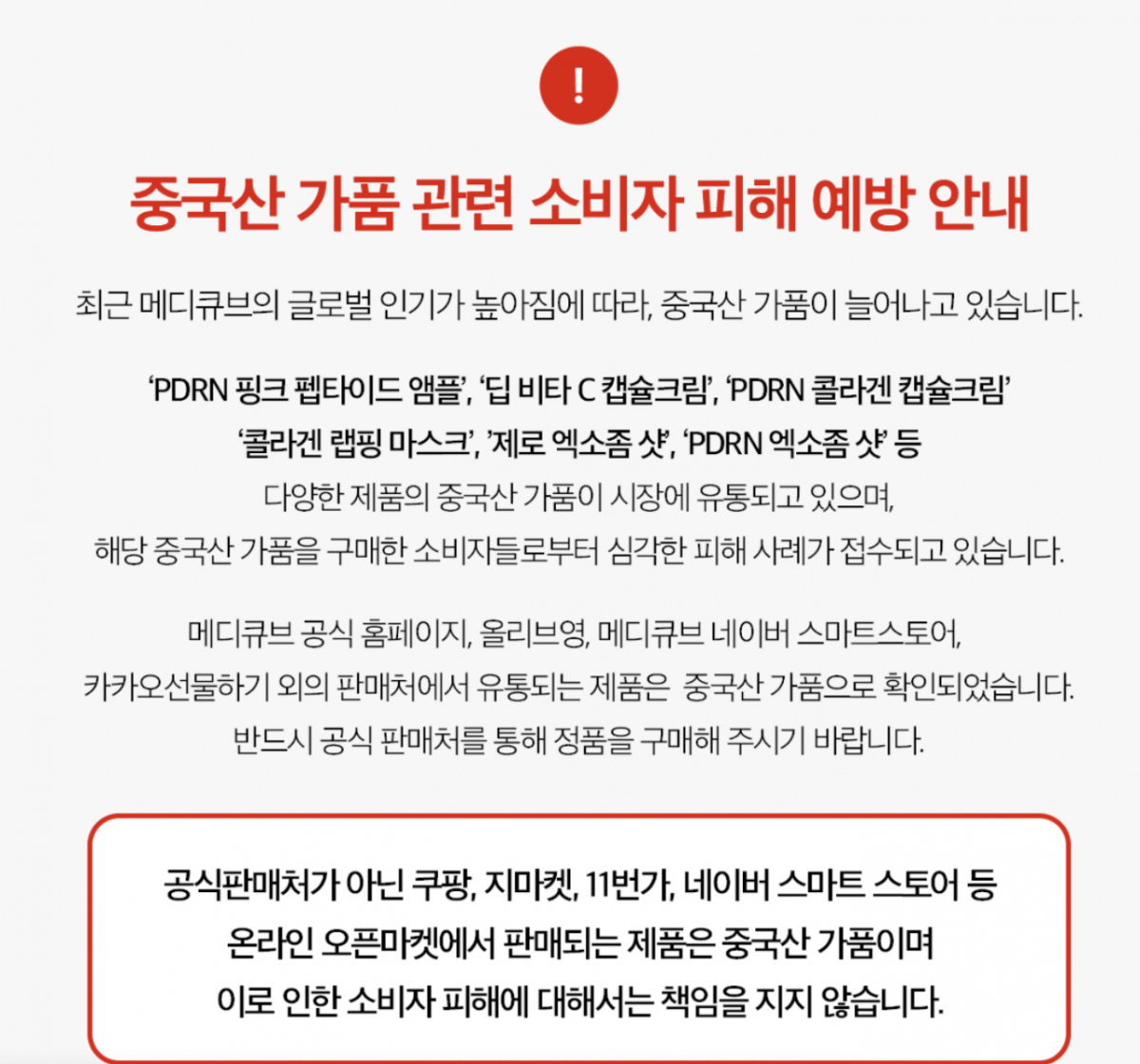
China remains a major production hub. In an early July joint crackdown by the Baiyun District Public Security Bureau and Market Supervision Administration in Guangzhou, China, over 6,000 suspected imitation products of six MediCube items were seized. During this process, it is reported that many products from other well-known domestic brands such as Skin1004 and Arensia were also discovered. Chinese authorities had previously found numerous MediCube counterfeits during a crackdown on counterfeit cosmetic manufacturing sites in Guangzhou last April.
Online platforms are becoming conduits accelerating the global spread of counterfeits. Sellers replicate product photos and detailed descriptions from official brand stores to mimic legitimate sales channels, then ship counterfeit products manufactured in China. Cases have been confirmed where Chinese-made fakes were distributed not only on global platforms like Amazon, eBay, and TikTok Shop but also on domestic platforms such as Coupang and Gmarket.
Companies are responding by coordinating with local legal counsel and law enforcement authorities to raid production facilities or report sales posts to platforms. However, due to the nature of manufacturing and distribution overseas, it is difficult to trace producers and sellers, and crackdown systems vary by country, limiting individual company responses.
The industry worries that as K-beauty's global recognition grows, the counterfeit problem will spread further. A beauty industry official stated, "Cases are increasing where not only products are copied directly but also brand images and the reputation of being 'Made in Korea' are exploited." The official added, "Since responses at the company level have limits, cooperation must be strengthened between overseas customs, law enforcement authorities, and online platforms."

 in LIVING

