

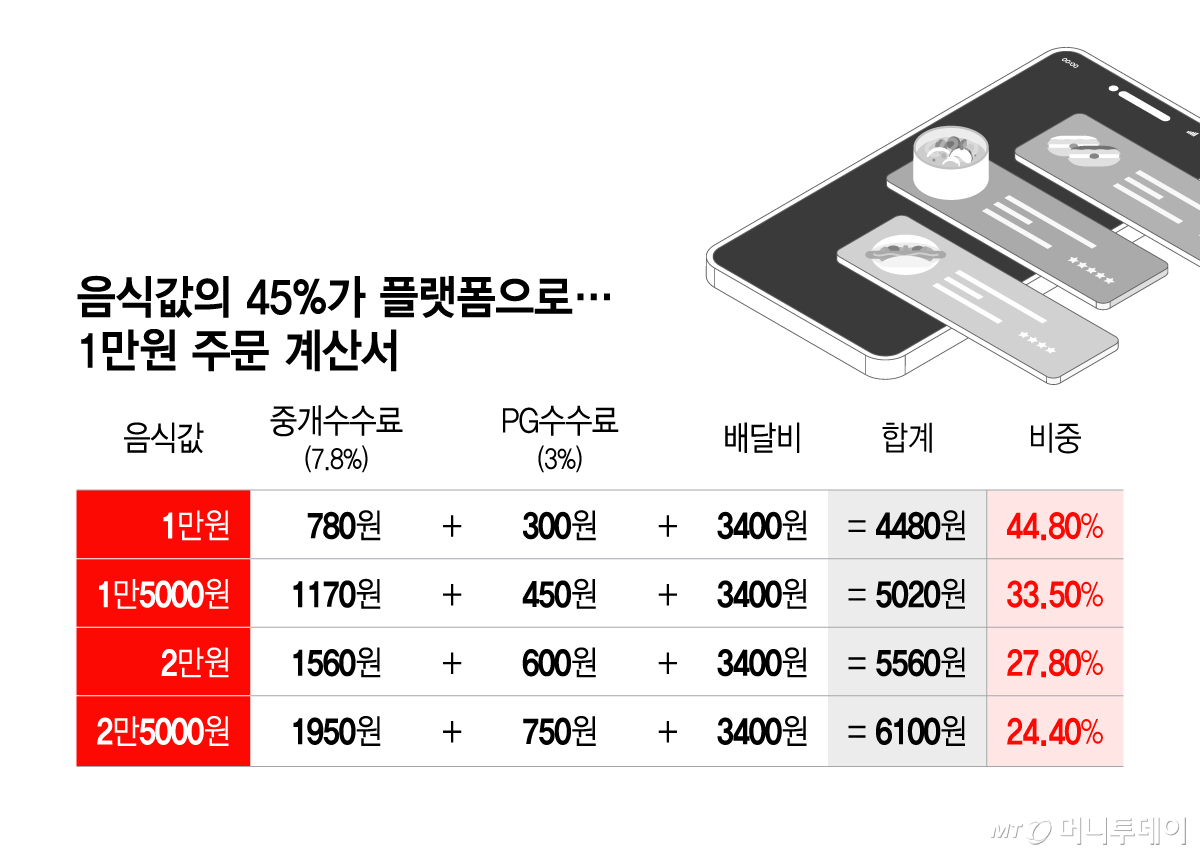
As controversy over delivery app (application) fees intensifies, voices are emerging among self-employed workers arguing that simply lowering fees has its limits. The argument is that various methods should be considered, such as allowing self-employed workers to deliver directly based on their store’s circumstances, rather than relying entirely on the delivery method set by the platform.
According to industry sources on the 22nd, one of the changes demanded by self-employed workers, including franchise owners, is the promotion of “direct delivery.” The idea is that during off-peak hours when orders are not concentrated, delivering directly over short distances of about 500 meters near the store can reduce costs paid to external delivery networks and improve profitability. This could be a useful alternative for stores that have their own delivery staff or where the owner has the capacity to deliver personally.
However, owners demand that they should not face disadvantages in exposure rankings within delivery apps or be prevented from attracting consumers through price differentiation simply because they choose direct delivery. They argue that the delivery method provided by the platform and the store’s direct delivery method must be able to compete on equal terms.
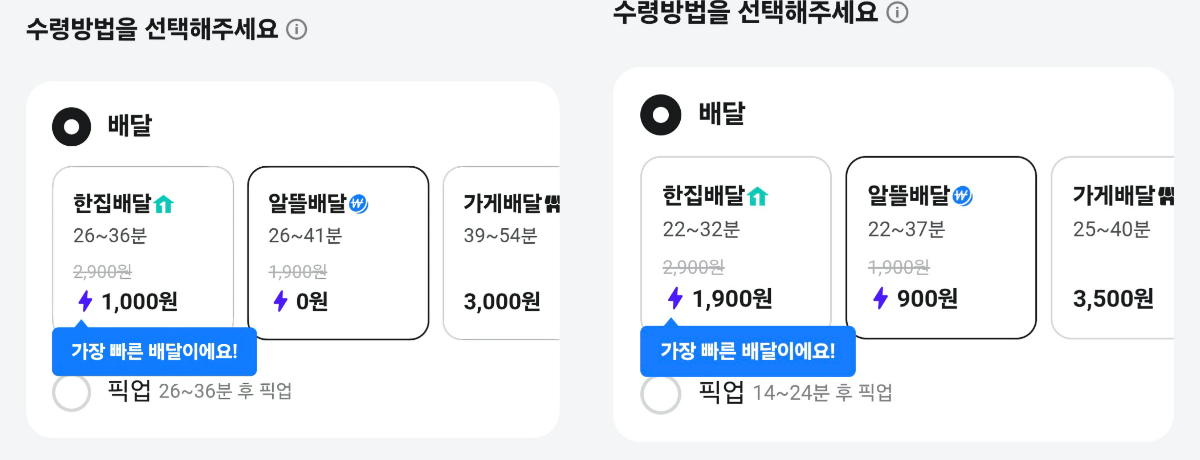
Currently, looking at Baemin, it operates various options such as Hanjip Delivery (one-household delivery), Alttul Delivery (budget delivery), and Store Delivery, allowing consumers to choose their preferred delivery method. However, while the delivery fee for Hanjip Delivery is 1,000 won and Alttul Delivery is free, Store Delivery is set at 3,000 to 4,000 won. From the consumer’s perspective, there is no incentive to choose Store Delivery. Critics point out that this is a pricing strategy that exploits the reality where Baemin offsets revenue losses from lower delivery fees through economies of scale, while self-employed workers, who must bear the full delivery costs, cannot reduce their delivery fees to Baemin’s level.
For these reasons, opinions are emerging that consumers and self-employed workers should share the costs related to delivery. The core is the “beneficiary pays principle.” Since both self-employed workers and consumers benefit from using delivery app services, the intention is for them to share the costs as well. Self-employed workers gain the benefits of acquiring customers and increasing sales through delivery apps. Consumers use a service that allows them to conveniently receive their desired food at home without visiting the store.
In this case, part of the intermediary fees and delivery costs, which have mostly been borne by self-employed workers, can be shared with consumers. This would allow consumers to distinguish between the price of the food itself and the value of the delivery service when making judgments, while self-employed workers could mitigate the deterioration in profitability caused by the burden of delivery fees.
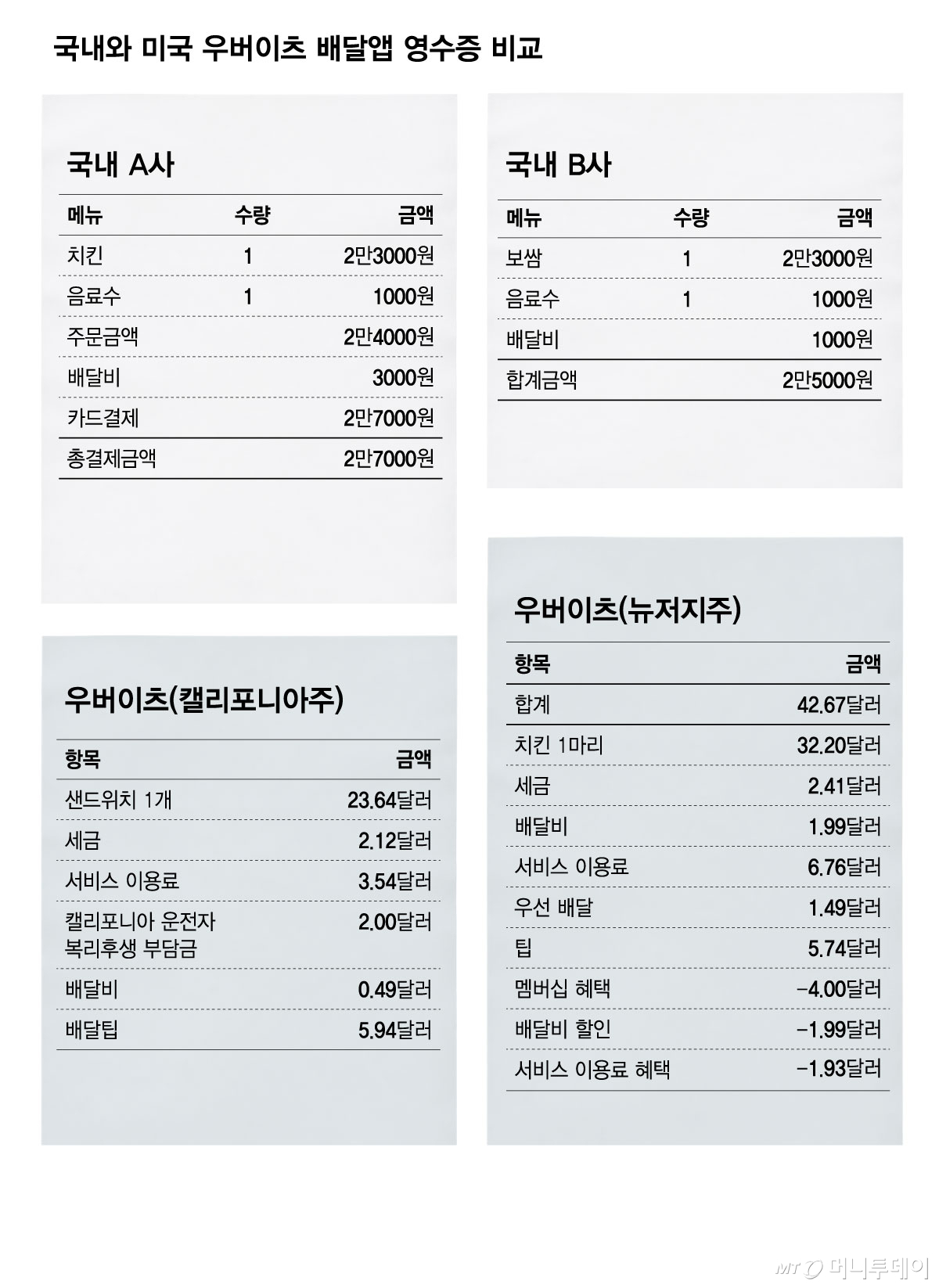
A representative example can be found in the United States. Major US delivery platforms disclose costs incurred for using the service separately from the food price during the ordering process. For instance, looking at Uber Eats in New Jersey, USA, when ordering chicken, the price of the chicken is listed separately, and taxes, delivery fees, service usage fees, priority delivery fees, tips, etc., are itemized and listed distinctly.
Professor Lee Jong-woo from the Department of Distribution Marketing at Nam Seoul University emphasized, “Self-employed workers should be able to earn sales and profits commensurate with their work, but currently, this is structurally blocked.” He added, “Since many business owners want direct delivery, discussions must begin to ensure it can become established.”

 in LIVING


