

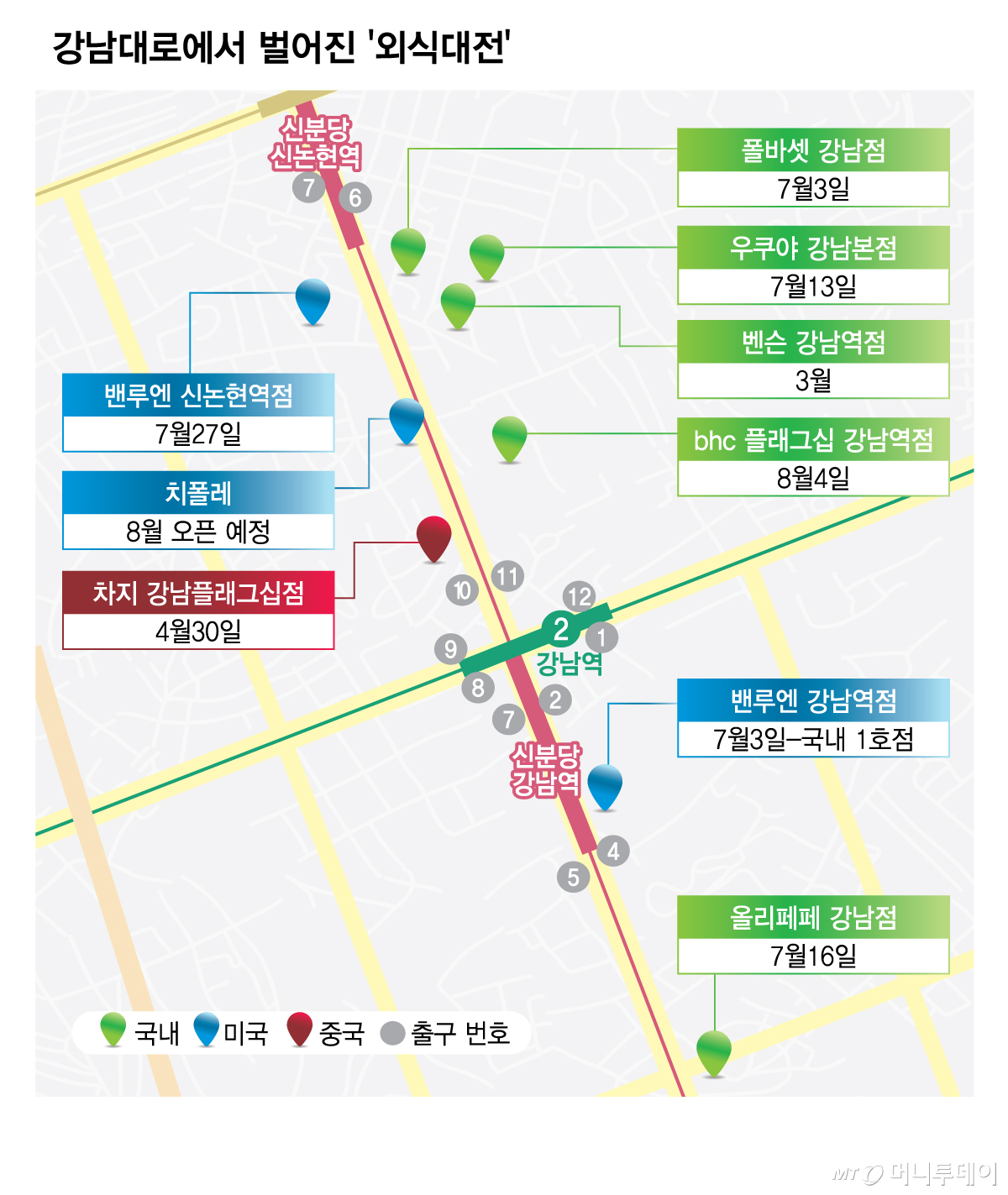
The area around Seoul's Gangnam Station has emerged as a battleground for major dining brands. From March to this month, eight large-scale branded outlets have opened in the vicinity of Gangnam-daero alone. With a concentration of consumers highly sensitive to trends, the area is expected to serve as a key indicator of success or failure for F&B (food and beverage) brands.
According to the franchise industry on the 19th, Chipotle's first U.S. Mexican casual brand outlet is set to open as early as the end of this month near Gangnam Station. Currently in the final stages of preparation, the store has drawn significant attention from the dining sector as it marks Chipotle's first location in Asia.
Domestic leading chicken franchise companies have also recently entered the Gangnam market. Dining Brands Group, which owns BHC, opened its first flagship store at Gangnam Station on the 4th. The ground floor is dedicated to takeout, the second floor for small gatherings, and the third floor for tourists, with a segmented layout designed to cater to diverse demand from lunch through late-night snacks. Genesis BBQ Group also launched its Gangnam headquarters for its pork cutlet and udon specialty brand 'Ukuya' on the 13th. The restaurant operates as a meal-focused venue centered on pork cutlets and udon during lunch hours, while transforming into an izakaya-style establishment focused on alcoholic beverages and appetizers in the evening.
The trend of existing F&B companies and global brands opening stores has continued. CJ Foodville opened its fourth 'Olive Pepper' location at Italian restaurant BEAST on the 16th, spanning 110 pyeong with 120 seats. Meanwhile, MZ Seeds, a subsidiary of daily dairy company Maeil Dairy, launched the 'Paul Bassett Gangnam Store' on the 3rd, featuring a differentiated limited menu. Ben & Jerry's premium ice cream brand 'Benson', a subsidiary of Hanwha Galleria, also opened its store in March.
Additionally, Toms Place introduced the U.S. ice cream brand 'Ben & Jerry's' through a master franchise agreement, opening its first Korean outlet at Gangnam Station on the 3rd and a third location near Sinsa-Nonhyeon Station later that same month. Including the second store at Shinsegae Department Store Gangnam Branch, three outlets were opened in the Gangnam area within just 24 days. Chinese milk tea brand ChaCha also entered the Korean market by simultaneously opening three locations: its flagship store in Gangnam on April 30, followed by stores at Yongsan i-Park Mall and Sinchon.
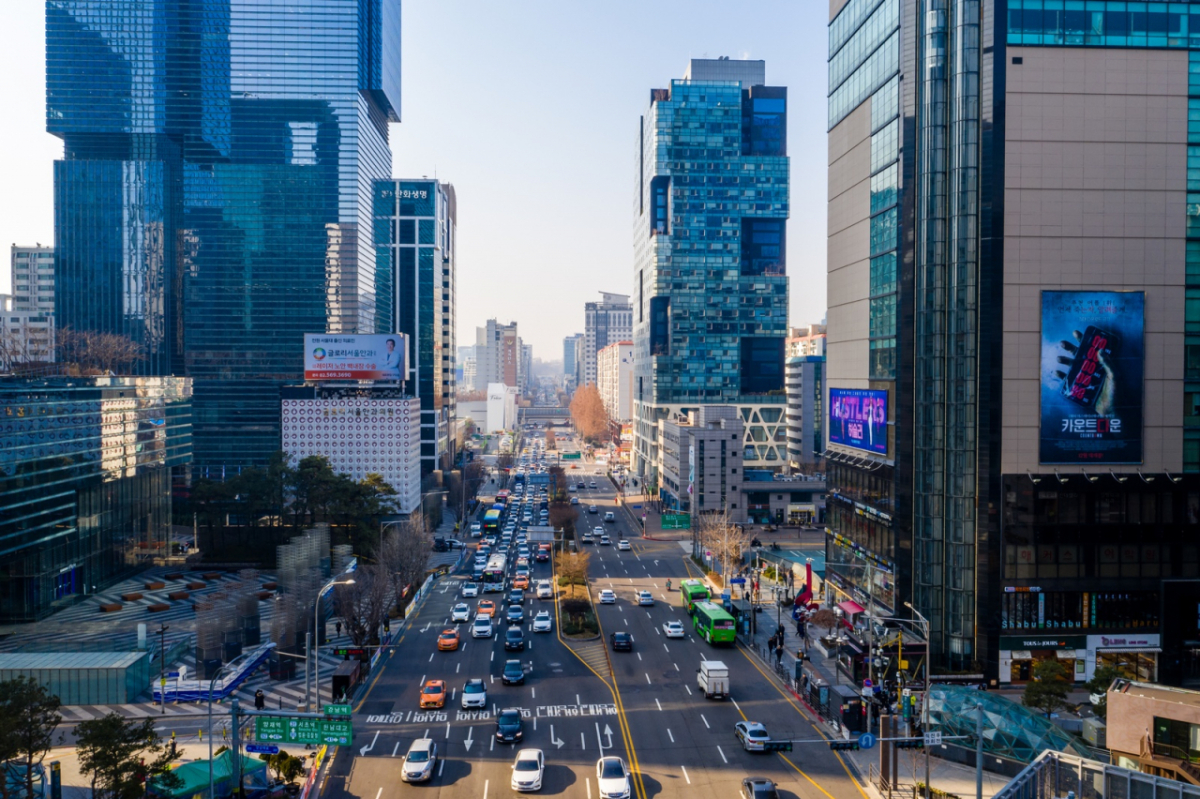
The reason brands are focusing on Gangnam lies in real estate indicators. According to AlSquare, a comprehensive commercial real estate service company, the average office vacancy rate in Seoul for the second quarter of this year rose to 6.5%, an increase of 0.4 percentage points from the previous quarter. In contrast, the Gangnam area (GBD) saw office vacancy rates of just 0.3% for super-large offices and 2.2% for large offices. While vacant offices increased in other areas, there were no empty spaces in Gangnam.
High foot traffic is another strength. The area can attract a wide range of visitors, including weekday office workers, weekend young people, and foreign tourists. According to Seoul Metro's statistics, Gangnam Station recorded an average daily passenger count of 152,232 last year, ranking third among Seoul subway stations after Jamsil Station and Hongik University Station.
Analysts suggest the real challenge lies beyond the initial 'opening effect.' A representative who opened a new outlet in the Gangnam area stated, "It is an ideal location to test the brand's core strategy targeting both Korean consumers and foreign tourists." However, they added, "With high rents and a flood of similar-category stores opening everywhere, failure to establish differentiated competitiveness could become a critical risk factor."

 in LIVING

