

The government's plan to allow early-morning delivery by large-scale supermarkets, which was announced for legislative promotion in February this year, has been idling for over six months.
Small business organizations strongly oppose the measure, while the large supermarket industry draws a line, calling the government's compromise proposals such as establishing a fund excessive. Pessimistic views suggest that legislation this year will be difficult amid opposition from stakeholders.
According to relevant industries on the 31st, ministries including the Ministry of Trade, Industry and Energy and the Ministry of SMEs and Startups reportedly proposed alternatives during a meeting with major retailers held in July last month. These included establishing a mutual cooperation fund worth 100 billion won as a trade-off for relaxing regulations on early-morning delivery by large supermarkets, and restricting sales of fresh food priced at 10,000 won or less during early-morning delivery. Additionally, it was reported that the Korea Supermarket Cooperative Federation recently requested support for neighborhood supermarkets to provide shopping delivery through local government public delivery apps as a condition for amending the law.
Major retailers operating large-scale supermarkets and SSMs (corporate-type supermarkets) maintain that they cannot accept such proposals. A representative of a major retailer stated, "Until now, before opening new stores in large supermarkets or SSMs, we have implemented various support measures including mutual cooperation funds and market facility improvements through consultations with local merchants and local governments. In this situation, requiring acceptance of large-scale fund contributions and delivery condition restrictions as conditions for relaxing early-morning delivery permissions when profitability remains uncertain is unreasonable."
Furthermore, the ruling party's recent push to legislate restrictions on early-morning delivery work hours places a significant burden on the industry. Representative Park Hong-bae of the Democratic Party of Korea introduced a partial amendment bill to the Industrial Safety and Health Act and the Life Logistics Service Industry Development Act, which limits night work for early-morning delivery to a maximum of 10 hours per day and 48 hours per week. To provide early-morning delivery services, large supermarkets require substantial investments in additional logistics centers, delivery vehicles and drivers, and new hiring of night shift personnel.
Adding large-scale fund contributions and regulations on working hours for early-morning delivery workers would further increase corporate burdens. A company representative who requested anonymity said, "If we have to accept these conditions, it would be better to maintain the current system." Additionally, retailers are opposing other mutual growth ideas such as support for quick commerce (rapid delivery) through public apps and wholesale sales to small business owners.
The consensus among large supermarket operators is that rather than allowing early-morning delivery which generates unnecessary controversy and costs, regulations on mandatory closure days should be normalized first. Relaxing mandatory closure day regulations could also increase the chances of recovery for Homeplus, a large supermarket facing bankruptcy (liquidation) risks. Homeplus stated last year when applying for emergency corporate rehabilitation that "mandatory closure day regulations resulted in annual sales losses of approximately 1 trillion won."
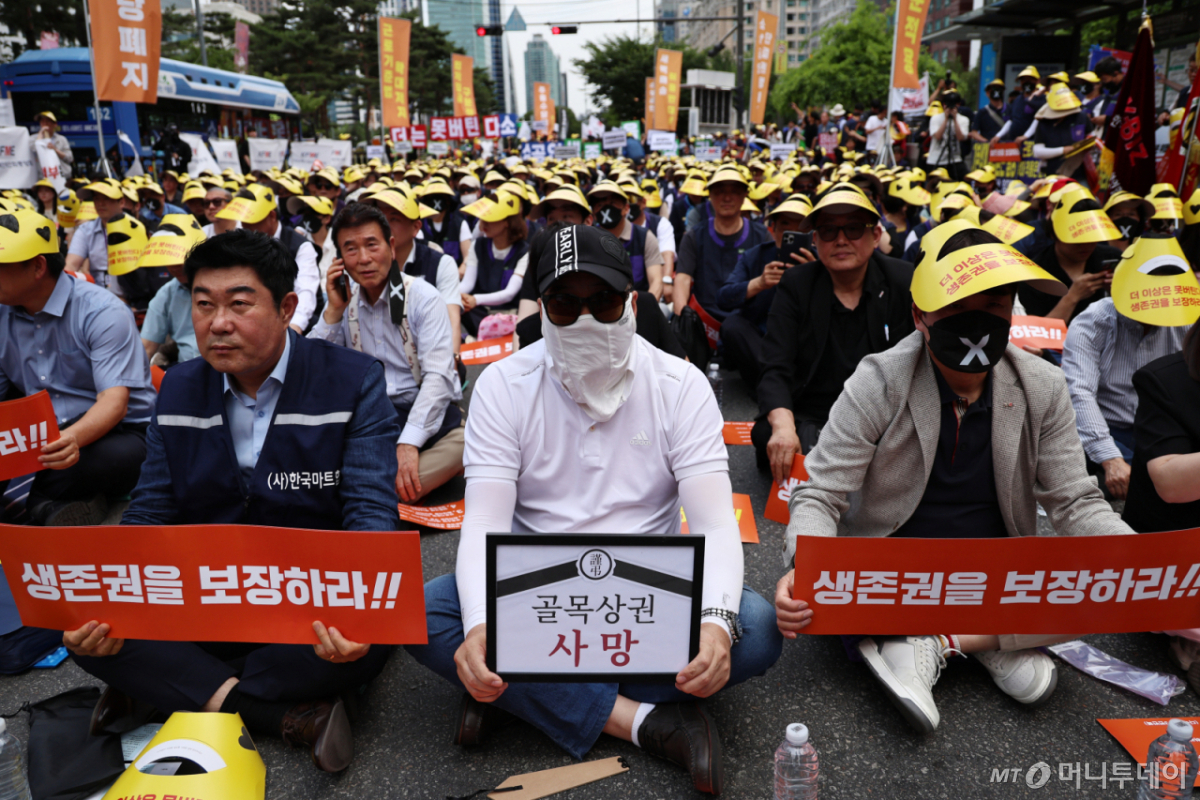
Small business organizations also oppose the legislative amendment. The Korea Federation of Small Business Owners and Self-Employed Persons pointed out, "If large retailers offer early-morning delivery, small business owners will lose all regional distribution channels they have built over decades." In May, the Small Business Owners' Alliance, National Merchants' Alliance, and Korea Supermarket Cooperative Federation issued a joint statement declaring, "If the National Assembly forcibly passes the bill allowing early-morning delivery, we will immediately file a constitutional complaint with the Constitutional Court."

 in LIVING
