

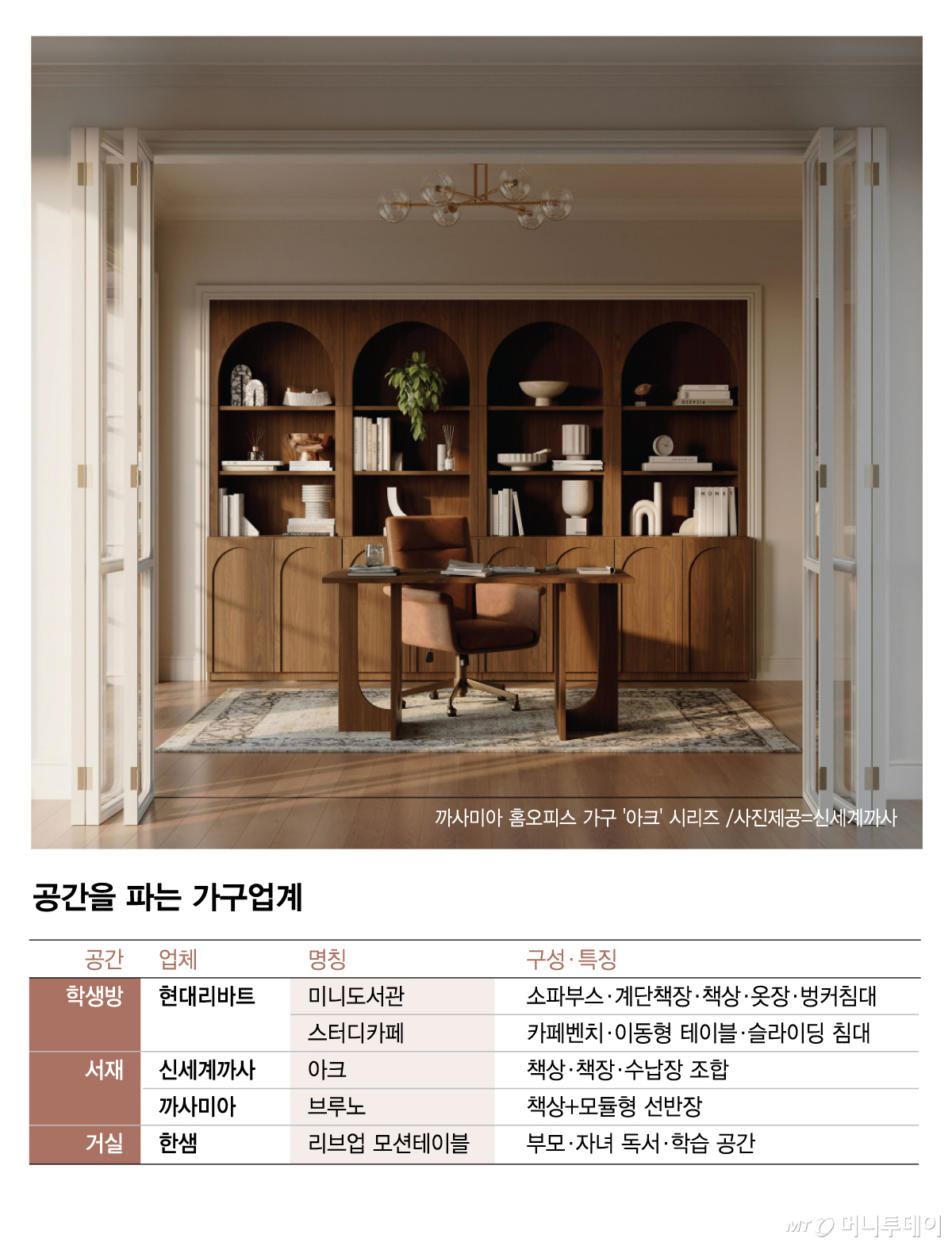
With the arrival of autumn moving season, weddings, and the new school term, the furniture industry is ramping up competition in "package" offerings that propose entire spaces rather than individual items. The strategy aims to increase the number of items purchased per customer by combining bookshelves and storage units to create study rooms, or pairing beds with storage furniture to furnish entire bedrooms.
According to the furniture industry on the 2nd, sales of Shinsegae Casa Casamia's study furniture "Arc" increased by approximately 75% over the past two weeks compared to the two weeks immediately prior to its launch. Released in late July, Arc is a product that combines desks, bookshelves, and storage units to create an entire study space resembling a library.
This competition for space packages is particularly evident in students' rooms at the start of the new school term. Hyundai Revit proposes furnishing elementary school students' rooms as "mini-libraries" and middle/high school students' rooms as "study cafes" through its space-customized package, "THE ROOM." A mini-library includes sofa booths, staircase bookshelves, desks, wardrobes, and bunk beds, while a study cafe features café benches, mobile tables, and sliding beds.
Casa Casamia also strengthened its student room and study furniture offerings in response to the autumn school term and interior design season. It added modular shelving units to its "Bruno" series, enabling the creation of a "total study" alongside existing desks, and equipped its motion desk "New Libro" with height-adjustable functions so it can be used by everyone from elementary students to adults, thereby increasing its utility.
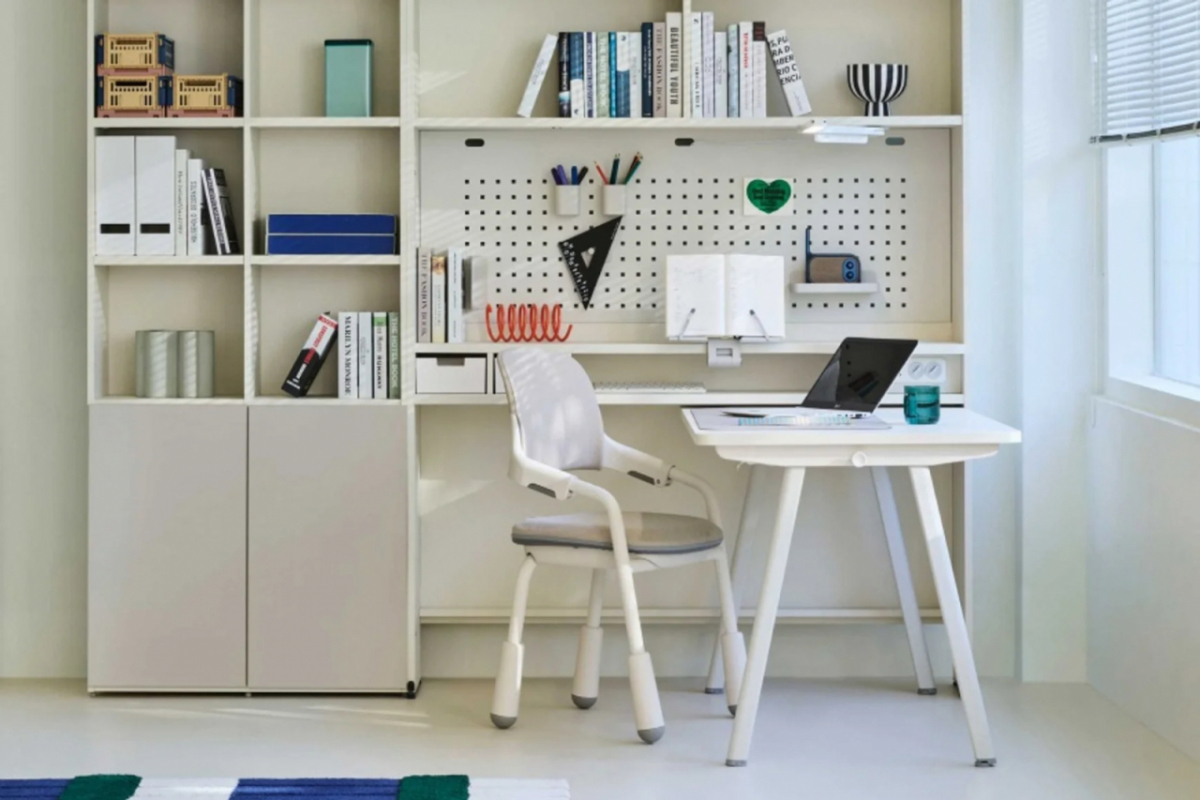
Demand for student rooms is also reflected in sales performance. Combined sales of Hansem's student room furniture "Joy S2" and "Joy A" series surged 172% during the peak period of new school term demand compared to the previous quarter. Sales of the "Live-up Motion Table," which allows parents and children to read and study together by furnishing living room spaces, also increased by 78% during the same period.
Sales by space unit are expanding beyond student rooms to include living rooms, bedrooms, kitchens, and more. The furniture industry attracts consumers through services such as 3D space consulting, which allows for virtual placement of furniture based on apartment floor plans. This enables customers to check the arrangement and combination of multiple furniture pieces tailored to their home's structure before purchasing, allowing them to furnish the entire space.
A sluggish furniture market is also a factor driving this competition. Hansem's sales in the first half of this year amounted to 816.7 billion won, a 9.6% decrease compared to the same period last year, while Hyundai Revit recorded 729.1 billion won, down 14%. The calculation is that by expanding package sales during periods when demand for moving, household goods, and the new school term concentrates, they can increase both the number of items and the amount spent per customer.
With the official autumn peak season approaching, the industry has launched efforts to attract high-value customers. Hyundai Revit is holding a "Rhythm Festa" until the 30th of this month, increasing additional discount rates from 3% up to 10% as purchase amounts for sofas, recliners, beds, and mattresses rise from 2 million won to 8 million won. Discount events by space category, including bedrooms, living rooms, and storage areas, are also being conducted sequentially. Hansem is also offering products worth up to 5 million won depending on the purchase amount when customers buy four items—kitchens, bathrooms, storage, and windows/doors—as a package this month.
A furniture industry official stated, "As overall furniture demand has contracted, companies are forced to compete for a limited pool of customers," adding, "Proposing products by space unit rather than individual items creates an effect of bundling customers through linked purchases, leading companies to strengthen related products and services."

 in LIVING

