

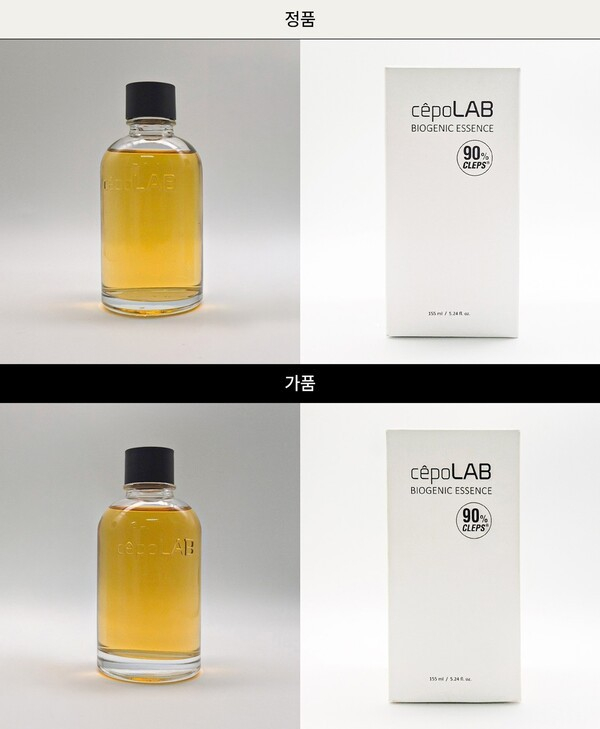
K-beauty counterfeits are evolving by copying everything from the product itself to online sales content. This includes taking official product photos and item information, using AI to create detailed pages and product descriptions, and even adding fake reviews and expert recommendation phrases. As the time and cost required to produce counterfeit listings decrease, fake products targeting popular K-beauty items are rapidly increasing not only overseas but also in domestic online markets.
According to the beauty industry on the 7th, an unofficial distribution issue was also revealed in a recent controversy surrounding APRL's Medice Cube "PDRN Pink Collagen Capsule Cream" in Singapore. Although the Health Sciences Authority (HSA) of Singapore announced that trace amounts of Sudan Red were detected in certain batches, APRL refuted this by stating that there is no official export record for those batches to Singapore and that the sales outlet for the test samples was not an authorized supplier or distributor. Earlier in July, over 100 suspected counterfeit Medice Cube products were seized at Timișoara Airport in Romania.
This is not limited to Medice Cube alone. In September last year, approximately 56,000 counterfeit items of Chosun Beauty and Skin1004 were seized all at once in Foshan City, Guangdong Province, China. The estimated damage based on genuine product prices was around 10 thousand won. During a crackdown in Guangzhou, China, 6,000 imitation products of six Medice Cube items, along with domestic brand products such as Skin1004 and Arensia, were also discovered. Best-selling products from brands with high overseas sales volumes, such as Cosrx and Anua, are also becoming major targets for counterfeiting.
The spread of counterfeit goods is accelerating further due to AI. In the past, counterfeiters would copy genuine product photos and add product descriptions, but now they can use generative AI to create new sales content based on product images and information. It is now possible to adapt product descriptions according to country and language, produce fake user reviews or expert advertisements, and simultaneously post them across multiple platforms.
A new method has also emerged where the same counterfeit products are repeatedly registered on platforms such as Shopee, Amazon, and TikTok Shop with only the name and price changed. The brand protection company ACVISS analyzed that when generative AI is used, fake sales posts that could previously be produced at a rate of about 100 per day using traditional methods can now be generated up to 10,000 per day.
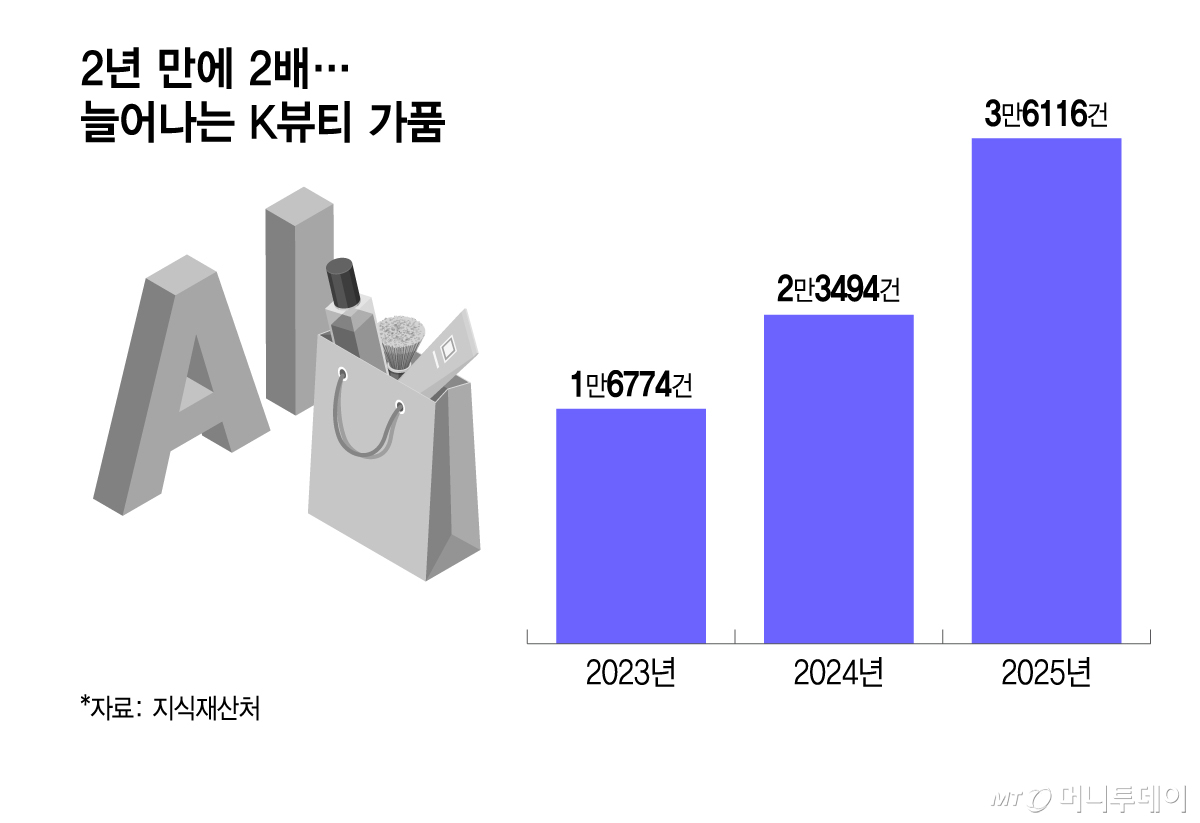
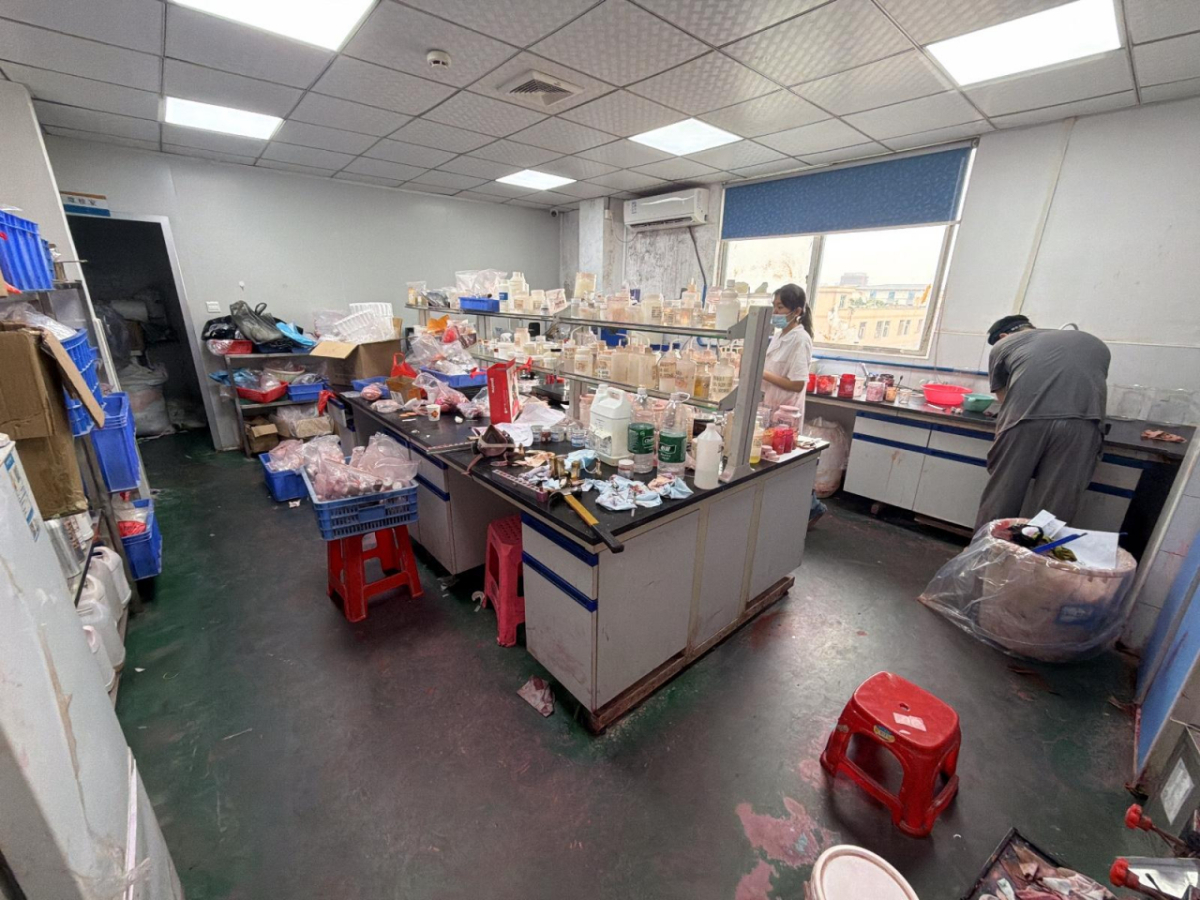
The number of K-beauty counterfeit blocking cases has also surged sharply. According to the Intellectual Property Office, the number of blocked online sales posts for counterfeit K-brand cosmetics overseas increased from 16,774 in 2023 to 23,494 in 2024 and 36,116 in 2025. This represents more than a doubling within two years. Counterfeit products are primarily produced in China and spread through overseas e-commerce platforms and domestic open markets. According to Markvision, approximately 1.115816 million K-beauty counterfeit products were detected in 2025 alone. For this year, 2.25 million cases were detected from January to May, with projections indicating the annual total will exceed 50 thousand won.
The costs that brands must bear are also increasing. Since deletion procedures for sales posts vary by platform, companies must directly search for counterfeit products, verify their authenticity, and request removals. As overseas markets expand, the scope of monitoring also grows accordingly. This is the background behind companies taking action, such as Amorepacific establishing a dedicated team for counterfeit distribution monitoring and APRL introducing genuine product authentication QR codes for Medice Cube.
The government is also expanding its support. The government is providing up to 200 million won per company for the introduction of genuine product authentication technology and is also expanding safety inspections for cosmetics purchased through direct overseas shopping. An industry official stated, "As K-beauty gains popularity in the global market, products with higher sales volumes are increasingly becoming targets for counterfeits." They added, "With the use of AI, not only counterfeit products themselves but also their sales content can be created rapidly, making much more detailed monitoring necessary than before."

 in LIVING


