

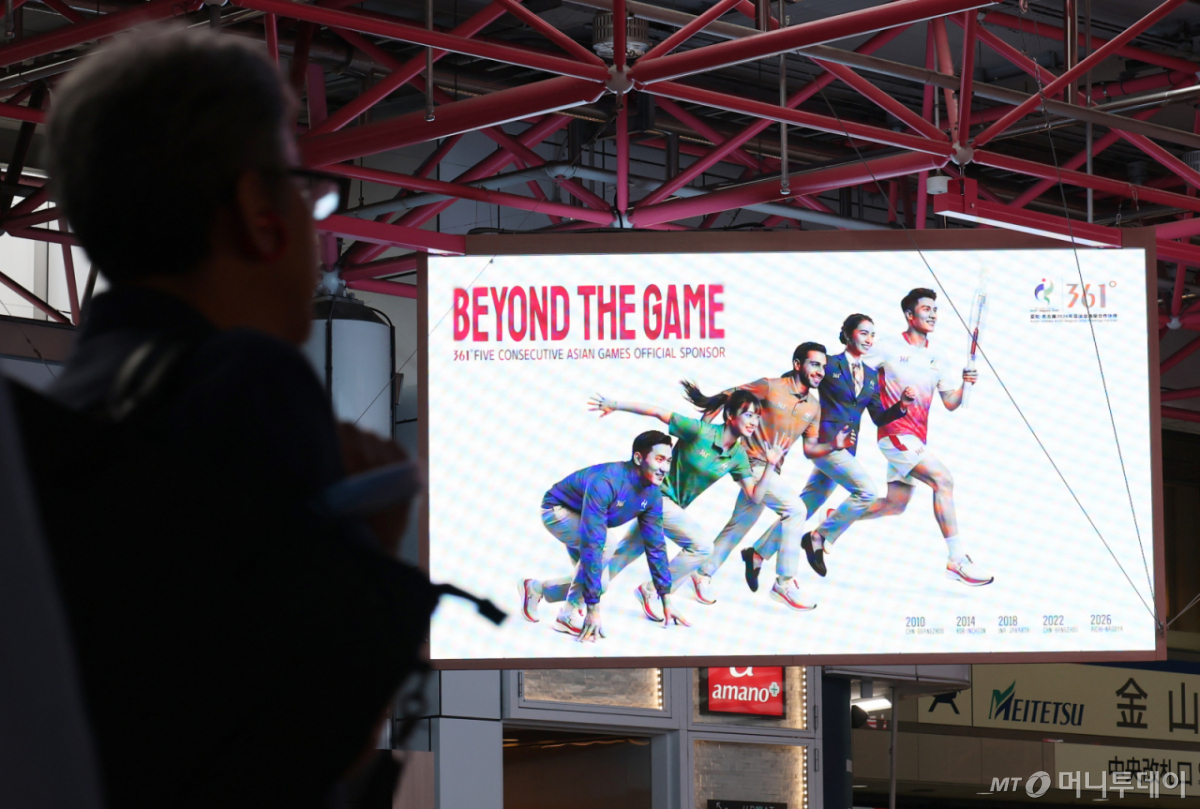
With the opening of the 2026 Aichi-Nagoya Asian Games approaching on the 19th, a temperature difference is emerging between the restaurant industry and the convenience store sector. Chicken franchises are organizing support events but remain cautious about large-scale sales booms. In contrast, convenience stores have launched aggressive discount campaigns targeting 'home-viewing fans' who watch games at home. Analysts suggest this reflects not only expectations for sports events but also industry-specific factors such as core products and inventory burdens.
According to relevant industries on the 16th, chicken franchises have begun Asian Games marketing through athlete sponsorship and consumer participation events. BBQ, an official sponsor of the Korean Olympic Committee, delivered a 100 million won encouragement fund to national team athletes. Kyochon Chicken filmed virtual advertisements for MBC and SBS broadcasts, offering product exchange vouchers via lottery to customers who verified them on social media (SNS). BHC provides a 1,000 won coupon to users who participate in its daily support event through the company app.
However, expectations that these events will lead to increased orders across all franchise stores are not high. During the recent North American World Cup, sales at some chicken franchise stores nearly tripled compared to usual levels, but not all stores benefited equally from the boost, according to industry sources. When the Korean national team failed to advance to the Round of 32, follow-up events prepared by major restaurant franchises were also concluded early. Since box office success varies depending on the national team's performance, and non-sponsored companies face restrictions on using the event name and emblems, they must be cautious in their marketing efforts. A franchise industry representative stated, "It is better than having no events at all, but it is not at a level to expect a sales boom."
In contrast, convenience stores are actively targeting 'home-viewing fans' by promoting canned beer, snacks, and beverages. Unlike the restaurant industry, which must prepare fresh raw ingredients and cook to order, key promotional items for convenience stores such as beer and snacks have relatively long shelf lives. Even if support demand does not surge as expected, these products can be sold after the event, reducing the burden of clearing inventory within a short period.
GS25 will offer discounts on alcoholic beverages, ready-to-eat chicken, snacks, and drinks until early next month. Twenty-eight popular beer bundles will receive a 2,000 won discount when paid via Kakao Pay, while three types of Chicken25 Sobachicken will be sold as 1+1 deals. CU is holding discount events on over 70 items until the 30th of this month, offering up to 56% off bundles of Chingtao and Asahi Style Free 500mL six-packs.
Seven-Eleven will also discount over 300 products during the same period. Drawing on its experience from the North American World Cup when sales of refrigerated ready-to-eat meals during Korean matches rose by 158% year-on-year, it has prominently featured chicken and alcoholic beverages. Beer is discounted by up to 55%, while whiskey and wine (189 varieties) are discounted by up to 25%.

 in LIVING
