

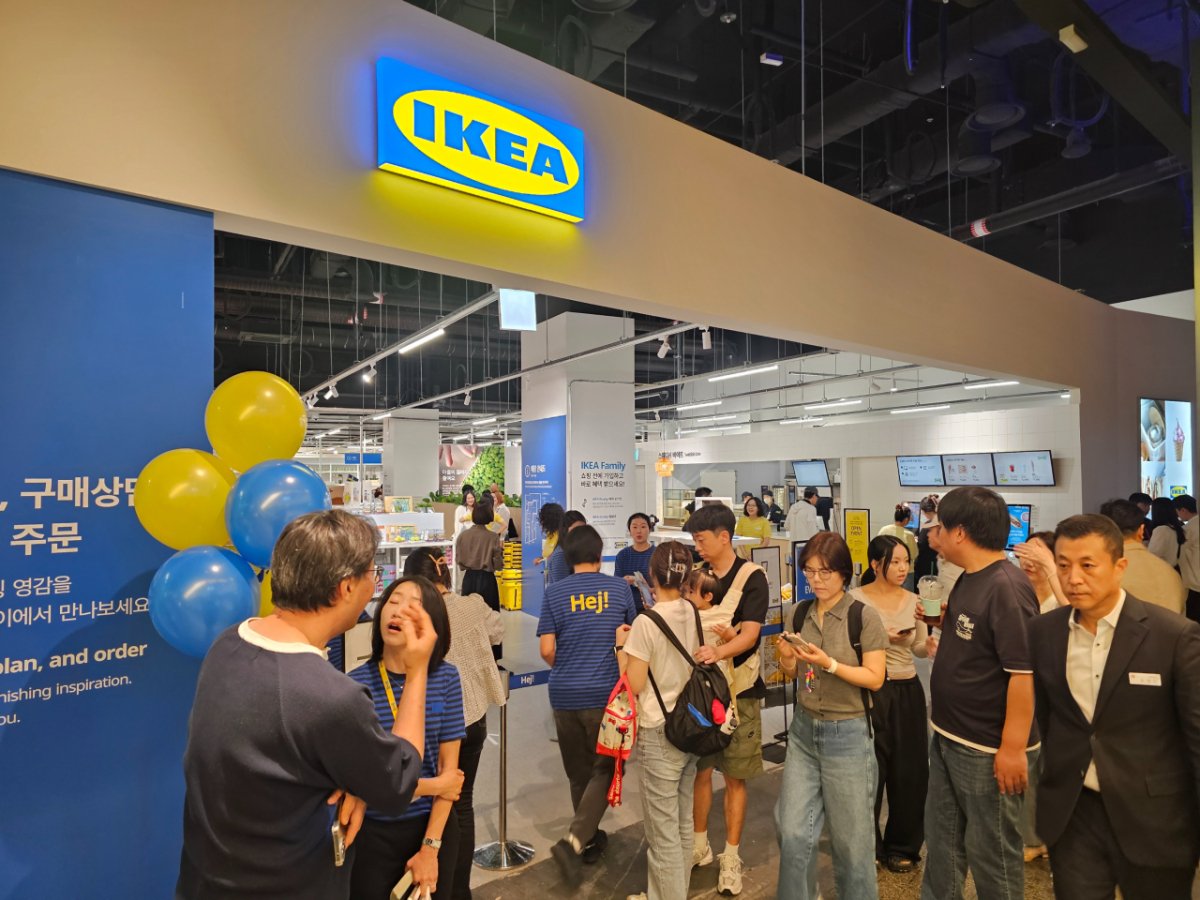
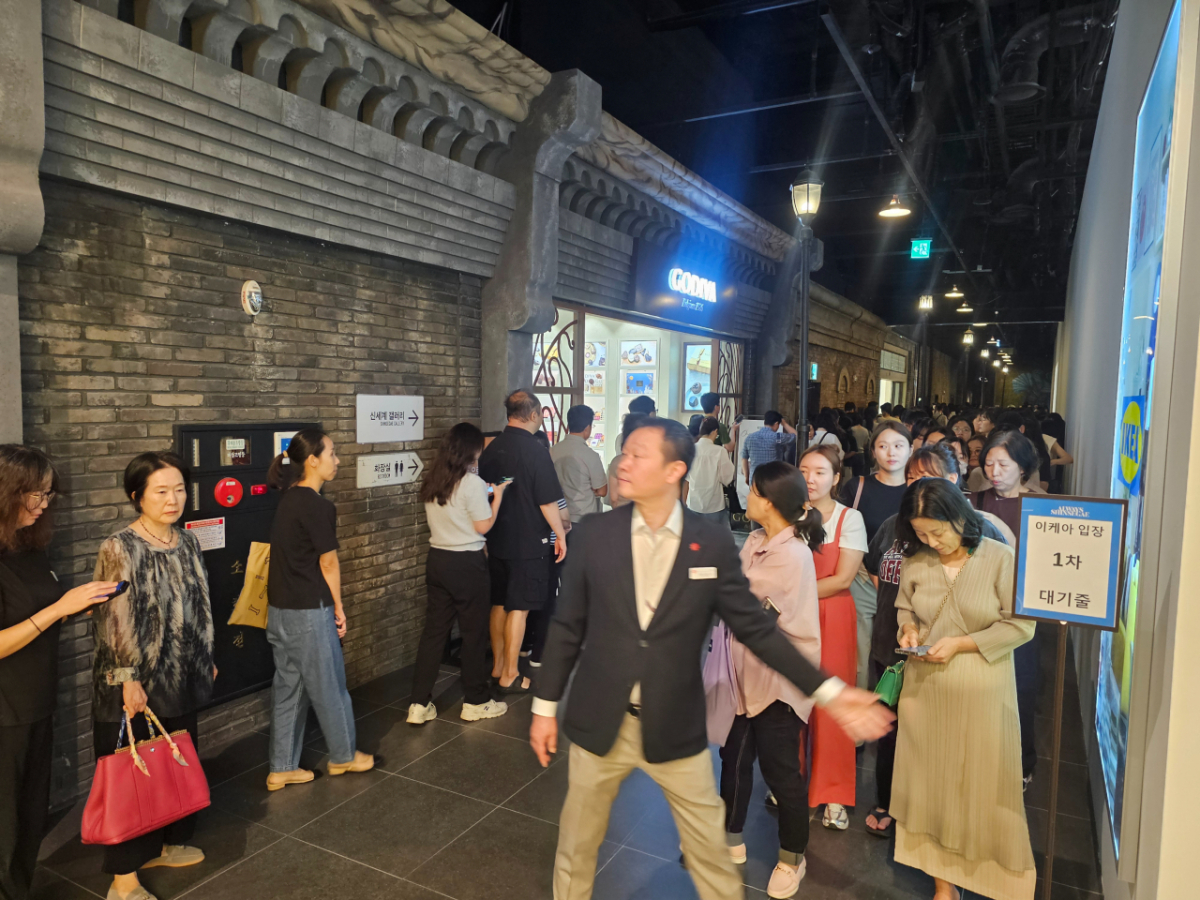
At 10:30 a.m. on the 17th, hundreds of people lined up near Dongdaegu Station in Daegu Metropolitan City at the 8th floor of Shinsegae Department Store. They were waiting for the opening of 'IKEA Shinsegae Department Store Daegu Branch' (a city-type store covering approximately 300 pyeong).
Kim Kyung-mi (pseudonym), a housewife residing in Suseong-gu, said she had been eagerly awaiting this day alone. She had been standing in the waiting line for an hour and remarked with a smile, "Since there was no IKEA in Daegu, I used to go all the way to Busan. Now I don't have to go to Busan anymore."
Home furnishing retail company IKEA Korea officially opened its first store in the Daegu and Gyeongbuk region, IKEA Daegu Branch, and welcomed customers that day. Due to the large number of visitors, entry was limited to 150 people at a time to prevent safety incidents. The waiting line continued to grow until it filled the entire 8th floor. IKEA estimated that over 10,000 people would visit by the end of business hours on that day.
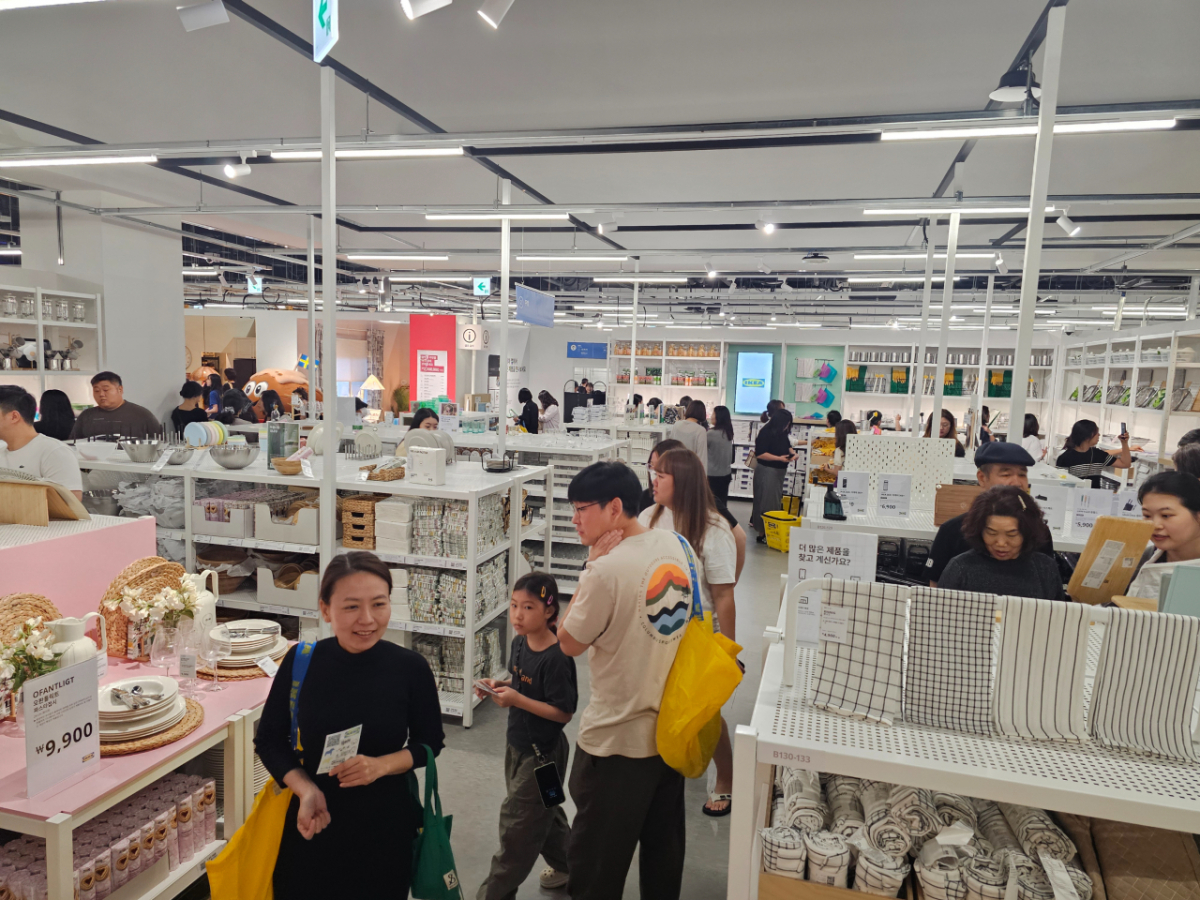
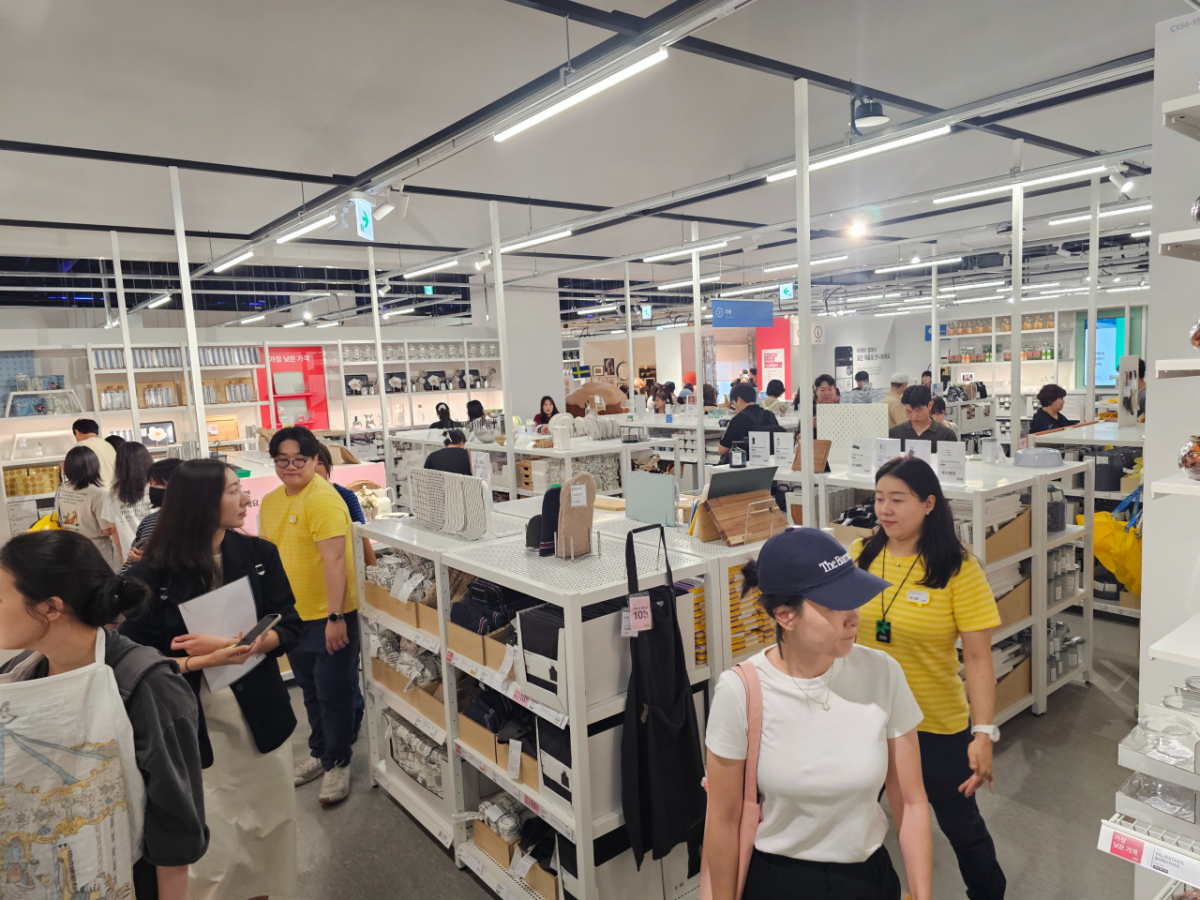
Customers entering the store moved busily, filling large yellow bags (IKEA shopping baskets) with items ranging from side dish containers to kitchenware, bathroom supplies, and children's toys. They also examined prices for various furniture products such as desks and tables, utilized consultation services, enjoyed Swedish food, and experienced the new city-type IKEA store throughout the premises.
Approximately 900 types of products were sold at the store that day. Among them, about 40 types consisted of small furniture such as chairs with high space utilization efficiency.
IKEA Daegu Branch reflected the local residential environment centered on apartments and the high interest in efficient space utilization in its interior design. In particular, it showcased many practical products applicable to daily life, such as storage and organization solutions. Six showrooms reflecting customers' actual living environments and lifestyles—kitchens, living rooms, bedrooms, and children's rooms—were particularly noticeable.
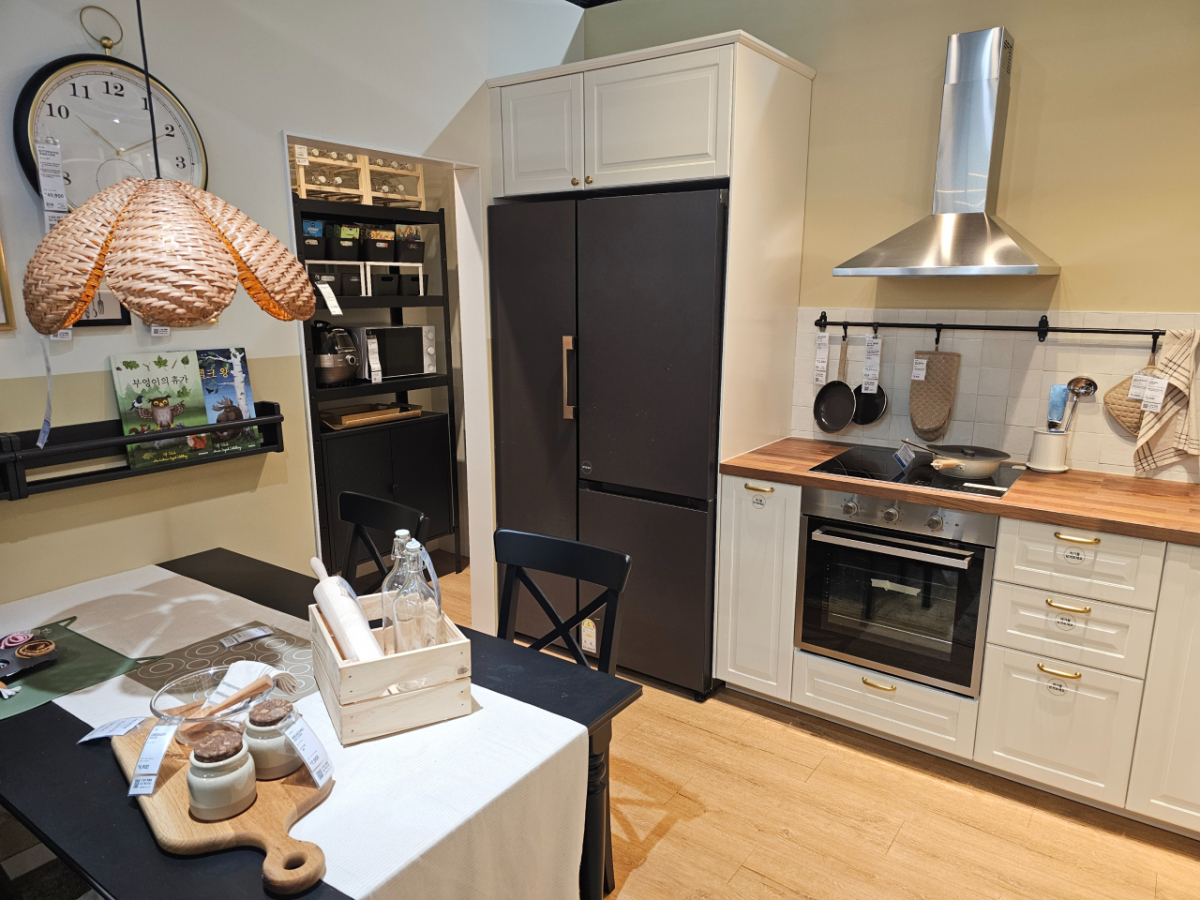
Park Yu-ri, Hong Bo (Head) of IKEA, explained, "We are providing home furnishing solutions tailored to various lifestyles including single-person households, two-person households, and families with children. Visitors will be able to discover various ideas that suit their homes and lifestyles here."
A food space where customers can experience Sweden's unique culinary culture also opened alongside the store. At 'Swedish Bite' and 'Swedish Food Market' inside the store, there were not only convenient snacks such as ice cream, coffee, and hot dogs but also various Swedish groceries like meatballs that can be enjoyed at home.
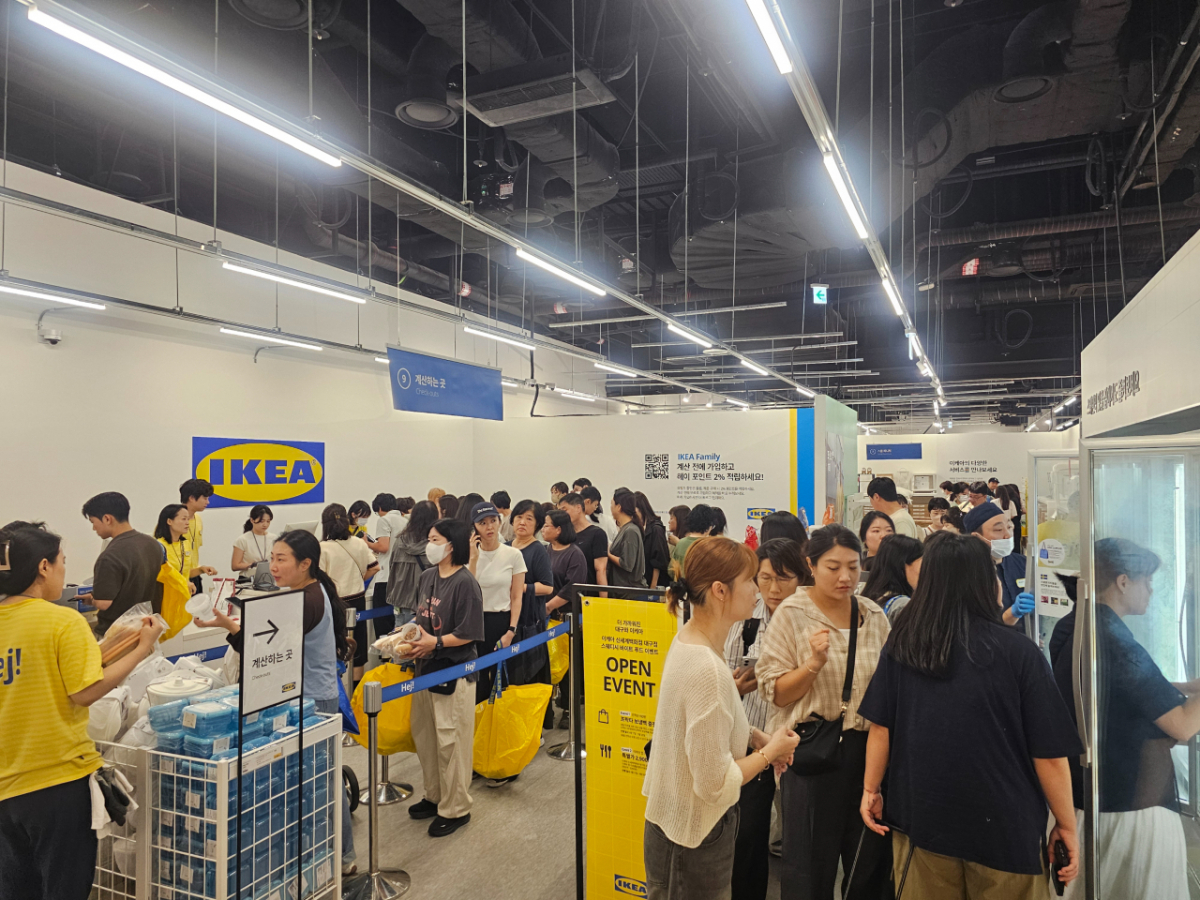
With the opening of IKEA Daegu Branch on this day, customers in the Daegu and Gyeongbuk region can now conveniently enjoy IKEA's wide range of home furnishing experiences closer to their daily lives.
Through home furnishing consultations and self-planning, they can concretely plan solutions tailored to their spaces and needs. Additionally, all IKEA products, including those seen in the showrooms, can be ordered online and delivered.
In particular, this store holds significance as it operates together with local talent. IKEA Korea collaborated with the Daegu Employment and Welfare Plus Center to hire approximately 20 new employees for the Daegu Branch. Together with these newly joined staff members, they plan to meet Daegu and Gyeongbuk customers up close and showcase IKEA's products and services.
Isabel Puig, CEO of IKEA Korea, stated, "The opening of the Daegu Branch is a meaningful step in expanding how we connect with customers so that more people can easily and conveniently experience IKEA close to their daily lives. Going forward, we will continue to expand touchpoints with customers through various channels ranging from large-scale stores to city-type stores and online platforms, enabling customers to experience IKEA in the way they desire and find the products and services they need."
Meanwhile, with the opening of this Daegu Branch, the number of IKEA stores in Korea has increased to a total of eight: five large warehouse-type stores (Gwangmyeong, Goyang, Giheung, Dong-Busan, Gangdong) and three small city-type stores (Gwangju, Songdo, Daegu).

 in LIVING


