

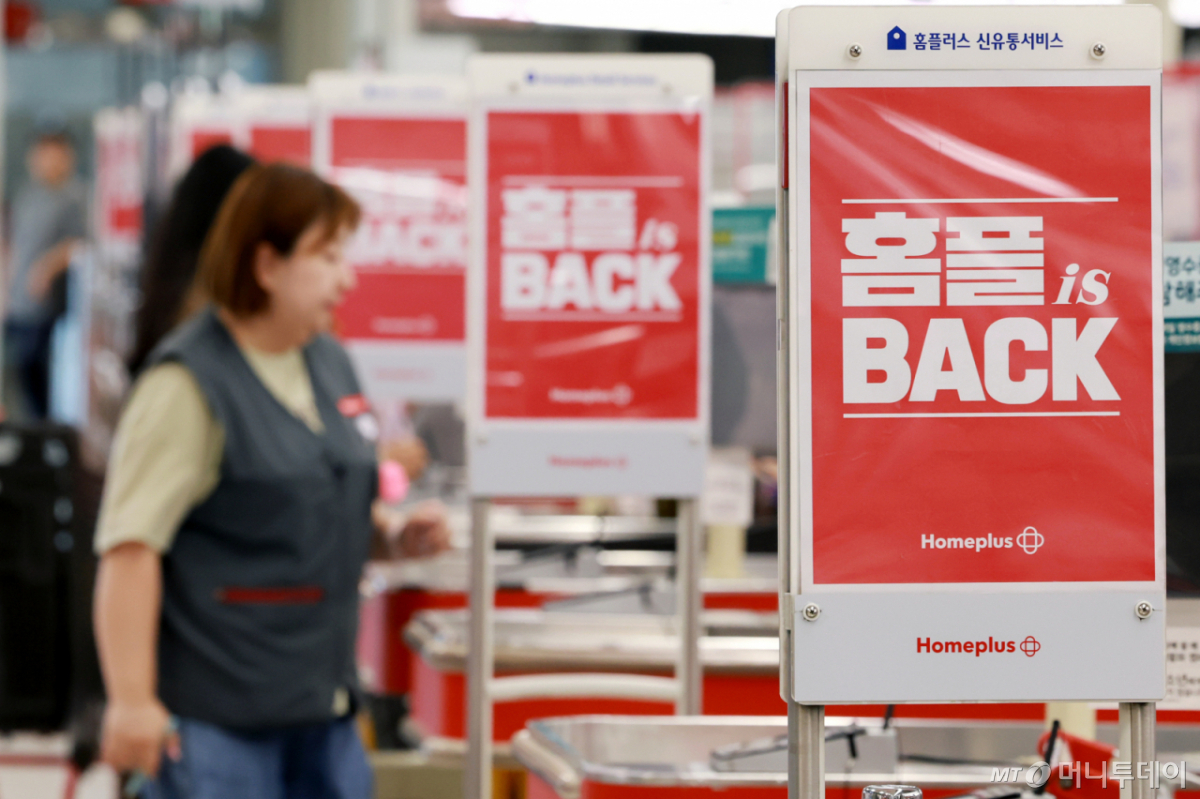
"No money even to pay those who took the voluntary retirement package"
Homeplus, which is moving forward with its rehabilitation plan, has once again found itself in a funding crisis just one month after reopening. The 200 billion won emergency operating funds (DIP) injected at the beginning of this month were reportedly used partially to cover overdue supplier payments and employee salaries, leaving little room for active investment in new product supplies—the most critical need. As a result, concerns are growing that a vicious cycle will repeat itself: prolonged sales slumps leading to worsening funding shortages.
According to the retail industry on the 17th, Homeplus's 67 stores, which resumed operations on the 13th last month, have seen their sales figures decline compared to the previous month since the beginning of this month.
Since reopening in August, Homeplus generated about 116.4 billion won in sales over approximately three weeks—a level 57% higher than the same period just before operations were suspended. Sales continued steadily even after the first weekend when reopening effects were most concentrated, and given that only pre-paid inventory was supplied, this exceeded expectations. However, sales figures have noticeably dropped since the beginning of this month. While Homeplus headquarters has not disclosed specific amounts, internal sources suggest sales reached only 40% of the monthly target.
Based on its operation of over 120 large-format supermarkets, enterprise-type supermarkets (SSM) Express, and online stores, Homeplus recorded annual sales in the range of 59 trillion won last year. Excluding about 1 trillion won in SSM sales sold to NS Home Shopping, and considering that normal operating stores have been reduced to about half, monthly sales of over 200 billion won would be needed to reach a "normal" level.
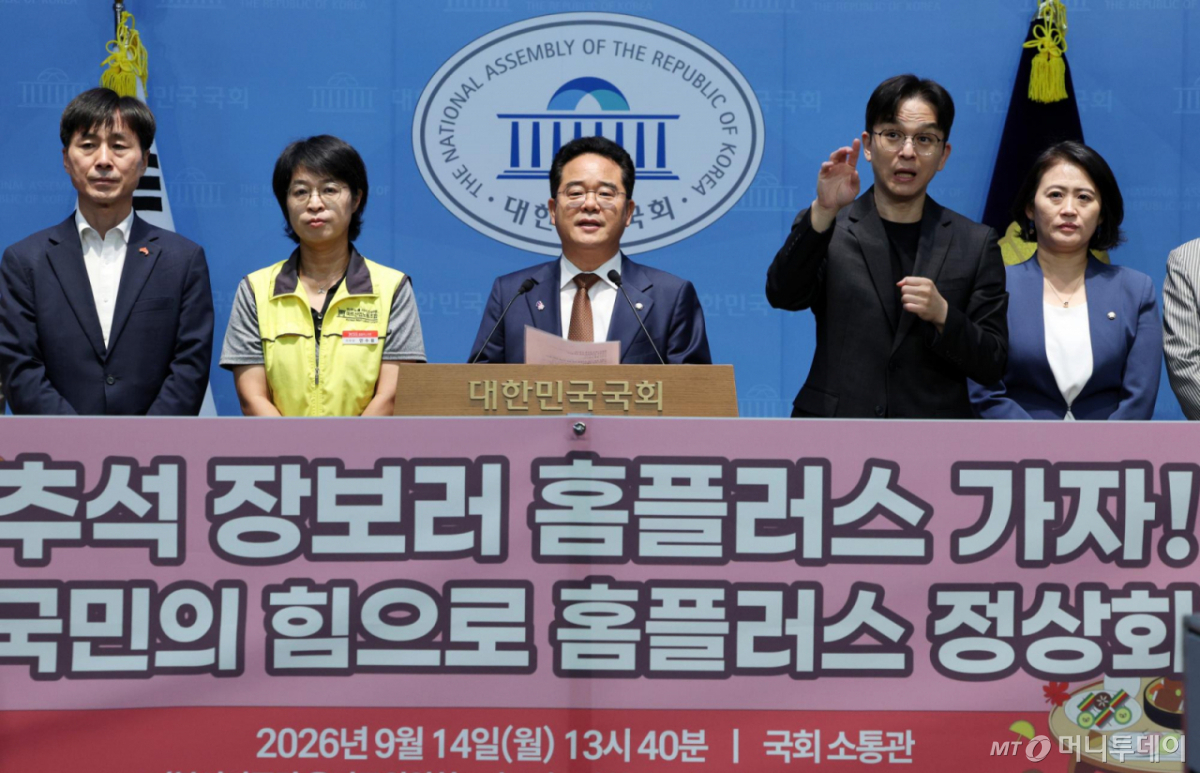
Homeplus has been conducting large-scale discount events since the beginning of this month to celebrate Chuseok. In particular, September is a peak season for the retail industry due to the Chuseok holiday, leading some analysts to interpret the sales decline as evidence of worsening competitiveness. Homeplus is unable to sell gift sets, which are representative holiday special products, due to payment issues with suppliers.
An industry official stated, "Homeplus resumed operations focusing on fresh foods and PB (private brand) products, but its product lineup remains weak compared to competitors, and discount benefits are inevitably limited."
The longer the normalization of Homeplus's operations is delayed, the more severe the funding crisis becomes. According to Homeplus's rehabilitation plan, as of early last month, public interest claims requiring priority repayment totaled 1.4129 trillion won. Specifically, payments for goods amounting to 503.2 billion won are the largest, followed by lease rights claims (166.9 billion won), service fees (88.1 billion won), salaries and severance pay (63.3 billion won), tenant sales settlement payments (58.9 billion won), and four major insurance premiums (18.8 billion won).
To achieve actual debt repayment, mergers and acquisitions (M&A) and the securitization of real estate assets are realistic alternatives. Homeplus announced plans to sell its 67 large-format supermarkets, including headquarters and online business divisions, and dispose of owned real estate at closed stores.
According to the rehabilitation plan, among the 37 stores closed last May, 19 company-owned stores will be disposed of by February 2028 to raise 1.4192 trillion won. These funds will be used to repay trust-secured bonds set by Marius Financial Group, the largest creditor. Subsequently, by February 2030, approximately 600 billion won will be raised using 38 stores as collateral to pay off public interest claims such as unpaid wages and taxes, and by 2037, the secured loan scale will be increased to around 900 billion won to secure repayment funds.
At the same time, Homeplus is pushing forward with the sale of its 67 large-format supermarkets, including headquarters and online business divisions. Samil Accounting Firm, the lead underwriter for the M&A, plans to send investment memorandums to potential acquirers by the end of this week.
If the M&A succeeds, proceeds from the sale could be injected, potentially accelerating some debt repayment timelines, but the likelihood remains low. The prevailing view is that risks such as excessive management intervention by a strong labor union and potential contingent liabilities remain significant for any acquirer. In the industry, there are concerns that if Homeplus's funding crisis worsens, it could face renewed threats of liquidation (bankruptcy).

 in LIVING

