

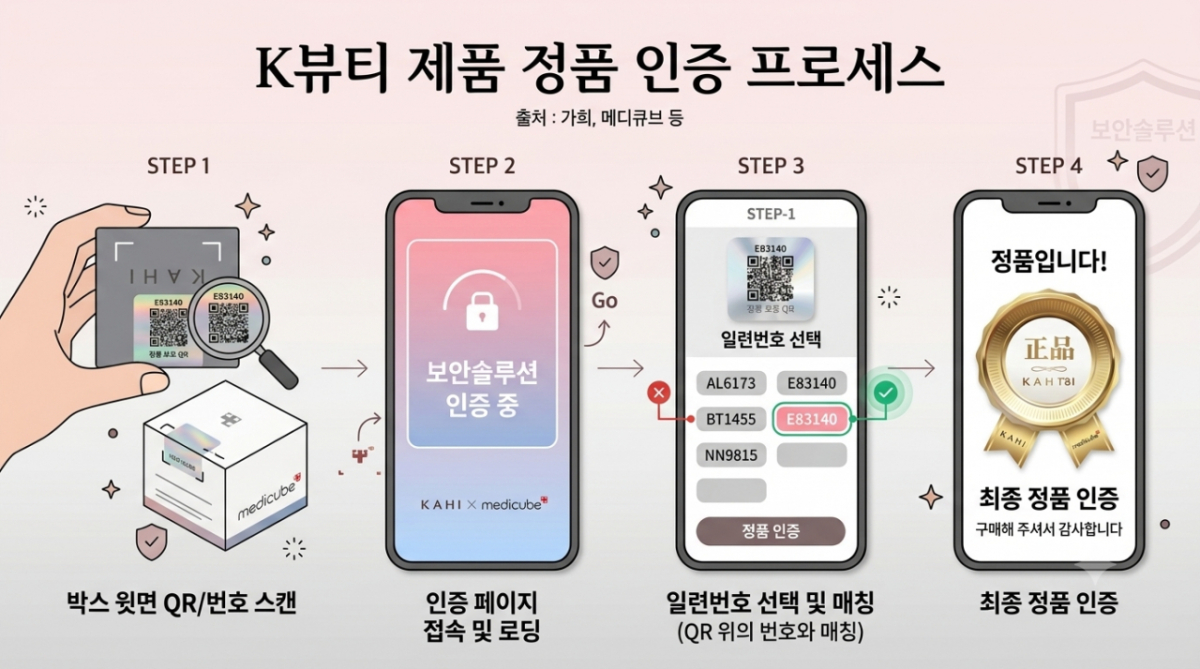
K-beauty companies are actively taking measures to combat counterfeit products circulating overseas. They apply unique QR codes to their products so consumers can verify authenticity, while using artificial intelligence (AI) to locate counterfeit sellers and trace both the sellers and distribution channels. As K-beauty sales expand globally, anti-counterfeit strategies have evolved from simply deleting posts to implementing pre-verification and managing distribution networks.
According to the beauty industry on the 21st, the Ministry of Food and Drug Safety recently identified counterfeit cosmetics made in China, including Gahyun's representative product "Multi Balm." As cases where consumers struggle to distinguish between genuine and fake products have increased, Gahyun has implemented an authentication system for its products and issues warnings about counterfeits through its official website.
Scanning the QR code on the top of the Multi Balm package redirects users to an authentication page. During the verification process, the number displayed on the screen must match the number printed on the product to be recognized as genuine. While it is possible to replicate the appearance of the QR code and numbers, each product is assigned a unique code value, making it impossible to authenticate using only a copied QR code. If the same QR code is scanned more than a certain number of times across different devices, the system flags it as suspicious usage and displays a warning message.
Given that relying solely on post-sale detection of counterfeit products sold online has limitations, brand management approaches have also changed. APR has collaborated with an AI-based monitoring specialist since 2024 to analyze product images and sales information across domestic and international open markets. Once suspicious sellers are identified, the company gathers evidence such as deleted posts and verifies actual sales and distribution circumstances before taking action. Unique QR codes have also been applied to beauty devices and cosmetics, allowing consumers to verify authenticity after purchase.
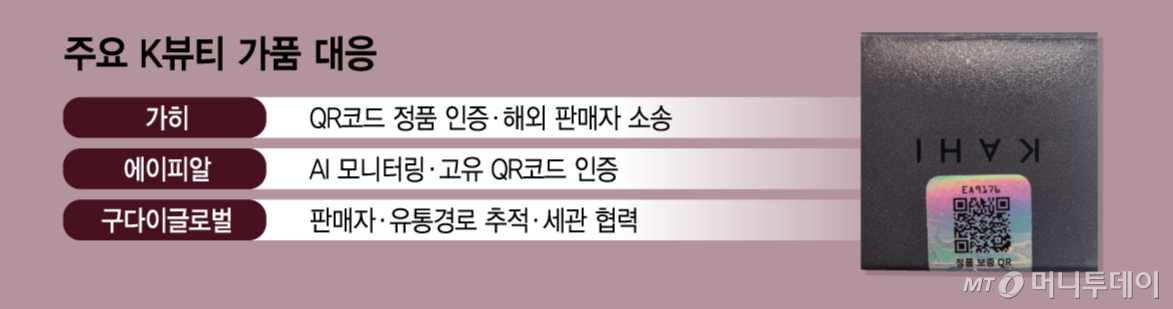
Some companies also track sellers who repeatedly distribute counterfeit products and their distribution channels. Goodai Global, which owns brands such as Joseon Beauty and Tirtir, continuously monitors e-commerce platforms, social media networks (SNS), and C2C marketplaces to accumulate information on counterfeit-selling accounts and related data. Since sellers often change accounts and resume sales after posts are deleted, the focus is on identifying the same or similar sellers.
The company also conducts test purchases and product analysis through professional investigative services. After verifying whether products are counterfeit, it traces seller information and distribution channels. For sellers who repeatedly distribute counterfeits, it requests platform account sanctions and considers legal action in local jurisdictions. Regular training is provided to Korean customs authorities, and cooperation with customs agencies abroad is also pursued to block counterfeit products at the distribution stage.
Legal actions against counterfeit sellers are also being taken proactively. Last October, Gahyun filed lawsuits in U.S. courts against over 40 companies selling counterfeit products on Walmart, eBay, and other platforms in the United States. Among these, accounts and payment accounts of 37 sellers were frozen. The company has obtained a court judgment ordering compensation and is now proceeding with recovery procedures for the awarded damages. In March this year, additional lawsuits were filed against 12 more counterfeit-selling companies.
A beauty industry official stated, "As K-beauty brands expand their overseas sales channels, counterfeit distribution is no longer limited to specific countries or platforms." They added, "Simply deleting sales posts is insufficient to prevent repeated distribution, so there is a growing trend of combining authentication systems, online monitoring, and seller information management."

 in LIVING

