

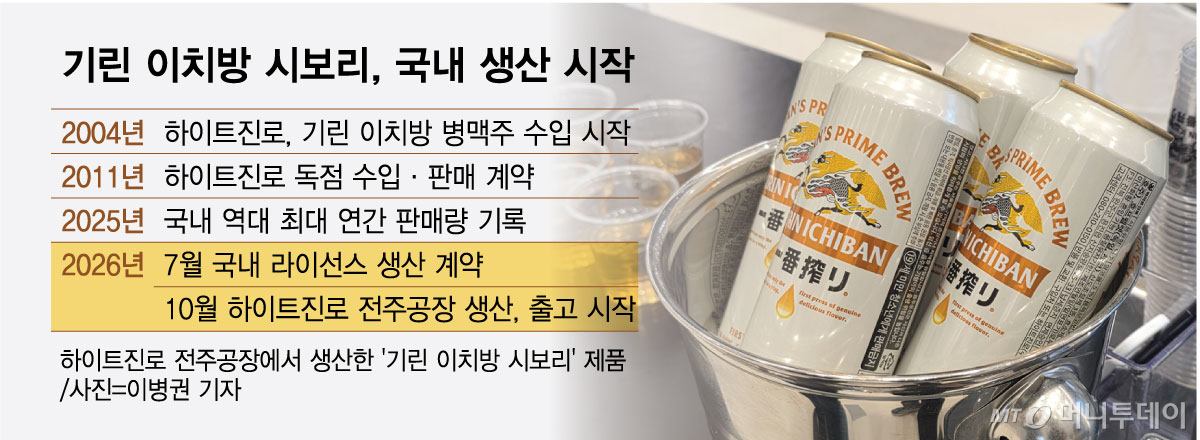
Japan's premium beer, Kirin Ichiban Shibori (hereinafter referred to as Kirin Ichiban), which has crossed the East Sea for more than 20 years, has begun production in Korea. As HiteJinro received manufacturing raw materials and technology from Japanese brewing company Kirin, the cooperation between the two companies has expanded from import and distribution to production and technology exchange.
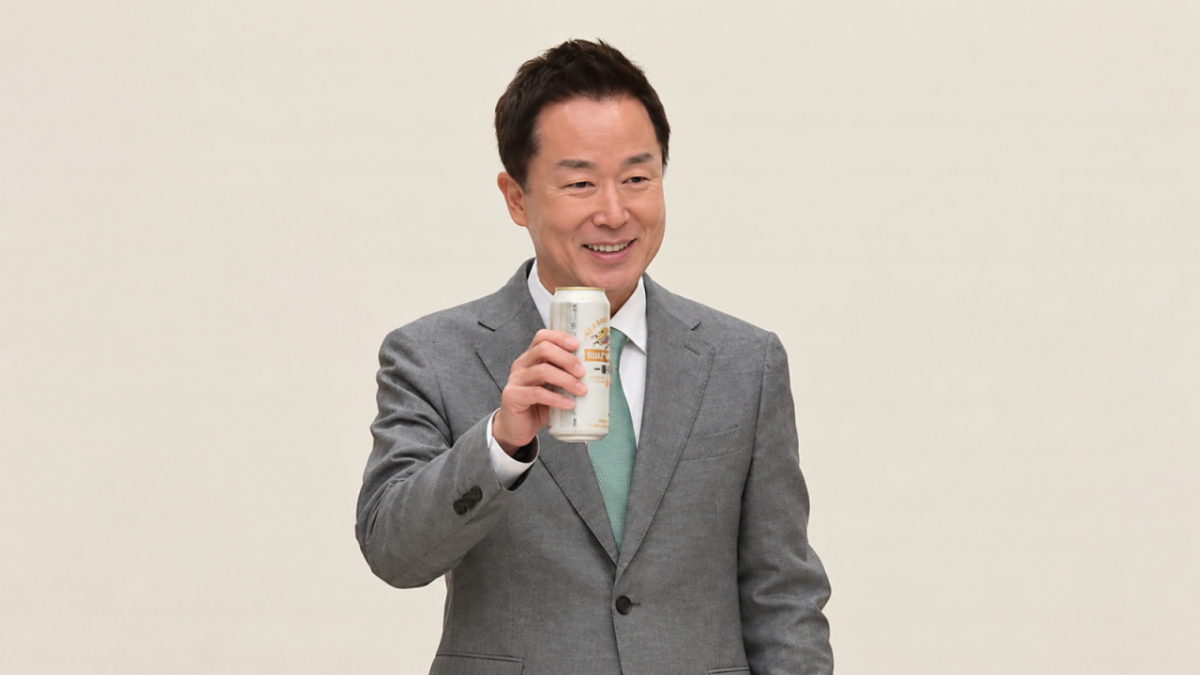
Jang In-sub, Executive Director of HiteLee Teu-jin-ro (CEO), stated on the 8th at the HiteJinro Integrated Research Institute in Yongin, Gyeonggi Province, "For about 20 years since 2004, we have worked to deliver the taste and quality of Kirin Ichiban Shibori to domestic consumers," adding, "We are the first in Asia to begin licensed production in Korea."
HiteJinro signed a license production agreement with Kirin last July. This is the first time Kirin has transferred a production license to an Asian regional partner without a capital relationship. The initial production volume is 1.5 million liters (ℓ), equivalent to 3 million 500ml cans. Next year, the company plans to produce 75% of its annual domestic sales at the Jeonju plant.
As Kirin Ichiban has broken its own annual sales records in Korea every year, the intent to produce it directly aligned. In particular, the compound annual growth rate (CAGR) of can product sales from 2020 to 2026 is 97%. Kwon Gwang-jo, Regional Manager in charge of imported beer at HiteJinro, explained, "As the growth trend of Japanese beer and increased domestic demand converged, there were also parts where supply was insufficient."
HiteJinro spent more than a year working to replicate the same taste using equipment at the Jeonju plant. Unlike other beers, Kirin Ichiban is made using Kirin's unique manufacturing method that uses only the wort first extracted from malt. This is why "Ichiban" (Japanese for "first") is included in the product name. HiteJinro directly received yeast from Japan and adjusted brewing temperature and time, raw material ratios, and finished product specifications to match Kirin's production standards.
It took more than three trials even to obtain production approval. Products test-produced at the Jeonju plant were sent to Japan for sensory testing and numerical analysis, and they had to pass the criteria set by Kirin to move on to the next stage. Even after domestic production begins, quality control and technology exchange will continue through regular technical consultation bodies.
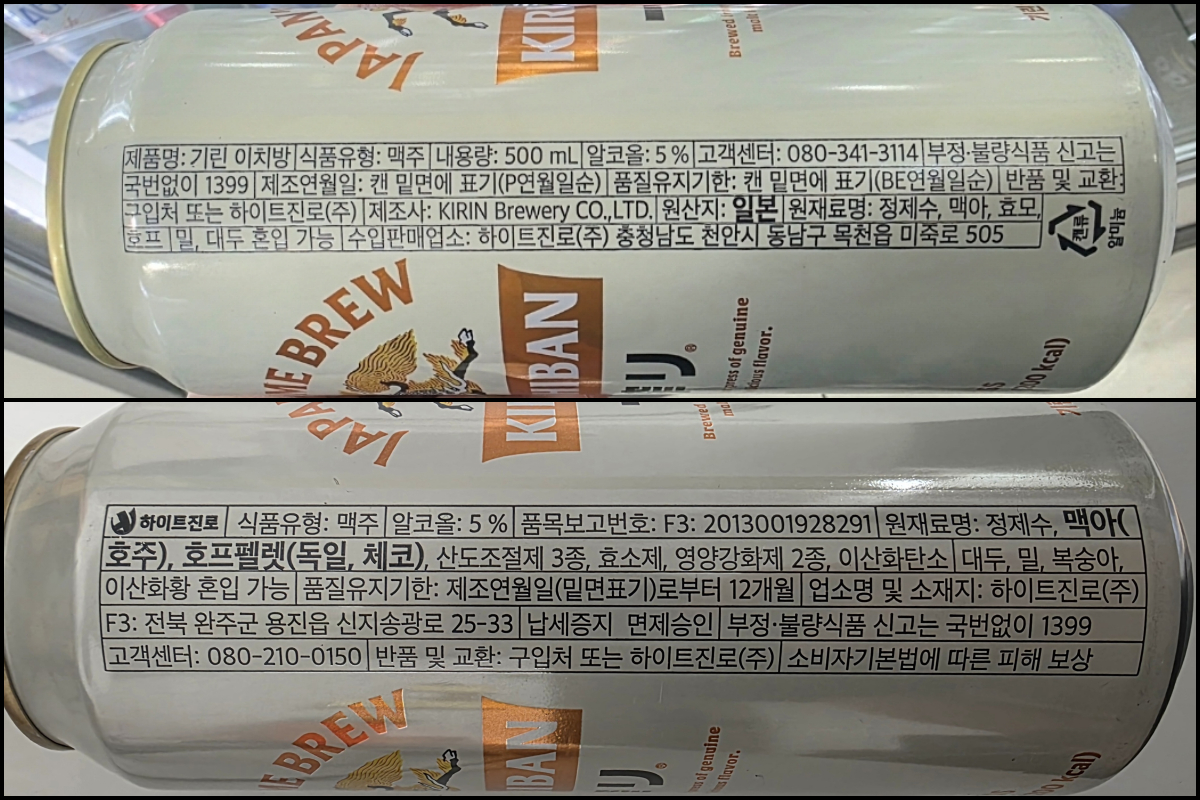
HiteJinro began domestic production of Kirin Ichiban from the first week of this month. As existing Japanese-produced products are consumed, they are expected to be easily found in convenience stores and other channels sequentially. When reporters directly visited convenience stores in Seoul for comparison, the back of the cans of the existing Japanese-produced items listed "Manufacturer KIRIN Brewery CO., LTD." and "Country of Origin Japan," while domestically produced items list the address of HiteJinro's Jeonju plant as the manufacturing facility.
Domestic production significantly shortens the supply period for Kirin Ichiban. It takes about a month and a half for products produced in Japan to be distributed domestically after passing through customs, but domestic production allows product supply anywhere in Korea within one to two weeks. This also reduces supply burdens due to external variables such as volume fluctuations and tariffs, and saves logistics costs that were previously required to move finished products.
HiteJinro plans to invest the reduced costs into promotions and marketing to increase consumer benefits. Additionally, the possibility of expanding domestic production of Kirin Ichiban bottled products and draft beer will be considered once can production and sales stabilize. Jang (CEO) stated, "This technology agreement is not merely a relocation of the production site, but the beginning of a strategic partnership that builds technology and quality together."
Meanwhile, Horiguchi Hideki, Gi Rin-maek-ju (CEO), and related personnel were scheduled to attend the event on this day but did not participate due to local circumstances in Japan. Recently, Japan's Fair Trade Commission launched a compulsory investigation into suspicions of price collusion targeting four major beer companies: Kirin, Asahi, Suntory, and Sapporo.

 in LIVING


