

Home Plus, a large-scale mart that resumed operations after receiving an emergency operating fund (DIP) of 20 billion won, has effectively "surrendered" within two months. The company's CEO admitted that the environment is not suitable for normally stocking products on store shelves. It is difficult to find a proper solution other than M&A (mergers and acquisitions).
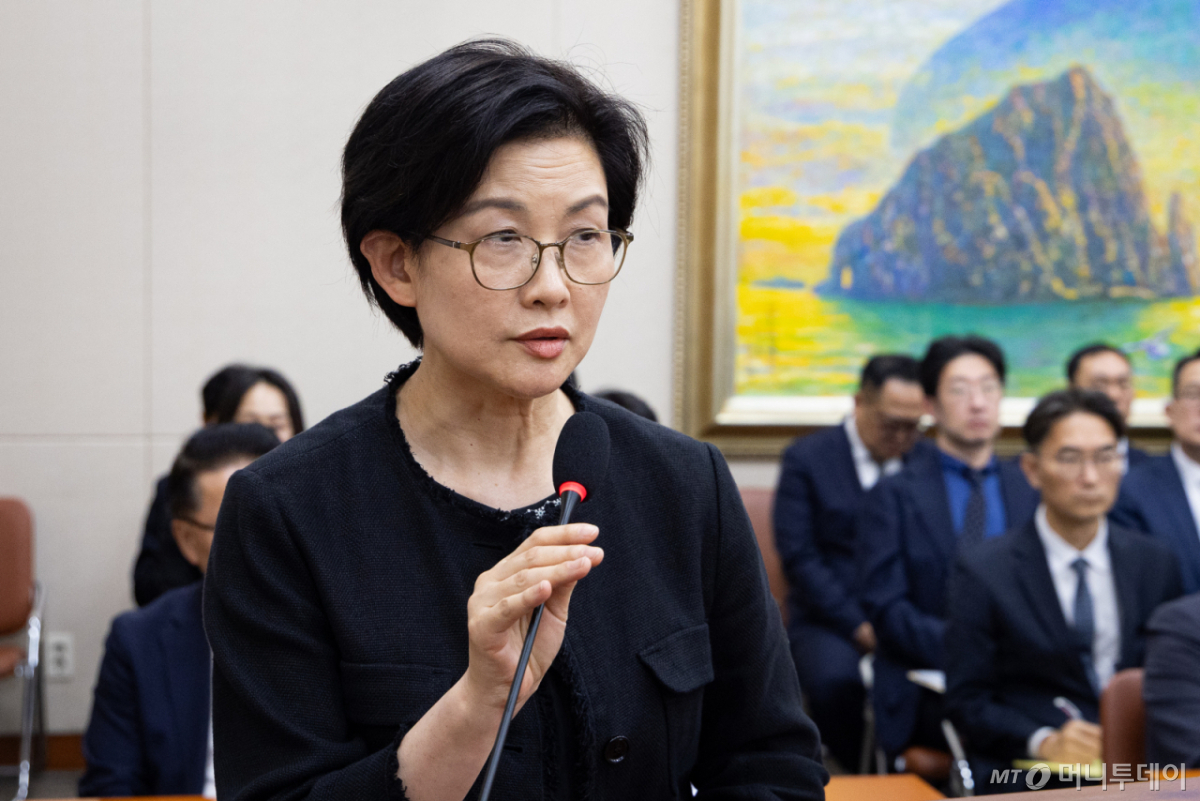
Home Plus CEO Cho Ju-yeon stated at the National Assembly Political Affairs Committee's national audit on the 12th, "We were able to resume operations through the 20 billion won DIP, but the normalization of deliveries that was initially expected did not materialize."
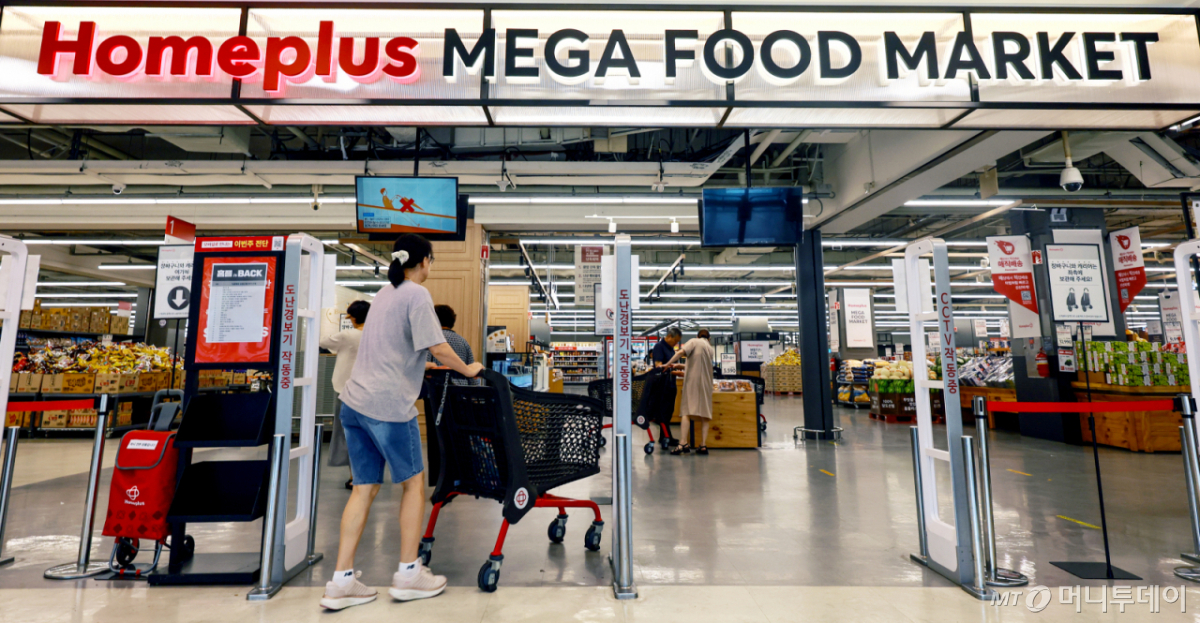
According to industry sources, during the holiday period in early this month, total sales across 67 Home Plus stores dropped sharply to an average of 3 billion won per day, a level of about 30% compared to the 10.9 billion won in sales on the first day of reopening.
This means that the company has effectively failed to normalize store management. Typically, distribution companies, including large-scale marts, receive goods through credit transactions such as sales-secured bonds. The general view is that Home Plus lost market trust because it failed to pay over 50 billion won in trade debts just before entering corporate rehabilitation proceedings.
If the credit transaction structure is not restored, distribution companies need cash every time they secure goods, making it difficult to receive adequate quantities on time, and sales recovery also slows down. This is also why the shelves at major Home Plus stores were empty or stocked only with low-priced PB (private brand) products just before operations were suspended.
Additional DIP funding is also not easy. An industry source said, "Since it has been confirmed that settling overdue delivery payments is difficult, existing suppliers have no choice but to reduce transaction volumes, and securing new suppliers is also difficult," adding, "If this situation is not resolved, additional DIP support will be like pouring water into a leaky pot."
Meritz Financial Group, the largest creditor, also takes the position that additional DIP support is impossible. MBK Partners has effectively relinquished its status as the largest shareholder through measures such as the free cancellation of shares worth 2.5 trillion won last month, and because operating costs were supported by personal guarantees from MBK Chairman Kim Byung-ju, it shows reluctance to inject additional funds. It is also known that Kim Gwang-il, MBK Vice Chairman who served as co-CEO of Home Plus, recently expressed his intention to resign.
Cho said, "Ultimately, M&A (mergers and acquisitions) must proceed for the current situation to be resolved." This is interpreted to mean that there is no solution other than Home Plus finding a new owner.
However, the outlook for M&A is also dark. This is due to concerns that risks such as management intervention by a strong labor union and contingent liabilities will be significant for an acquirer. Although the sale agent recently sent investment information documents to some companies, it is known that no company has yet expressed intent to acquire. Large distribution companies previously mentioned as acquisition candidates also draw a line regarding the possibility of acquiring Home Plus.
Home Plus, whose financial difficulties have worsened, has ultimately decided on workforce reduction. It is accepting applications for voluntary retirement until the 22nd. The condition is a lump-sum payment of overdue salaries and holiday bonuses without separate consolation money. Home Plus, which once had around 20,000 employees, currently has about 9,000 due to the sale of Express stores, store restructuring, etc., and the workforce size is expected to shrink further from this level.
Observations suggest that if Home Plus's M&A fails, it will effectively follow a liquidation process through separate store sales, etc. If mass unemployment becomes reality in this process, there is a possibility that this issue will again become a political controversy.
The labor union urges the government to prepare countermeasures. The union released a statement regarding voluntary retirement on the 8th, stating, "As time passes as it is, workers' employment will become increasingly unstable, and tenant business owners and small and medium-sized merchants will be driven out into the streets, increasing social costs."
It added, "The path to normalizing Home Plus is only to find an acquirer who can revive the core distribution business, and this is not something that should be left solely to MBK and the creditor group." It further urged, "The government should prepare public officials, recommend a joint administrator to the court through public institutional investors in the position of creditors, and M&A promotion should be supervised together by public entities."

 in LIVING

