

Orion is continuing its growth trajectory in China and Russia by leveraging local distribution networks and new products. In China, the company has expanded its product supply to snack specialty stores, while in Russia, it has targeted consumer tastes with items such as Col Rafah-i and Cham Bungeoppang (grilled fish-shaped rice cakes). As profitability in the domestic market has slowed due to cost burdens such as raw material expenses, products and sales strategies tailored to local consumption are boosting overseas performance.
According to a summary of country-specific preliminary earnings disclosed by Orion on the 10th of last month and the 13th of this month, total sales in China for August and September this year reached 265.3 billion won, an increase of 11.1% from the same period last year. Operating profit for the same period was 53.5 billion won, up 6.6%. In Russia, sales were 73.5 billion won and operating profit was 13.2 billion won, representing increases of 17.6% and 48.3%, respectively. These figures are provisional totals based on separate financial statements by country, using the Korean won conversion amounts presented in the disclosures.
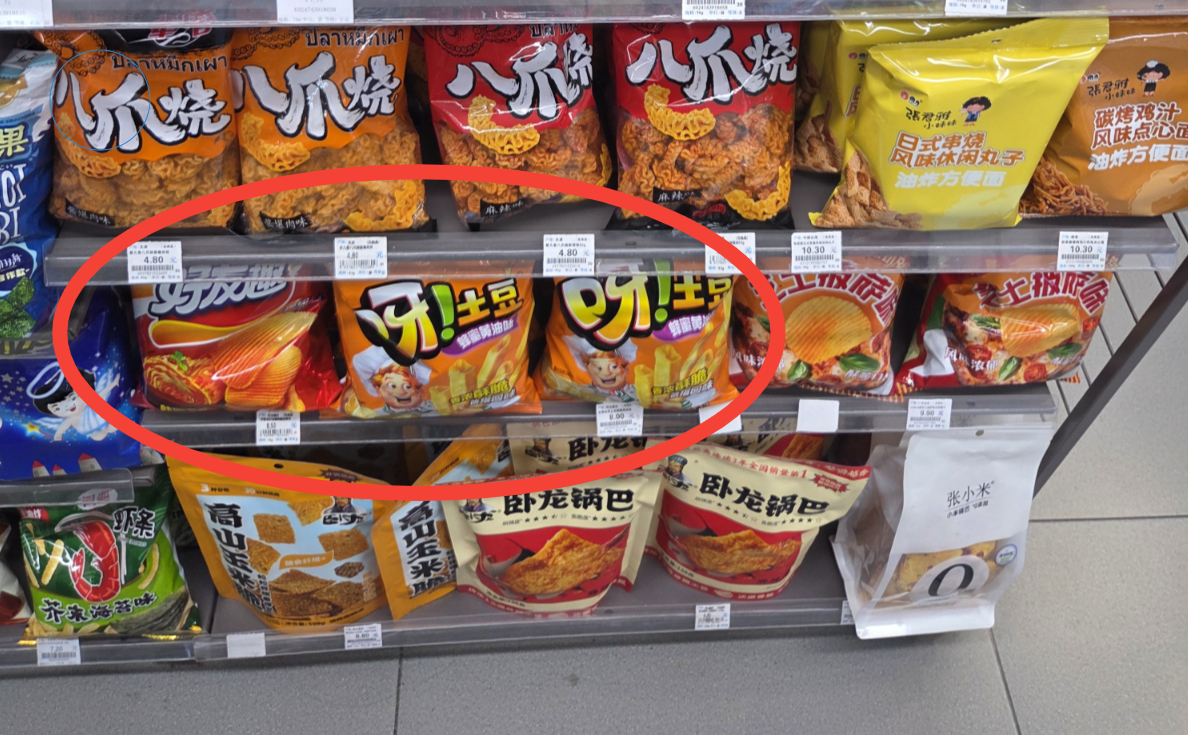
In China, the strategy to target snack specialty stores has yielded results. Snack shops are stores that gather snacks such as cookies and bread and sell them at low prices. According to Meritz Securities, Orion’s sales through the Chinese snack shop channel in September increased by 50% from the same month last year, driven by dedicated products and an expansion of store listings. This growth offset sales declines resulting from the closure of accounts with existing discount stores and retail outlets. Additionally, demand for the Mid-Autumn Festival contributed to a 9% increase in biscuit sales that month, while gum and jelly also posted double-digit growth each.
In Russia, the strategy of expanding the pie product line proved effective. With increased supply of Col Rafah-i, launched last July, and Cham Bungeoppang produced on new lines, pie sales in September rose by 13% from the same month last year. Cham Bungeoppang is a product developed to reflect local food culture, targeting Russian consumers who enjoy bread and cookies with jam alongside tea; it features milk cream, orange jam, and rice cakes inside the cake. It is sold locally under the name “Bungo.”
Eased cost burdens also contributed to improved profitability in Russia. Meritz Securities analyzed that lower unit prices for key raw materials such as cocoa and shortening helped improve the manufacturing cost ratio in Russia by more than 1 percentage point (P) from the same month last year. In addition, export sales to the Commonwealth of Independent States (CIS) and Mongolia increased by more than 30% last month as the volume exported from the Russian subsidiary to these regions grew.
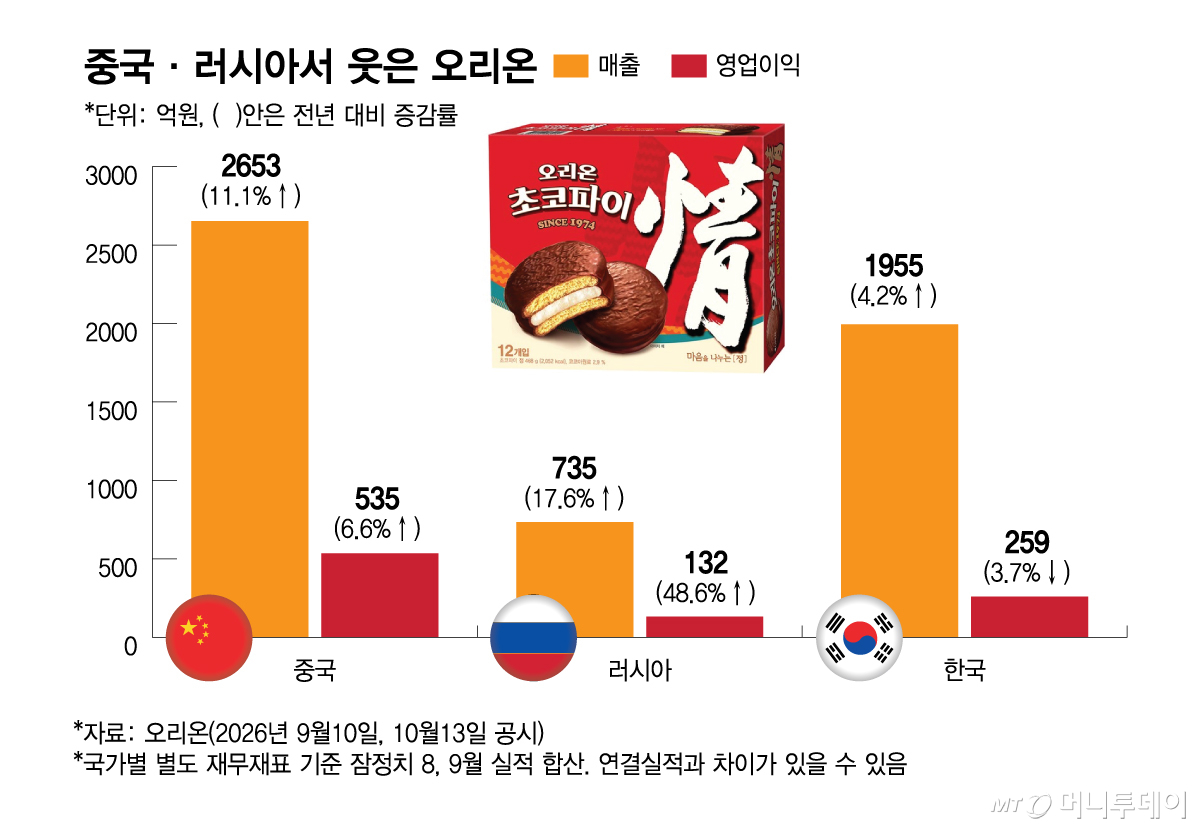
Domestic performance was relatively sluggish. Sales in Korea for August and September were 195.5 billion won, up 4.2% from the same period last year, but operating profit decreased by 3.7% to 25.9 billion won. Securities analysts noted that while sales increased on platforms such as e-commerce and Daiso, cost burdens for raw materials and labor impacted profitability. In particular, last month saw a 13.2% decrease in operating profit from the same month last year due to rising unit prices for eggs, shortening, and oils, compounded by increased rental fees and logistics costs associated with relocating headquarters.
Orion plans to continue its growth by increasing product variety and supply volumes in China and Russia. In China, the company will expand dedicated pies for snack shops, snacks with new flavors, and seasonal limited-edition products, while securing inventory in advance for the Lunar New Year. In Russia, it will operate the Cham Bungeoppang production line that was expanded last month, while also introducing distribution channel-exclusive products and pies with new flavors.

 in LIVING

