

Controversy is mounting as global private equity firm MBK Partners moves to sell Golfzon County to The Siena Group. This comes after MBK shifted its focus to recovering investment through a stake sale, contrary to the original agreement with Golfzon Holdings to pursue an initial public offering (IPO).
MBK is breaking the IPO promise it had agreed upon with Golfzon Holdings and moving toward an exit (investment recovery), while industry observers point out that this sale process could be thwarted by legal disputes over liability.
According to industry sources on the 28th, MBK and Golfzon Holdings joined forces in 2018 to foster the growth of Golfzon County and enhance its corporate valuation. At the time, both parties pursued a direction of raising corporate valuation through an IPO and adjusted the business structure so that Golfzon Holdings would maintain management leadership as the existing business entity even after listing. Currently, MBK Partners holds 68.4% of Golfzon County's shares, while Golfzon Holdings holds 31.6%.
However, the situation changed as it became difficult to gain market recognition for the expected corporate valuation. MBK is now clashing with Golfzon Holdings by placing more weight on recovering investment through a stake sale rather than an IPO. Dispersing shares through an IPO and selling them in bulk to a specific acquirer can lead to entirely different outcomes in terms of management control.
If the stake sale is executed, management control of Golfzon County will transfer to another company other than Golfzon Holdings. It is assessed that Golfzon Holdings, which has partnered with MBK for the past eight years believing in the company and working to grow Golfzon County, has been betrayed.
A bigger issue is the lease agreement, which is criticized as being unfavorable to the existing business partner. At the time of investment, MBK secured preferential terms, including low rental fees and a "zero deposit," for four golf courses (Anseong H·W, Seoun, Cheongtong) owned by GC Asset Management, a subsidiary of Golfzon Holdings.
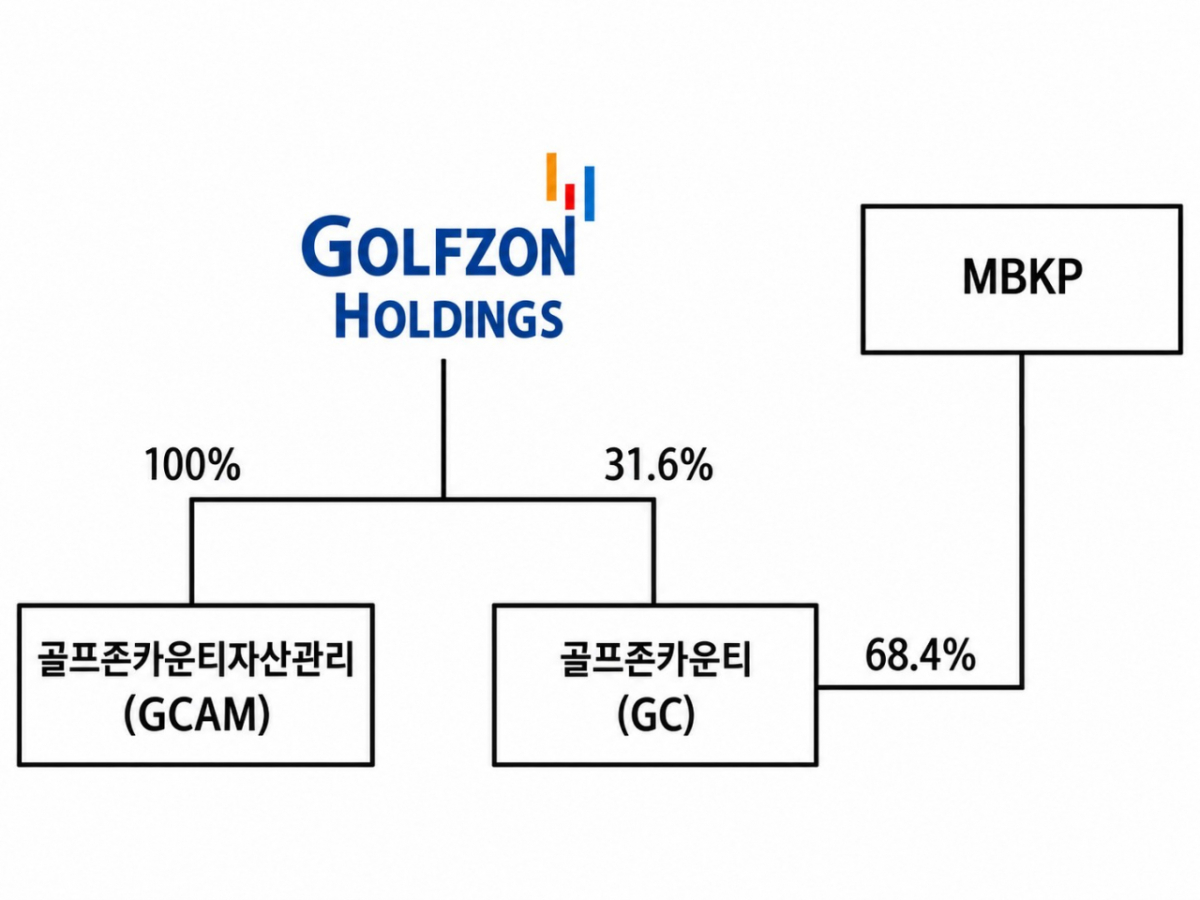
Furthermore, leveraging a poison pill clause that allows only the tenant to unilaterally extend the contract, MBK plunged GC Asset Management into chronic losses. It maintained a seven-year silence in response to official letters requesting rental fee normalization due to rising raw material costs and interest rates, using its partner as a scapegoat to artificially inflate Golfzon County's operating profit.
GC Asset Management has repeatedly requested rental fee normalization citing rising interest rates and increased operating costs, but the MBK side remained silent. The asset owner is burdened with costs, while the operator maintains relatively favorable contract terms. The contract, formed under the guise of mutual growth, has been functioning as a structure that forces one party's sacrifice.
This behavior aligns precisely with the "short-term performance squeezing and destruction of symbiosis" seen in past controversies, such as the sale and re-leasing (sale-and-leaseback) of Homeplus's prime stores, the extraction of margins on raw materials from BHC franchisees, and the hostile M&A controversy involving Korea Zinc. It is a typical predatory business practice where partners are reassured with the flashy rhetoric of mutual growth, only for the ecosystem to be destroyed during the recovery phase, allowing the firm to pocket tens of billions of won in profits before leaving.
Uncertainty after the sale is also an issue. If new acquirers such as The Siena Group demand adjustments to existing lease agreements to improve profitability, further conflicts may arise with Golfzon Holdings. Legal disputes over the validity and potential modification of the contracts cannot be ruled out. Such uncertainty could increase the burden on acquirers and become a hindrance to closing the deal.
Legal experts and M&A industry insiders point out that MBK's current aggressive exit attempt could lead to a dead end where the sale fails. This is because possibilities for contract readjustment and legal disputes are being raised over the unfair lease agreement system with GC Asset Management.
An M&A industry official stated, "From the buyer's perspective, they comprehensively review not only financial figures but also future contract stability, operational sustainability, and the potential for conflicts with existing stakeholders." The official added, "In the case of MBK's current sale process, there is a high risk that normalizing golf course operations will become impossible due to conflicts of interest with the existing business entity, even if a new acquirer takes over."

 in LIVING

